 Save to Pins
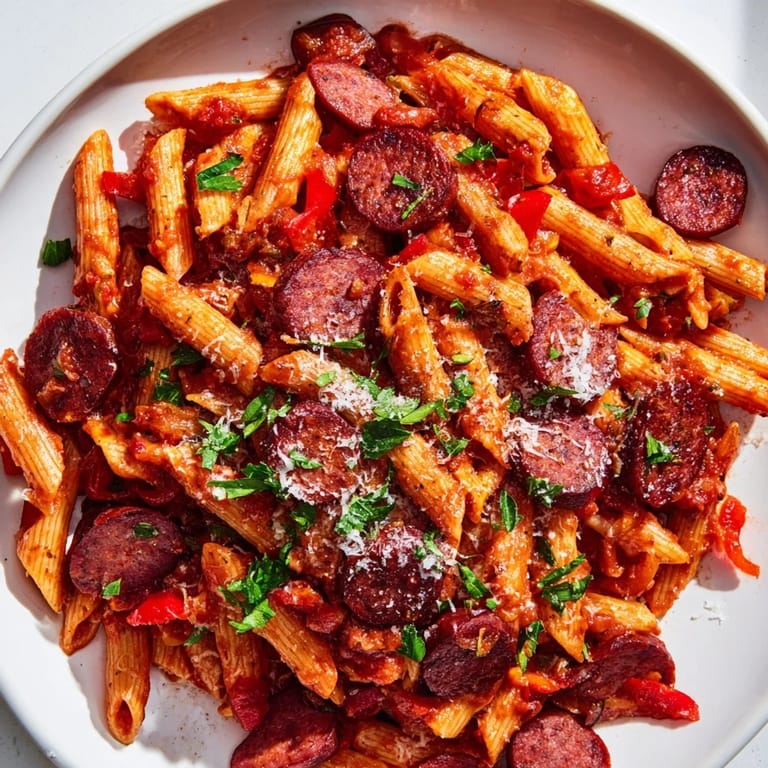
 I discovered this dish on an unremarkable Tuesday night when my pantry was nearly bare except for a package of chorizo my neighbor had gifted me. The kitchen filled with that distinctive smoky aroma within minutes of the sausage hitting the pan, and suddenly I understood why this simple combination had captivated Spanish tables for generations. What started as a quick weeknight dinner became something I found myself craving constantly, the kind of recipe that teaches you how a few good ingredients need nothing more than respect and heat to shine.
I made this for my partner on a rainy evening when we were both exhausted from work, and watching their face light up at that first bite reminded me why cooking matters. The sauce clung to the pasta in this glossy, deepened way, and before I knew it, we were both scraping our bowls clean and asking if there was more. That single moment made the ten minutes of chopping feel worthwhile.
Ingredients
- Penne or rigatoni (350 g): The tubular shapes trap that smoky sauce beautifully, though honestly any pasta you have will work.
- Spanish chorizo (200 g): This is where the magic lives—seek out the proper Spanish kind if you can, not the raw Mexican chorizo, as it brings that distinctive paprika smokiness.
- Onion (1 medium): The foundation that softens into sweetness and balances the spice.
- Garlic (2 cloves): Add it only after the vegetables have started softening, or it turns bitter and sharp.
- Red bell pepper (1): The gentle sweetness here keeps the dish from tasting one-note and adds color that makes it feel festive.
- Canned chopped tomatoes (400 g): Tinned are actually superior here—they're picked at peak ripeness and bring consistent acidity.
- Smoked paprika (1 tsp): The soul of the dish, adding depth without heat; don't skip it for regular paprika.
- Chili flakes (½ tsp): Optional, but I lean into it for a gentle warmth that builds as you eat.
- Extra virgin olive oil (2 tbsp): Quality matters because it's tasting itself here, not hiding in something complicated.
- Fresh parsley and cheese: The final flourish that makes it feel intentional and complete.
Tired of Takeout? 🥡
Get 10 meals you can make faster than delivery arrives. Seriously.
One email. No spam. Unsubscribe anytime.
Instructions
- Boil the pasta:
- Salt your water generously so it tastes like the sea—this is your only chance to season the pasta itself. While it bubbles away, you'll have time to prep everything else, and saving that starchy water is the secret to silky sauce later.
- Coax the chorizo:
- Let those slices sit in the hot skillet undisturbed for a minute or two so they develop a slight crust and release their crimson oil. This is the foundation of every flavor that follows.
- Build the base:
- Once the chorizo has done its work, add your onion and pepper to that flavored oil—you're not starting from scratch anymore, you're building on something delicious. Let them soften completely, listening for that gentle sizzle.
- Wake up the spices:
- Add garlic now, that magical moment when the whole kitchen smells alive. The paprika blooms in the heat, releasing its smoky potential into the oil.
- Simmer the sauce:
- The tomatoes create a loose, bubbling sauce that slowly thickens as water evaporates and flavors meld together. You'll notice the raw edge of tomato gradually disappear into something unified and deep.
- Marry pasta and sauce:
- This is where timing matters—add your hot, drained pasta to the sauce and toss them together so every strand gets coated. If it seems thick, add pasta water bit by bit until it flows like a proper sauce, not a stew.
- Finish with care:
- A grind of fresh black pepper, a scatter of parsley, maybe some cheese—these aren't afterthoughts, they're the final adjustments that make it taste intentional and bright.
 Save to Pins
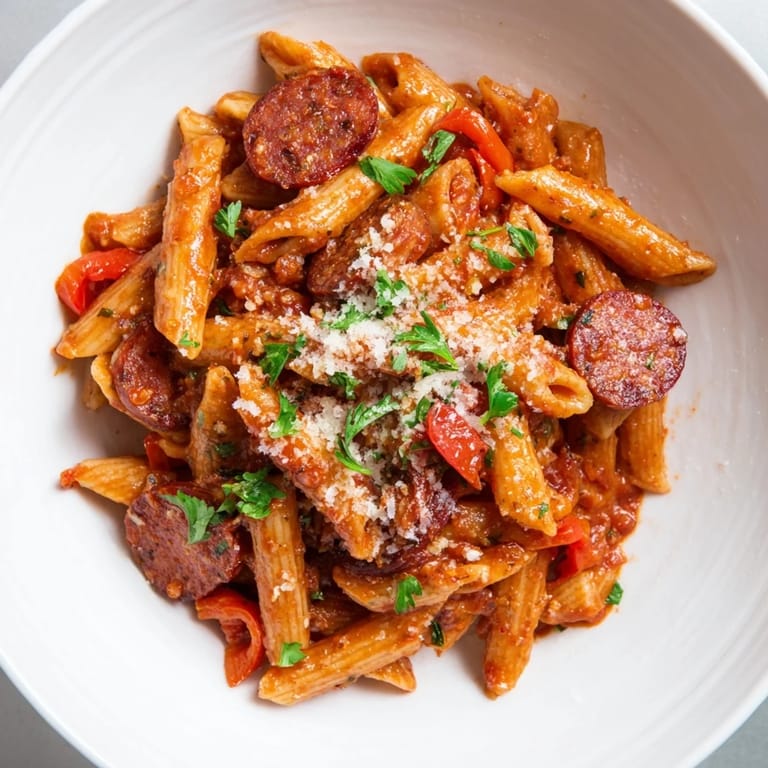
 There's something about the moment when everything comes together in one pan—the orange oil, the glistening pasta, the way a simple weeknight transforms into something that feels almost special. This dish taught me that Spanish food doesn't whisper, it sings, and you don't need a recipe full of unnecessary steps to make something worth remembering.
The Chorizo Question
The first time I made this, I grabbed what I thought was chorizo from the grocery store and wondered why the dish tasted flat and greasy. It turned out I'd picked up the raw Mexican kind, which behaves entirely differently when cooked—it needs browning and releases moisture in unexpected ways. Seek out Spanish chorizo specifically, which comes fully cured and only needs warming through to release its essential oils. It's the difference between a dish that tastes alive and one that feels like it's missing something.
Why One Skillet Changes Everything
Cooking everything in a single pan isn't just convenient, it's actually strategy. That chorizo leaves behind an oil infused with smoked paprika and pork fat, and every vegetable that touches that pan afterwards absorbs that flavor without you having to do anything extra. By the time the pasta arrives, it's not just meeting sauce, it's meeting a foundation that's been building complexity with every step. This is how home cooking becomes more than just assembly—it becomes layering.
Make It Your Own
This recipe is confident enough to stand alone but flexible enough to welcome your experiments. I've stirred in white wine for brightness, added handfuls of spinach in the final minutes, and once even crumbled in some roasted red peppers from a jar when fresh ones weren't available. The frame is solid enough that your additions feel thoughtful rather than chaotic.
- A splash of dry white wine after the vegetables soften adds acidity that brightens the whole dish.
- Baby spinach or arugula wilts into the residual heat at the very end, adding green without competing for attention.
- If Spanish chorizo isn't available, spicy Italian sausage gets the job done with a slightly different character but similar soul.
 Save to Pins
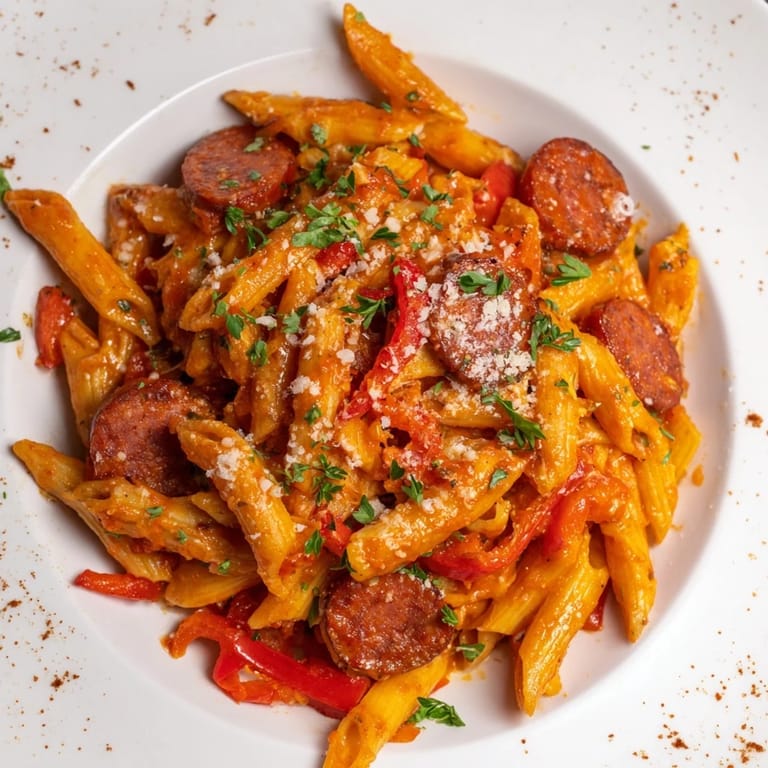
 This is the kind of recipe that becomes part of your regular rotation without you quite planning it that way, pulled out on tired evenings and casual dinner parties alike. Once you've made it a few times, you'll stop reading the steps and start cooking by instinct, which is exactly what should happen.
Frequently Asked Questions
- → Can I substitute the pasta with a different type?
Yes, penne or rigatoni work well, but you can also use other pasta shapes like fusilli or farfalle for similar texture.
- → How can I adjust the spiciness of the dish?
Reduce or omit chili flakes to lower the heat, or add a pinch of smoked paprika for mild warmth without extra spice.
- → Is it possible to add vegetables to this dish?
Definitely! Baby spinach, arugula, or extra bell peppers can be added during cooking to enhance flavor and nutrition.
- → What cheese options complement this dish best?
Grated Manchego or Parmesan add a salty, nutty finish that pairs nicely with the smoky chorizo and tomatoes.
- → Can I prepare the sauce in advance?
Yes, the sauce can be made ahead and reheated before tossing with freshly cooked pasta to save time.