 Save to Pins
 I still remember the first time I realized that the best flavors often come from patience and simplicity. Years ago, a friend invited me to a rustic dinner party where a humble wooden board was lined with the most vibrant pickled vegetables I'd ever seen—jewel-toned beets, sunset-orange carrots, emerald green beans, all glistening with promise. That night changed how I thought about appetizers. Now, whenever I want to create something that feels both effortless and impressive, I return to this colorful feast of pickled and fermented vegetables. It's become my go-to for gatherings because it whispers a simple truth: sometimes the most beautiful dishes are the ones that celebrate what's already perfect about fresh produce.
I'll never forget the first time my partner came home and caught me arranging pickled vegetables in a grid pattern on our best serving board. I was so focused on making it look gallery-worthy that I didn't notice them standing in the doorway, grinning. They grabbed a pickled carrot, took a bite, and said, 'You made this?' That moment—when someone realizes that something this stunning came from your own hands—that's when I knew I'd always make this recipe again.
Ingredients
- Fresh Carrots, julienned (1 cup / 120 g): Carrots are your golden threads in this feast. Their natural sweetness balances the vinegar beautifully, and julienning them means they pickle evenly and look absolutely stunning on the board
- Cucumber, sliced (1 cup / 120 g): Cucumbers stay crisp if you work quickly and don't over-pickle them. I learned this the hard way—they're best enjoyed between 12 and 24 hours when they're still snappy
- Radishes, thinly sliced (1 cup / 100 g): These little flavor grenades become even more assertive when pickled. Their peppery bite cuts through richness like nothing else can
- Red Cabbage, shredded (1 cup / 120 g): This is your jewel. The deep purple deepens even further when it hits the vinegar, and it holds its texture longer than almost any other vegetable
- Cauliflower florets (1 cup / 80 g): Small florets work best—they absorb the brine more completely and become little mouthfuls of pure tang
- Green beans, trimmed (1 cup / 120 g): Their color brightens slightly when blanched before pickling. This extra step takes five minutes but makes them sing visually
- White vinegar (2 cups / 480 ml): The backbone of your brine. Use the kind your grandmother used—nothing fancy needed here
- Water (2 cups / 480 ml): This keeps the pickling from being too aggressive. The ratio matters more than you'd think
- Sugar (2 tbsp / 30 g): Just enough to round out the sharp edges without making anything sweet
- Kosher salt (2 tbsp / 30 g): The seasoning that makes everything else taste like itself, but better
- Garlic cloves, sliced (2): Garlic grows mellower and more mysterious as it sits in the brine. A revelation every time
- Mustard seeds (1 tbsp / 10 g): These little orbs pop between your teeth with a gentle heat that builds over time
- Coriander seeds (1 tbsp / 10 g): Warm, slightly floral—they add an unexpected sophistication to what might otherwise be a straightforward pickle
- Black peppercorns (1 tsp / 3 g): Leave them whole. Cracking releases oils too quickly, and you want this gentle, lingering spice
- Bay leaves (2): Tradition in a leaf. They anchor the whole thing with calm authority
- Fresh dill, sprigs (3): If you can get it fresh, do. The anise notes are exactly what this board is dreaming of
- Red chili, sliced (1 small, optional): For those moments when you want the feast to have a little edge, a little danger
- Kimchi (1 cup / 120 g, optional): Store-bought is fine here. It adds umami depth and a fermented funk that rounds out the quick pickles
- Sauerkraut (1 cup / 120 g, optional): The classic choice. Its subtle fermented flavor plays beautifully alongside the bright vinegary notes
Tired of Takeout? 🥡
Get 10 meals you can make faster than delivery arrives. Seriously.
One email. No spam. Unsubscribe anytime.
Instructions
- Prepare Your Canvas:
- Wash all your vegetables under cool running water, then pat them completely dry. This is your first act of care. Wet vegetables dilute the brine and never pickle as crisply. Cut each one with intention—julienne the carrots so they're thin and elegant, slice the cucumber at a slight bias to catch light, shave the radishes paper-thin on a mandoline if you have one. You're not just prepping; you're setting the stage for beauty
- Create the Brine:
- Pour your vinegar and water into a saucepan and bring it to a gentle boil. Once it's steaming, add the sugar and salt, stirring slowly until both dissolve completely. Watch the crystals disappear into liquid clarity—this is alchemy. The brine should smell sharp and bright, almost medicinal. That's exactly right. Remove it from heat and let it cool until you can comfortably hold your hand near the pan. If it's still too hot, it will cook your vegetables slightly, and we want them to stay crisp
- Build the Architecture:
- Take your clean glass jars or small bowls and start packing vegetables in with intention. Group colors together—all the orange carrots in one section, the deep red cabbage in another, the pale cauliflower creating contrast. Pack them tightly enough that they won't float, loosely enough that the brine can find every crevice. This is where your board becomes art. Nestle the garlic cloves, mustard seeds, coriander seeds, peppercorns, bay leaves, dill sprigs, and chili slices evenly among the vegetables, thinking about visual distribution
- Pour and Seal:
- Slowly pour the warm (not hot) brine over everything, watching it cascade down and settle into all the small spaces. Make sure every single vegetable is submerged—anything exposed to air will spoil. Press down gently with the back of a spoon to encourage submersion. Seal your jars and let them cool completely to room temperature before moving them to the refrigerator. Patience here matters. Warm jars sealed tight can build pressure
- The Waiting Game:
- For quick pickles with bright, fresh flavors, refrigerate for at least 12 hours. If you have the time, 24 hours is when they really hit their stride—all the flavors have married but the vegetables are still crunchy. At 48 hours, they're deeper, more complex, softer. You get to choose your own adventure based on what you're craving
- For True Fermentation (If Brave):
- If you want to try fermentation instead of quick pickling, mix a 2% salt brine (that's 20 grams of salt per liter of water) with filtered or boiled water that's cooled completely. Pack your vegetables in a clean jar, pour the brine over, and weight them down with a small glass filled with water so they stay submerged. Cover loosely with a cloth and leave on your counter for 5 to 7 days, checking daily for mold (skim any off the top immediately) and tasting your way to your preferred fermentation level. You'll see bubbles—that's the magic happening. By day three, they'll taste alive
- The Grand Presentation:
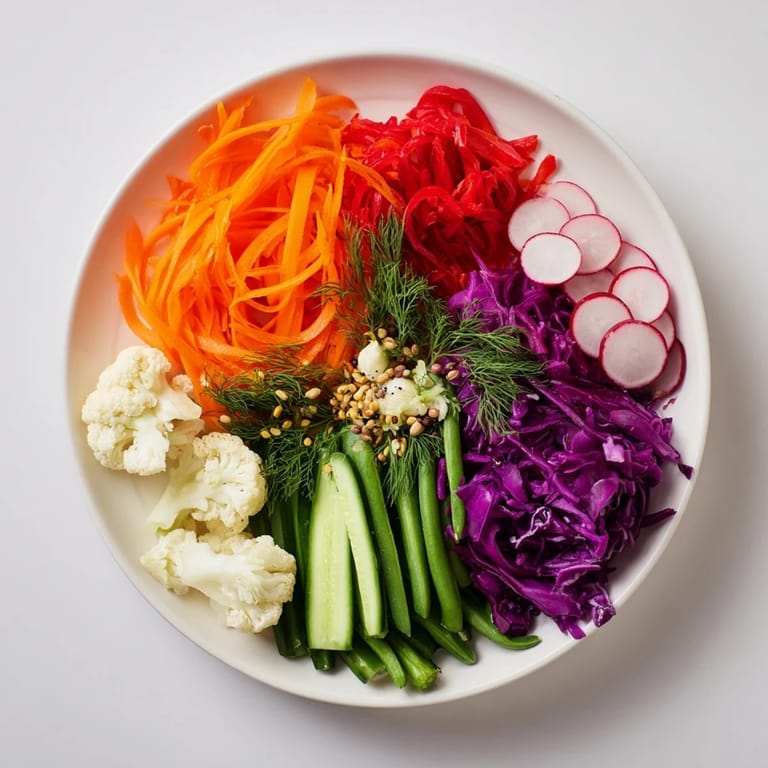
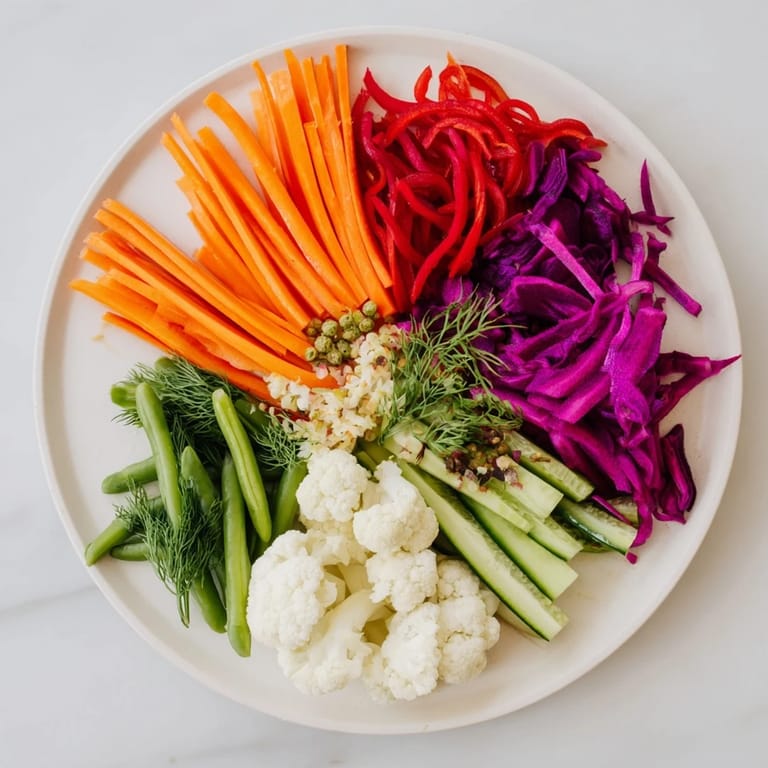
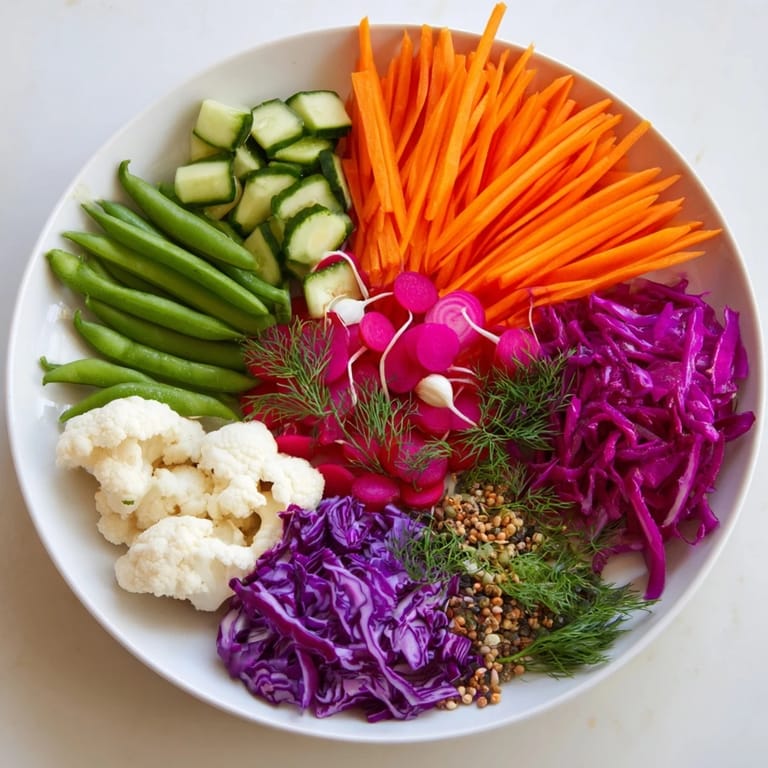
- When you're ready to serve, arrange everything on a beautiful board or platter. Think of it as a edible painting. Straight lines for a modern look, scattered abundance for a rustic feel. Keep the fermented items in their original jars for visual interest, or arrange them directly on the board alongside their quick-pickled cousins. Garnish with extra dill, maybe a lemon wedge, and step back to admire what patience and simple ingredients have created
 Save to Pins
 There was a moment, perhaps six months into making this recipe regularly, when my neighbor saw the board of pickled vegetables through my kitchen window and called to ask if I was catering an event. I wasn't. I was just making dinner. But that question changed how I saw this simple recipe—it became the thing that made me feel like a real cook, like someone who understood that feeding people well is an act of love wrapped in vinegar and visible care.
Variations and Flavor Explorations
The beauty of this recipe is that it begs for experimentation. Once you understand the basic ratio—two parts vinegar to two parts water, balanced with salt and sugar—you can pickle almost anything. I've learned to follow the seasons: in late summer, I add paper-thin beets and pearl onions; in fall, I introduce thin slices of turnip and celery root; in spring, I focus on tender asparagus tips and baby radishes. The vegetables change, but the magic remains the same. For different flavor profiles, try substituting the white vinegar with rice vinegar for something gentler and slightly sweet, or apple cider vinegar for a deeper, almost apple-like warmth. Some of my favorite experiments have come from adding the zest of a lemon or orange to the cooled brine, or a handful of fresh tarragon for something almost French in its elegance. Each variation tells a different story about your kitchen and what you were craving on that particular day.
Pairing and Serving Wisdom
I've learned that pickled vegetables are the quiet heroes of any gathering—they make everything around them taste better. A simple crusty bread and some cured meats transform the board into a proper charcuterie situation. Soft cheeses—especially a tangy chèvre or creamy burrata—find their perfect match in the brightness of pickled vegetables. For vegan occasions, I arrange the board alongside good olive oils, nuts, and fresh herbs for people to compose their own bites. The pickled vegetables cut through rich flavors with such grace that even simple bowls of hummus or cheese feel elevated. And wine? A crisp Riesling or dry rosé sings alongside these bright, acidic flavors—the wine gets fresher, the pickles get more interesting, and everyone at the table starts smiling a little wider.
The Magic of Timing and Texture
Here's something I discovered through trial and error: different vegetables have different timelines for achieving that perfect balance between crispy and tender. The cucumbers and green beans reach their peak at 12 to 24 hours. The harder vegetables—carrots, cauliflower, radishes—benefit from longer pickling, up to 48 hours, because they need time to absorb flavor while maintaining their structural integrity. The cabbage is forgiving; it stays good for weeks. I've started making my pickled board in layers, adding quick-pickling vegetables the night before serving and leaving fermented items out for longer, creating a journey of flavors on a single board. This learned timing transforms the dish from simple preservation into something that feels thoughtfully composed, as though you've been thinking about your guests' experience all along.
- Taste your pickles throughout their pickling window—12, 24, 36 hours—to discover your personal sweet spot
- Keep everything submerged under brine at all times, or mold and spoilage will find those exposed bits
- A beautiful board is an invitation to eat better, to slow down, to notice the flavors and colors you're actually consuming
 Save to Pins
 This feast of pickled and fermented vegetables has become my answer to 'what should I bring?' and 'what should I make when I'm not sure what to cook?' It's learned to meet me wherever I am—as a quick pickle when I have an hour, as a fermented experiment when I'm feeling adventurous, as the board that makes ordinary moments feel like celebrations. That's when you know a recipe has truly become yours.
Frequently Asked Questions
- → Which vegetables are ideal for pickling and fermenting in this dish?
Carrots, cucumbers, radishes, red cabbage, cauliflower, and green beans are excellent choices due to their texture and flavor retention.
- → How long should the vegetables be left to develop flavor?
For quick pickling, refrigerate for at least 12 hours up to 48 hours. For fermented options, allow 5 to 7 days at room temperature.
- → What spices complement the pickling brine?
Garlic slices, mustard seeds, coriander seeds, black peppercorns, bay leaves, and fresh dill enhance the brine’s aroma and taste.
- → Can seasonal vegetables be used in this platter?
Yes, try beets, turnips, or pearl onions to vary the flavor and colors according to the season.
- → How should the pickled vegetables be presented for serving?
Arrange them in small jars or bowls, organized in linear or grid patterns on a serving board to create an eye-catching display.