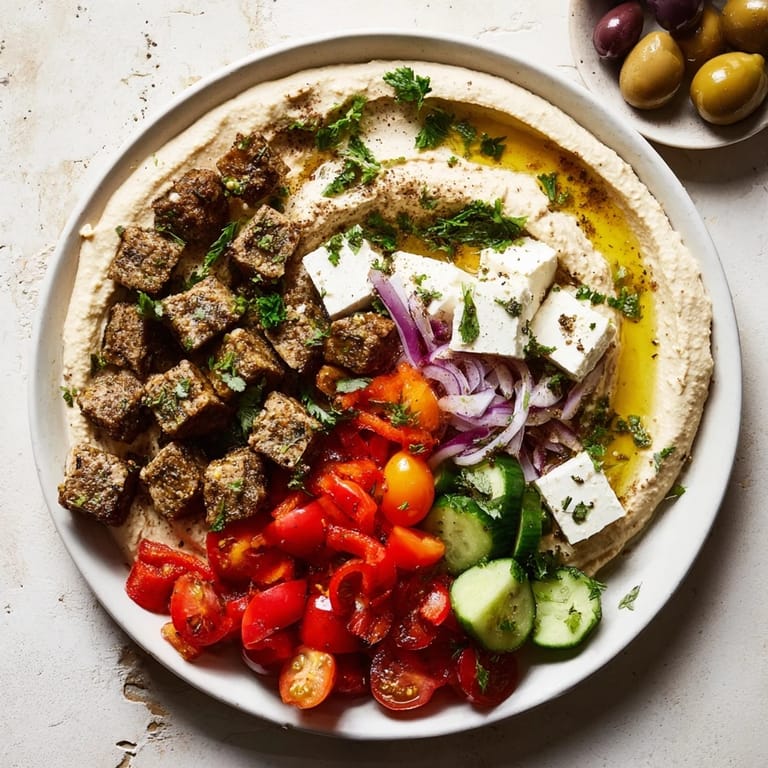
 Save to Pins
 I'll never forget the first time I wandered through a bustling Mediterranean market in Athens, weaving between vendors selling fresh olives and creamy cheeses. A local family invited me to their home, and their grandmother spread out the most beautiful platter I'd ever seen—not a formal appetizer, but an invitation to slow down and share. That moment taught me that the Mediterranean Mezza Platter isn't just food; it's a conversation starter, a way of saying 'let's eat together.' Now, whenever I recreate that memory on my own table, I'm transported back to that sunny afternoon, and my guests always feel that same warmth.
I remember making this for my book club on a warm evening, and what started as nibbling while we discussed turned into an hour of pure connection over that platter. Someone would reach for an olive, another would dip into the hummus, and suddenly we were all trying combinations we'd never considered before. That's when I realized this dish has a quiet magic—it gives people permission to be playful with food, to experiment, to take their time.
Ingredients
- Classic hummus (1 cup): The creamy anchor of your platter. A good hummus should be silky, not grainy—if making from scratch, don't skip blending it smooth.
- Baba ganoush (1 cup): That smoky, velvety eggplant dip that people always ask about. The char from roasting the eggplant is what makes it unforgettable.
- Tzatziki (1 cup): Cool, garlicky, and refreshing. The cucumber and yogurt balance everything else on the platter beautifully.
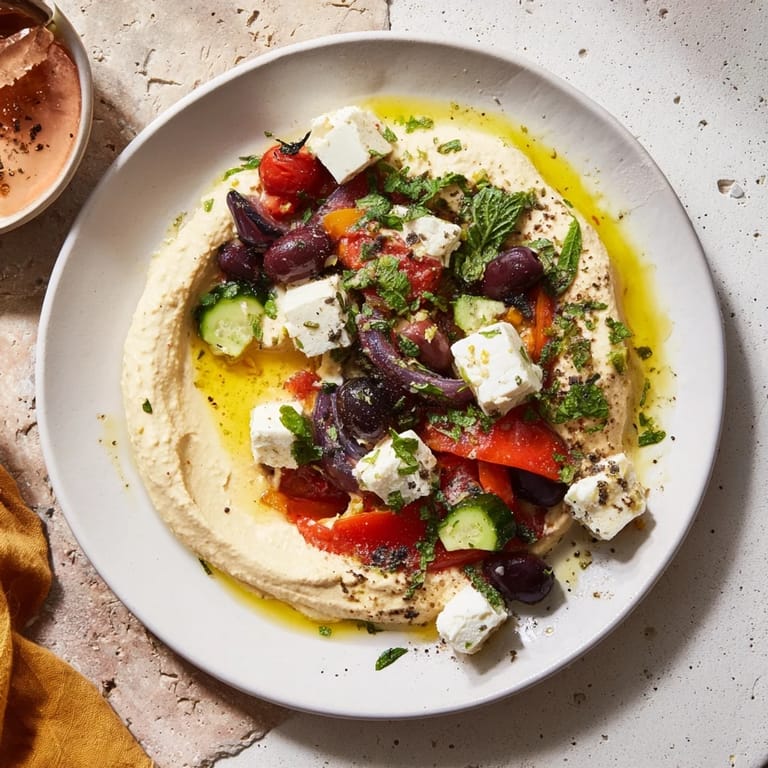
- Feta cheese, cut into rustic cubes (150 g): Don't crumble it—those irregular cubes feel more generous, more Mediterranean. The saltiness plays perfectly against the dips.
- Cherry tomatoes, halved (1 cup): Look for ones that are still slightly warm from the sun if you can find them. The sweetness matters here.
- Cucumber, sliced into rounds (1 cup): Keep the skin on for color and texture. Fresh is key—a crisp cucumber makes all the difference in each bite.
- Assorted olives—Kalamata, green, Castelvetrano (1 cup): This mix of varieties creates visual interest and flavor complexity. I learned to pit a few so guests aren't caught off guard.
- Roasted red bell pepper, sliced (1 pepper): Jarred is fine if you're short on time, but roasting them yourself gives a deeper, sweeter flavor that elevates the whole platter.
- Red onion, thinly sliced (1 small): The sharpness cuts through the richness. I used to skip it, but now I know it's essential.
- Pita breads, cut into triangles (2 large): Warm them lightly in a dry pan first—that makes them so much more inviting for dipping. Use gluten-free flatbread if you need to accommodate guests.
- Fresh parsley, roughly chopped (1/4 cup): This isn't just decoration; it's the final flourish that brings everything alive.
- Fresh mint leaves, torn (2 tbsp): Torn, not chopped—that releases the fragrance and keeps it delicate.
- Extra-virgin olive oil (2 tbsp): Don't use regular oil here. A generous drizzle of good olive oil is what transforms a platter into a memory. I learned this the hard way after years of being stingy.
- Sumac or zaatar, optional (1 tsp): If you have it, use it. That tangy, earthy finish is the secret that makes people lean in and ask what it is.
- Sea salt and freshly ground black pepper, to taste: Season as you go. These are your final adjustments for flavor.
Tired of Takeout? 🥡
Get 10 meals you can make faster than delivery arrives. Seriously.
One email. No spam. Unsubscribe anytime.
Instructions
- Set your stage:
- Pull out your largest, most beautiful platter or board. This is going to be your canvas. Take a breath. There's no rush.
- Place the dips:
- Arrange small, distinct mounds of hummus, baba ganoush, and tzatziki around the platter, spacing them so each one has its own moment. Picture them as islands of flavor that guests will discover as they explore.
- Add the cheese:
- Create a rustic cluster of feta cubes. Keep them together like they're naturally drawn to each other. The white against the colorful vegetables will be stunning.
- Build your vegetable landscape:
- Now scatter the cherry tomatoes, cucumber slices, olives, roasted peppers, and red onions in loose, organic mounds. Don't overthink this—organic beauty comes from gentle, natural placement, not precision. Let colors guide you.
- Position the bread:
- Place warm pita triangles in a separate pile or fan them around the edge. They're your guests' invitation to dive in.
- Add the extras:
- If you're including marinated artichokes, dolmas, or toasted pine nuts, scatter them in small clusters across the platter. These are the surprises.
- Anoint with olive oil:
- Here's where the magic happens. Generously drizzle that beautiful extra-virgin olive oil over the dips and vegetables. Don't be shy. This is an invitation to taste.
- Crown it with fresh herbs and spice:
- Sprinkle the parsley and torn mint across the whole platter—let some land on the dips, some on the vegetables, some everywhere. Finish with sumac or zaatar if you have it, and a whisper of salt and pepper. Step back and admire your work.
- Serve with presence:
- Bring this to the table with intention. Take a moment to tell people they're welcome to help themselves, to try combinations, to take their time. This is a platter that rewards leisurely enjoyment.
 Save to Pins
 There's something about a Mediterranean platter that slows time down. I watched my grandmother's hands move across a similar platter once—not hurried, just purposeful—and I understood then that this dish is about giving people permission to linger. Every person who gathered around it left happier than when they arrived, and I think that's the real recipe.
The Art of Arrangement
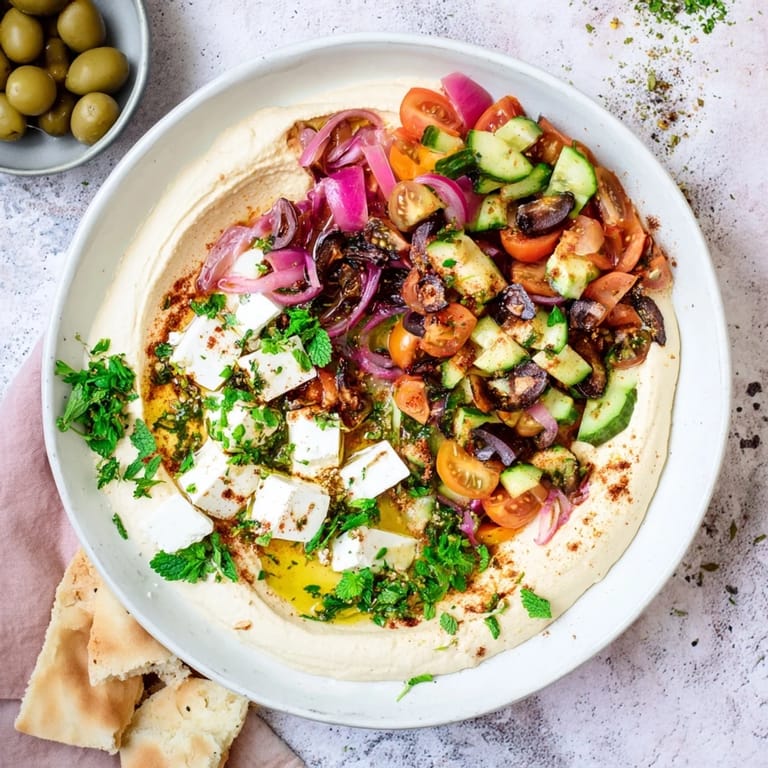
After making this platter dozens of times, I've learned that the arrangement is actually a meditation. The goal isn't perfection—it's generosity. Think of it like you're creating pockets of flavor and color that invite exploration. Place things where you can see them, where they feel balanced without being symmetrical. The eye should travel naturally from one cluster to another. I always leave a little negative space so the platter breathes, and honestly, that empty space makes the food look more abundant, not less. It sounds like a paradox, but it's one of those kitchen truths that only reveals itself through practice.
Customizing for Your Crowd
One of the beautiful things about a mezza platter is how naturally it adapts. If someone's vegan, skip the tzatziki and feta and lean into the vegetable and olive components—the platter is still stunning. If you want something heartier, add grilled halloumi, warm falafel, or even some spiced lamb tucked into the arrangement. I once made this for a dinner where half my guests were vegetarian and half weren't, and by adding some grilled chicken to one side and keeping the other side plant-based, everyone felt celebrated. The platter is forgiving that way. It's a framework for generosity, not a rigid formula.
Pairing and Presentation Secrets
A crisp white wine or light rosé is the perfect companion—something that won't overpower the delicate flavors but will lift them higher. I've also served this with sparkling water and fresh lemon, which works beautifully for a midday gathering. The presentation itself is half the pleasure. I always use natural light if I can, light a candle nearby, and sometimes I tie a simple linen napkin around the wooden platter for softness. Small details like these tell your guests that you took time to think about their experience, and that feeling lingers long after the last olive is eaten.
- If you're taking photos for memory's sake, shoot from above and wait for that late afternoon light—it makes everything glow.
- Have small plates ready nearby so guests can actually sit down with their food instead of hovering.
- Serve at room temperature for the most flavor—cold dips lose some of their character.
 Save to Pins
 This platter has become my favorite way to say hello to people I care about. It's simple enough that it doesn't demand attention, but beautiful enough that it becomes the backdrop for real connection.
Frequently Asked Questions
- → What are common dips used in a Mediterranean mezza?
Classic dips include hummus, baba ganoush, and tzatziki, each offering unique flavors from creamy chickpea to smoky eggplant and refreshing yogurt.
- → How can I make this platter suitable for vegans?
Simply omit dairy-based items like feta and tzatziki or replace them with plant-based alternatives to maintain the rich textures.
- → What breads pair best with the mezza components?
Pita bread triangles work wonderfully, and gluten-free flatbreads can be used to accommodate dietary needs.
- → How should olives be prepared for the platter?
Use a variety of olives such as Kalamata, green, and Castelvetrano, rinsed and pitted if desired for ease of eating.
- → What herbs enhance the flavor profile of this dish?
Fresh parsley and torn mint leaves add bright, aromatic notes that elevate the freshness of the platter components.