 Save to Pins
 The first time I made tikka salmon, I was standing in my kitchen on a rainy Tuesday evening, staring at four beautiful salmon fillets and wondering if I could pull off something more interesting than my usual lemon-butter routine. I'd just bought a jar of tikka masala paste on a whim, and something about the warm spice aroma when I opened it made me feel brave enough to try something completely different. Twenty minutes later, the oven was filling with this incredible smell—tangy yogurt mingling with cumin and coriander—and I knew I'd stumbled onto something special.
I served this to my in-laws last summer, and my mother-in-law—who's genuinely skeptical of anything that isn't her recipe—actually asked for seconds. She kept saying the salmon reminded her of a dish she'd had in Delhi years ago, and watching her face light up as she tasted it made me feel like I'd accidentally created something with real meaning. That moment taught me that good food isn't about impressing people; it's about making them feel understood through flavor.
Ingredients
- Salmon fillets (4 pieces, about 150g each): Look for fillets that are firm to the touch and smell like ocean, not fish—that's your sign they're fresh. Pat them completely dry before marinating, because moisture is the enemy of crispy edges.
- Plain yogurt (3 tbsp): Use the thickest yogurt you can find; it clings to the salmon better and creates a more luxurious coating. Greek yogurt works beautifully, or go plant-based if you're avoiding dairy.
- Tikka masala paste (2 tbsp): This is your flavor shortcut and honestly, the soul of the dish. Different brands vary in heat and saltiness, so taste yours before you commit to the full amount.
- Lemon juice (1 tbsp): Freshly squeezed makes all the difference—bottled lemon juice tastes flat against these warm spices.
- Ground cumin and coriander (1 tsp each): Toast these in a dry pan for 30 seconds before using if you have whole seeds; it wakes up their flavor in ways that feel almost unfair.
- Smoked paprika (½ tsp): The smoke adds a subtle depth that makes people ask what your secret ingredient is, and you get to smile mysteriously.
- Chili powder (½ tsp): Start here and adjust upward if you like heat; you can always add more, but you can't take it back.
- Olive oil (1 tbsp): Use good oil here—it's one of just a few ingredients, so it matters.
- Salt and black pepper: Freshly ground pepper tastes sharper and cleaner than pre-ground, and it actually makes a noticeable difference.
- Lemon wedges, fresh coriander, and red onion (for serving): These aren't just garnish; they're the bright punctuation marks that finish the dish.
Tired of Takeout? 🥡
Get 10 meals you can make faster than delivery arrives. Seriously.
One email. No spam. Unsubscribe anytime.
Instructions
- Heat your oven properly:
- Get that oven to 220°C (425°F) before you do anything else—patience here prevents cold spots in your salmon. While it preheats, line your baking tray with parchment paper or foil for easy cleanup and to prevent sticking.
- Build your marinade:
- In a bowl, whisk together the yogurt, tikka masala paste, lemon juice, cumin, coriander, paprika, chili powder, olive oil, salt, and pepper until it looks like a smooth, spiced paste. Taste it on your finger—this is your chance to adjust heat or seasoning before it touches the fish.
- Prepare your salmon:
- Pat each fillet dry with paper towels; any moisture on the surface will create steam instead of crust. This step takes 30 seconds but changes everything about the final texture.
- Coat generously:
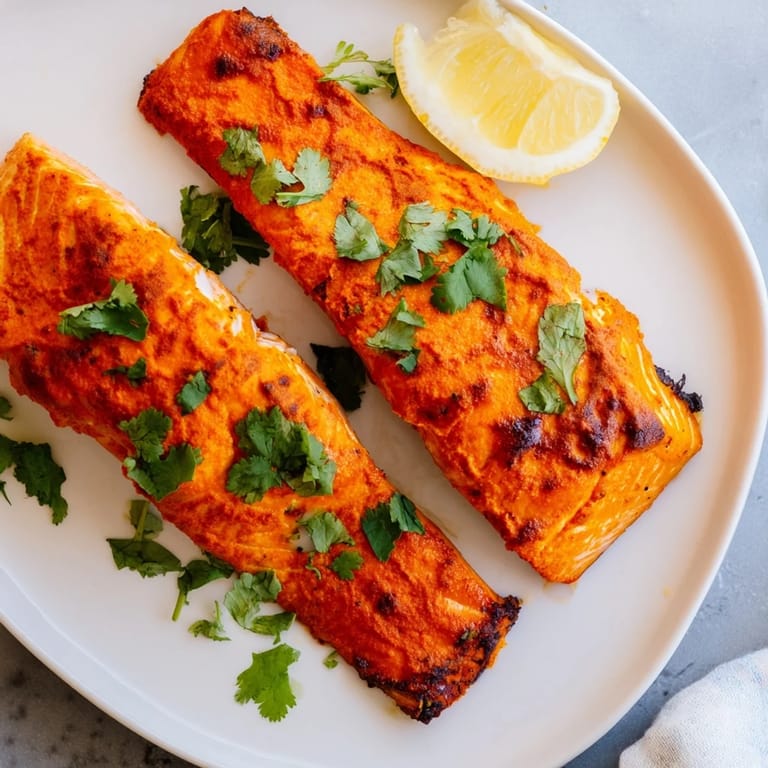
- Spread the marinade over each fillet, making sure to cover all sides and getting into any crevices. The salmon should look vibrant and fully dressed, not shy about the spices.
- Let it marinate:
- Even 10 minutes makes a difference, but if you have time, refrigerate for up to an hour and let the flavors sink deeper into the flesh. Cold salmon actually cooks more evenly, which is a trick that actually works.
- Roast until golden:
- Bake for 15–18 minutes, depending on how thick your fillets are and how you like your salmon cooked. The edges should look slightly crisp and caramelized, and the thickest part should flake gently when you press it with a fork.
- Finish with brightness:
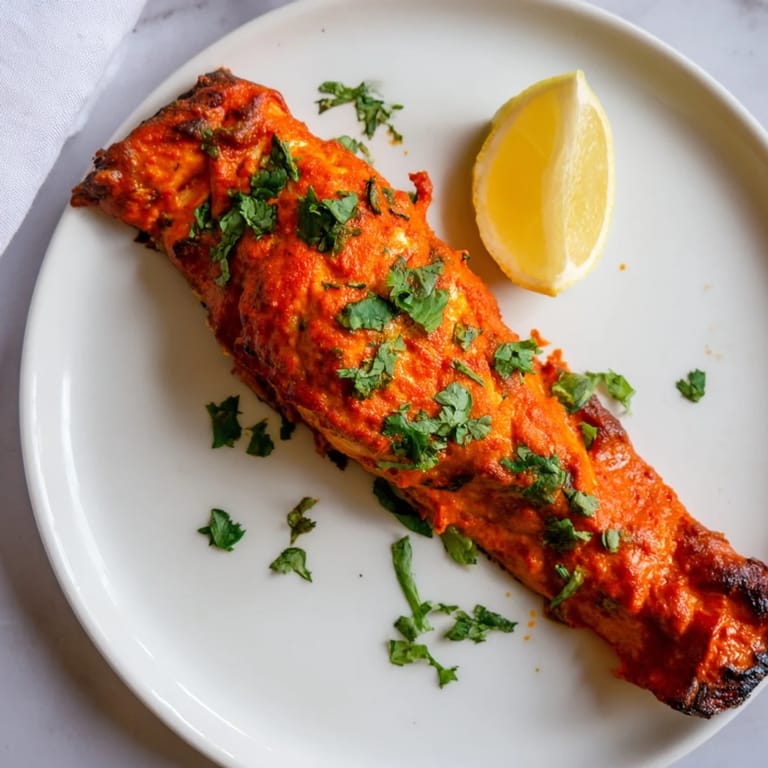
- Plate while hot and scatter fresh coriander and a squeeze of lemon over everything. If you want extra char, slide it under the broiler for 1–2 minutes, but watch it closely—salmon goes from perfect to overdone in seconds.
 Save to Pins
 There's a moment right when the salmon comes out of the oven—that first breath of warm, spiced steam that hits your face—where you realize you're about to eat something genuinely delicious, and you made it yourself. That feeling never gets old, no matter how many times I make this dish.
Why This Tastes Like Restaurant Food
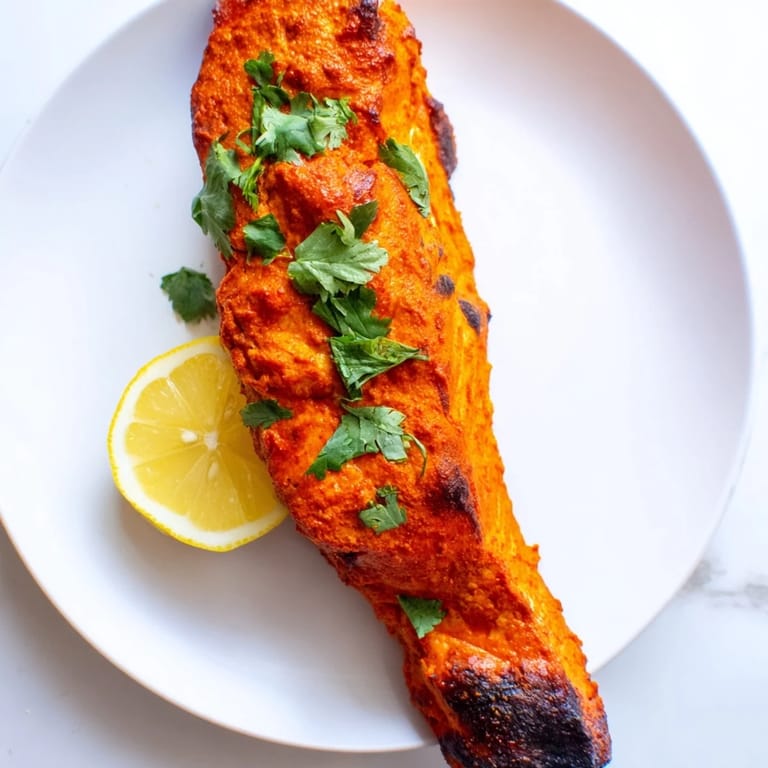
The secret is that you're using a professional-grade spice paste as your foundation, which means you skip the step of hunting down individual spices and trying to balance them yourself. The yogurt in the marinade isn't just a binder; it tenderizes the salmon slightly and creates a creamy coating that caramelizes in the heat. And roasting at high temperature means you get that contrast between the crispy, caramelized exterior and the buttery interior that makes people think you've been trained in a professional kitchen.
What to Serve Alongside
I've served this with everything from simple steamed basmati rice to fresh cucumber salad to warm naan, and it's genuinely hard to pick a favorite pairing. Basmati rice lets the salmon shine, while naan gives you something to use for soaking up the last bits of marinade from your plate. A cooling cucumber salad or raita cuts through the richness of the spices beautifully, especially if you've gone heavy on the chili powder.
Flexibility and Swaps
This marinade loves any firm white fish—cod, haddock, and halibut all work beautifully and often cost less than salmon. I've even made this with sliced tofu pressed between paper towels and marinated longer, and it became something entirely different but equally satisfying. The real point isn't the protein; it's that the spice marinade transforms whatever it touches into something warm and inviting.
- For dairy-free, swap the yogurt for thick coconut yogurt, which adds a subtle sweetness that actually complements tikka spices.
- If broiling at the end, keep the oven door open and watch constantly—high heat moves fast.
- Leftovers are incredible at room temperature the next day, shredded into a salad or tucked into a wrap with greens.
 Save to Pins
 This dish has become my go-to when I want to feel accomplished without spending all evening in the kitchen, and honestly, that's the best kind of recipe. Every time I make it, someone asks for the recipe, and I love that this simple combination of yogurt and spices brings that much joy to other people's tables.
Frequently Asked Questions
- → What is tikka masala paste?
A spice blend combining cumin, coriander, paprika, chili, and other seasonings, often mixed with yogurt to create a flavorful marinade.
- → Can I use skin-on salmon fillets?
Yes, skin-on salmon can be used and will crisp nicely when roasted, enhancing texture and flavor.
- → How long should the salmon marinate?
Marinating for at least 10 minutes is adequate, but up to 1 hour in the refrigerator deepens the flavors.
- → What sides complement this dish?
This spiced salmon pairs well with basmati rice, naan bread, or a fresh cucumber salad for balance.
- → Can I substitute salmon with other proteins?
Yes, cod, haddock, or tofu make excellent alternatives while absorbing the marinade’s vibrant spices.