 Save to Pins
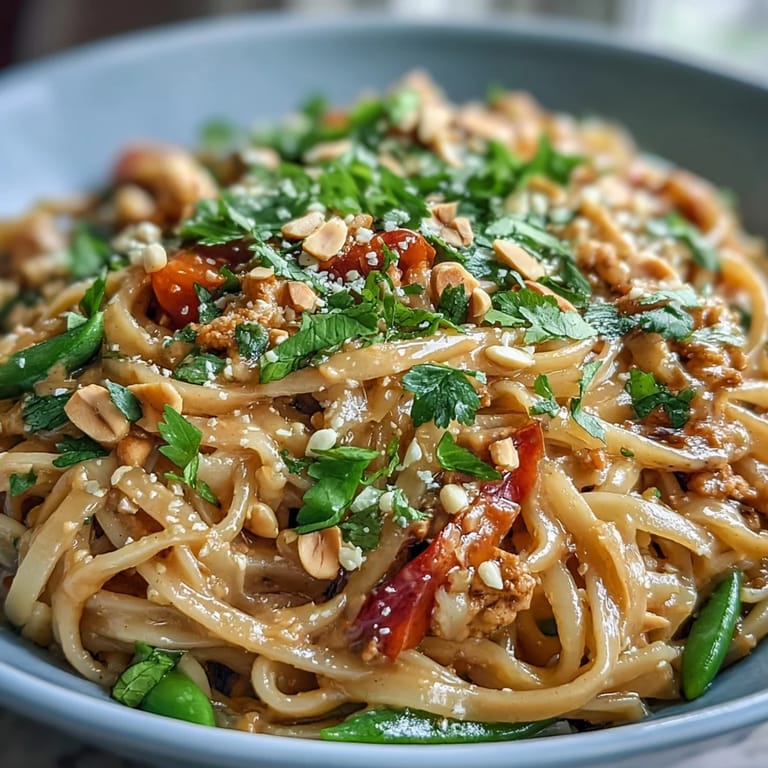
 There's something almost magical about the moment when a crowded skillet transforms into a cohesive, creamy bowl of noodles. I discovered this technique while experimenting late one weeknight, skeptical that cooking rice noodles directly in the sauce would work at all. The result was so unexpectedly silky and flavorful that I've made it dozens of times since, each batch tasting like I'd stumbled upon some well-kept Thai kitchen secret. Now my friends call it the weeknight miracle bowl, and honestly, I can't argue.
I made this for my partner's coworkers during an impromptu dinner party, and watching them return for seconds without asking what was in it told me everything. One guest asked if I'd worked in a Thai restaurant, which made me laugh because I'd nearly oversalted the sauce five minutes before they arrived. That night solidified it for me: this dish has the kind of approachable elegance that works for casual weeknights and unexpected gatherings alike.
Ingredients
- Ground chicken: Look for meat that's freshly ground or grind it yourself if possible, as it browns more evenly and absorbs the sauce better than pre-packaged versions that can be watery.
- Wide rice noodles: These are crucial because they have enough surface area to cradle the sauce; thinner noodles would turn to mush before the sauce coats properly.
- Red bell pepper: The sweetness balances the savory sauce beautifully, and the color matters visually when you're serving this.
- Snap peas: They add a textural contrast that keeps the bowl from feeling one-note, even though everything else is soft.
- Creamy peanut butter: Use the kind without added sugars if possible; it gives you control over sweetness and prevents the sauce from becoming cloying.
- Soy sauce and hoisin: The combination creates depth that neither could achieve alone, so don't skip either one.
- Rice vinegar: This keeps the sauce bright rather than heavy, cutting through all that richness from the peanut butter.
- Sesame oil: A small amount goes a long way; its nuttiness echoes the peanut butter and adds sophistication.
- Chicken or vegetable broth: Low-sodium is essential because the soy sauce and hoisin already bring salt; you're building layers, not overpowering.
Tired of Takeout? 🥡
Get 10 meals you can make faster than delivery arrives. Seriously.
One email. No spam. Unsubscribe anytime.
Instructions
- Brown the chicken first:
- Heat oil in your skillet over medium-high heat and add the ground chicken, breaking it apart with a wooden spoon as it cooks. You want it in small pieces, evenly browned and cooked through in about 5 minutes, then set it aside.
- Build your aromatic base:
- In the same pan, add minced garlic, grated ginger, and the white parts of the green onions. Cook for just 1 minute until the kitchen smells incredible and the aromatics look slightly translucent at the edges.
- Get the vegetables started:
- Add your sliced bell pepper, shredded carrots, and snap peas to the pan. Stir and cook for 2 to 3 minutes until they begin to soften but still have some firmness, which keeps them from disappearing into the sauce.
- Spread the dry noodles:
- Pour in the uncooked rice noodles and spread them evenly over everything in the pan. They'll look like a nest of straw, but resist the urge to panic.
- Mix and pour the sauce:
- In a separate bowl, whisk together peanut butter, soy sauce, hoisin, rice vinegar, honey, sesame oil, sriracha, and broth until completely smooth with no peanut butter clumps. Pour this over the noodles and vegetables.
- Simmer and stir occasionally:
- Bring everything to a simmer, cover the pan, and let it cook for 4 to 6 minutes, stirring every couple of minutes. The noodles will gradually soften and drink up the sauce, transforming from separate ingredients into something unified and creamy.
- Bring the chicken back home:
- Return the cooked chicken to the pan and toss everything together over low heat for 2 to 3 minutes until the sauce is creamy and every strand of noodle is coated. Finish with fresh lime juice, which brightens everything instantly.
- Plate and garnish:
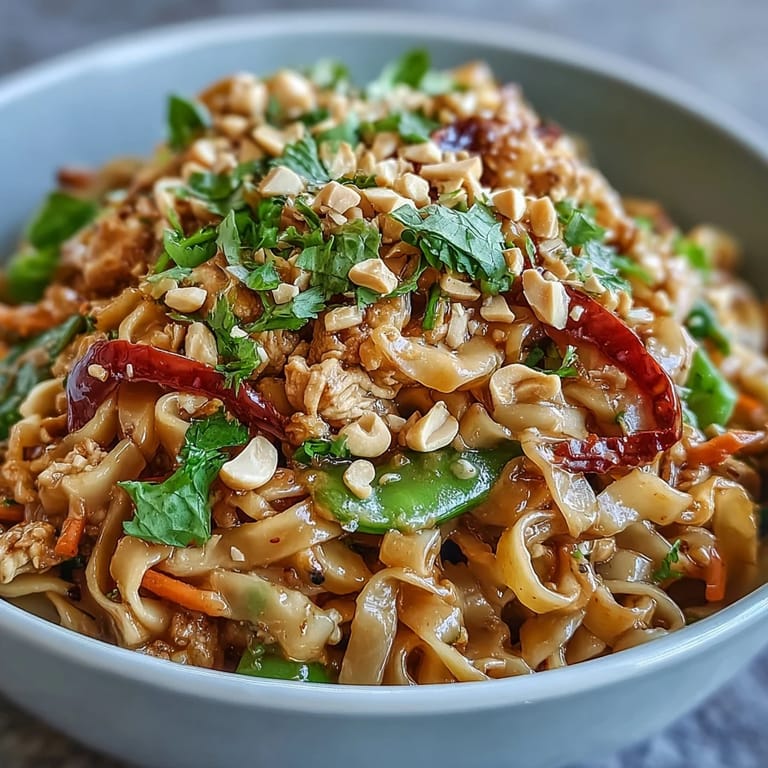
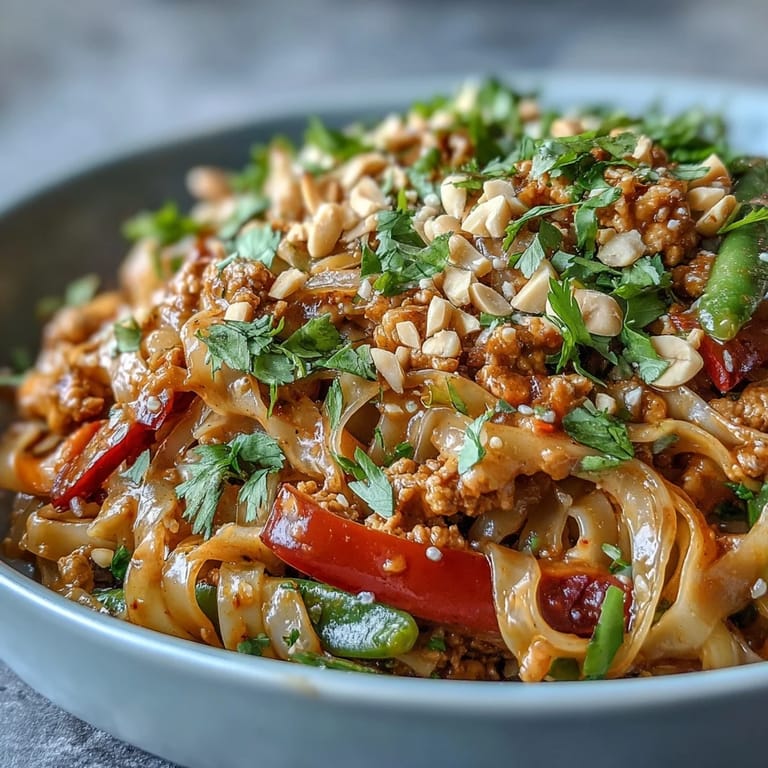
- Divide into bowls and top with chopped roasted peanuts, fresh cilantro, the reserved green onion tops, and lime wedges for people to squeeze over as they eat.
 Save to Pins
 My favorite version of this dish happened on a rainy Tuesday when I had nothing planned and only half the vegetables I usually use. Instead of abandoning the idea, I substituted broccoli and mushrooms, and something about that improvisation made it feel like a completely different meal worth remembering. It reminded me that cooking isn't about following rules perfectly; it's about understanding flavors well enough to trust your instincts.
Why This Cooking Method Works
The potsticker noodle technique, where dry noodles cook directly in the sauce, isn't new, but it's underused in home kitchens. Instead of boiling noodles separately and then mixing them with sauce, everything happens together, allowing the starches released from the noodles to thicken and enrich the sauce naturally. The result feels more cohesive and intentional than dishes where noodles and sauce are simply combined, and there's something deeply satisfying about achieving that texture without cream or additional thickeners.
Customizing Your Bowl
The beauty of this recipe is how it adapts without losing its soul. Swap ground turkey for chicken if you want something leaner, or use crumbled tofu if you're feeding vegetarians. Vegetables are flexible too; mushrooms, bok choy, broccoli, and water chestnuts all work beautifully, though I'd avoid anything that needs longer than 3 minutes to soften. The sauce is your anchor, so stick with those proportions, but feel free to adjust sriracha and lime juice to match your heat and acidity preferences.
- If you're cooking for someone who doesn't eat nuts, tahini can replace peanut butter, though the flavor becomes earthier and less sweet.
- For a gluten-free version, swap soy sauce with tamari and verify your hoisin sauce is certified gluten-free before using it.
- The dish reheats beautifully, though you may need to add a splash of broth to loosen the sauce since noodles continue absorbing liquid as they sit.
Pairing and Serving Suggestions
This isn't a dish that demands side dishes, but it appreciates good company. A crisp white wine like Riesling or Sauvignon Blanc balances the sauce's richness, or go the traditional route with Thai iced tea if you want to lean into the flavors. I've served this at casual dinners, brought it to potlucks in a thermos, and made it for myself on nights when I need something that feels both nourishing and comforting without being heavy.
 Save to Pins
 This recipe became my go-to because it delivers the satisfaction of restaurant-quality food without the pretension or stress. Every time I make it, I'm reminded that the simplest dishes often contain the most flavor.
Frequently Asked Questions
- → Can I use other proteins instead of ground chicken?
Yes, ground turkey or crumbled tofu make excellent alternatives, adjusting cooking times slightly for best results.
- → How can I make this dish gluten-free?
Use tamari instead of soy sauce and ensure the hoisin sauce is gluten-free to accommodate dietary needs.
- → What noodles work best for this meal?
Dried wide rice noodles are ideal for absorbing the creamy peanut sauce and holding texture through cooking.
- → How spicy is the dish and can it be adjusted?
Heat level is mild to medium from Sriracha; adjust spice amount or omit to suit your taste preferences.
- → What garnishes enhance the flavors?
Chopped roasted peanuts, fresh cilantro leaves, green onion tops, and lime wedges add texture and brightness.