 Save to Pins
 There was this Tuesday afternoon when I stood in my kitchen staring at an empty fridge, knowing I had maybe an hour before a friend stopped by hungry and a little stressed about their week. I grabbed a can of chickpeas from the pantry, remembered I'd roasted some vegetables the day before, and something just clicked—layers of warm grains, crispy spiced chickpeas, cool fresh toppings, and a sauce so creamy it felt like a secret. That bowl became the thing she asked me to make every time she visited, and somehow it transformed from a quiet kitchen moment into the reason people started texting me lunch ideas.
I made this for a group of friends with wildly different dietary preferences—one vegan, one avoiding gluten, someone with a nut allergy—and watched everyone at the table suddenly stop talking and just eat. There's something about a bowl where you control every layer that makes everyone feel seen, you know?
Ingredients
- Quinoa or brown rice, 1 cup uncooked: Quinoa cooks faster and has a fluffier texture, but brown rice brings an earthier flavor—pick based on your mood and how much time you actually have.
- Water or vegetable broth, 2 cups: Broth adds invisible depth that makes the grains taste less like an afterthought and more like they belong in the bowl.
- Canned chickpeas, 1 can (15 oz / 400 g) drained and rinsed: Rinsing removes that starchy liquid that keeps them from crisping up nicely, so don't skip it even though it feels like an extra step.
- Olive oil, 3 tbsp total (1 tbsp for chickpeas, 2 tbsp for vegetables): Quality olive oil matters here because it's not hiding under sauce—use something you'd actually taste on bread.
- Smoked paprika, 1 tsp: This is the flavor that makes people ask what you did to the chickpeas, so don't substitute it with regular paprika unless you want them to taste different.
- Ground cumin, 1/2 tsp: Adds warmth and earthiness that ties the whole bowl together without announcing itself.
- Garlic powder, 1/2 tsp: Use fresh garlic and you'll spend extra time mincing; this keeps things simple without sacrificing flavor.
- Salt, 1/4 tsp for chickpeas plus 1/2 tsp for vegetables: Season in layers rather than at the end and everything tastes more intentional.
- Sweet potato, 1 medium peeled and diced: Cut into roughly half-inch pieces so they roast through before the edges burn.
- Red bell pepper, 1 chopped: The brightness cuts through rich tahini and adds a slight sweetness that balances the spiced chickpeas.
- Zucchini, 1 small sliced: Slice lengthwise then into half-moons so they brown on the flat side instead of steaming.
- Red onion, 1 sliced: The sharpness mellows when roasted and adds a beautiful color that makes the bowl look alive.
- Black pepper, 1/4 tsp for vegetables: Fresh cracked pepper tastes brighter than pre-ground, and yes, it matters in a simple bowl like this.
- Tahini, 1/3 cup: Stir the jar before measuring because tahini separates and unseparated tahini tastes bitter and thick.
- Lemon juice, juice of 1 lemon: Fresh lemon is non-negotiable here; bottled lemon juice tastes flat and metallic in something this bright.
- Garlic, 1 clove minced: Raw garlic in the sauce gives it personality, but mince it fine so you don't bite into chunks.
- Water for sauce, 2 to 4 tbsp: Add gradually while whisking because tahini thickens up fast and you want it pourable but not soup.
- Cherry tomatoes, 1/2 cup halved: These stay fresh and slightly firm, adding a burst of acidity that amps up the whole experience.
- Avocado, 1 sliced: Add this right before serving so it doesn't oxidize and turn gray.
- Fresh parsley or cilantro, 2 tbsp chopped: Cilantro is more assertive if you love it or hate it; parsley is the safe choice if you're cooking for others.
- Toasted pumpkin or sunflower seeds, 2 tbsp optional: These add a textural contrast and a nuttiness that makes people feel like they're eating something fancy.
Tired of Takeout? 🥡
Get 10 meals you can make faster than delivery arrives. Seriously.
One email. No spam. Unsubscribe anytime.
Instructions
- Heat your oven and prep your workspace:
- Preheat to 425°F and get two baking sheets ready because you're going to roast vegetables and chickpeas at the same time. Line them with parchment or just use the bare sheets if you're feeling lazy.
- Start the grains first:
- Rinse your quinoa or rice under cold water—this rinses off the coating that makes quinoa taste soapy and helps rice cook more evenly. Combine with broth or water, bring to a boil, then lower the heat, cover, and let it simmer quietly while everything else happens: quinoa takes about 15 minutes, rice takes 30 to 40, so choose based on your timeline.
- Toss and roast the vegetables:
- Cut everything into roughly similar sizes so they roast at the same rate, toss with olive oil and seasoning, spread on a baking sheet in a single layer, and slide into the oven. Stir them around halfway through because the edges that touch the pan brown faster, and you want even caramelization all over.
- Season and crisp the chickpeas:
- While vegetables roast, toss your drained chickpeas with olive oil and the spice blend, spread on the second baking sheet, and roast for 15 to 20 minutes until they're golden and slightly crispy outside but still tender inside. They'll firm up a bit as they cool, so don't wait for them to sound like marbles in a can.
- Whisk together the tahini sauce:
- This is the component that ties everything together, so treat it gently: combine tahini, lemon juice, minced garlic, and salt in a bowl, then whisk while adding water one tablespoon at a time until it reaches the consistency of pourable Greek yogurt. If it breaks and gets grainy, add a tiny bit more water and whisk faster—it'll come back together.
- Build your bowls:
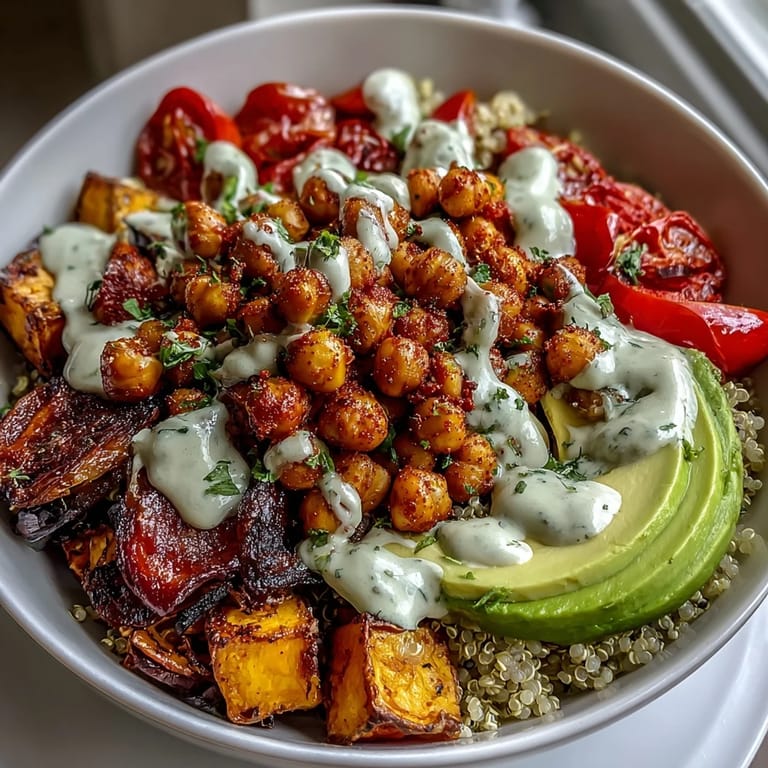
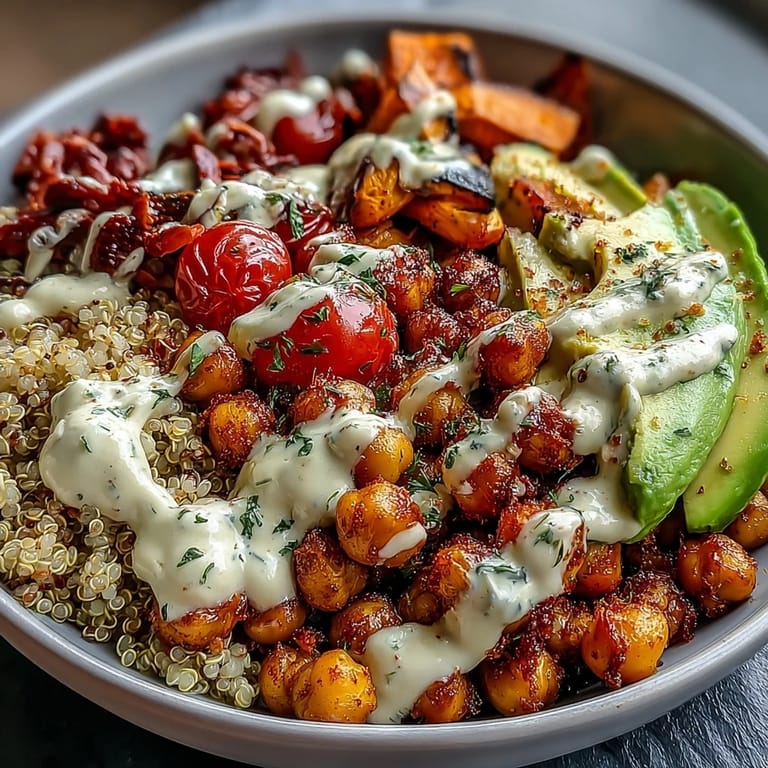
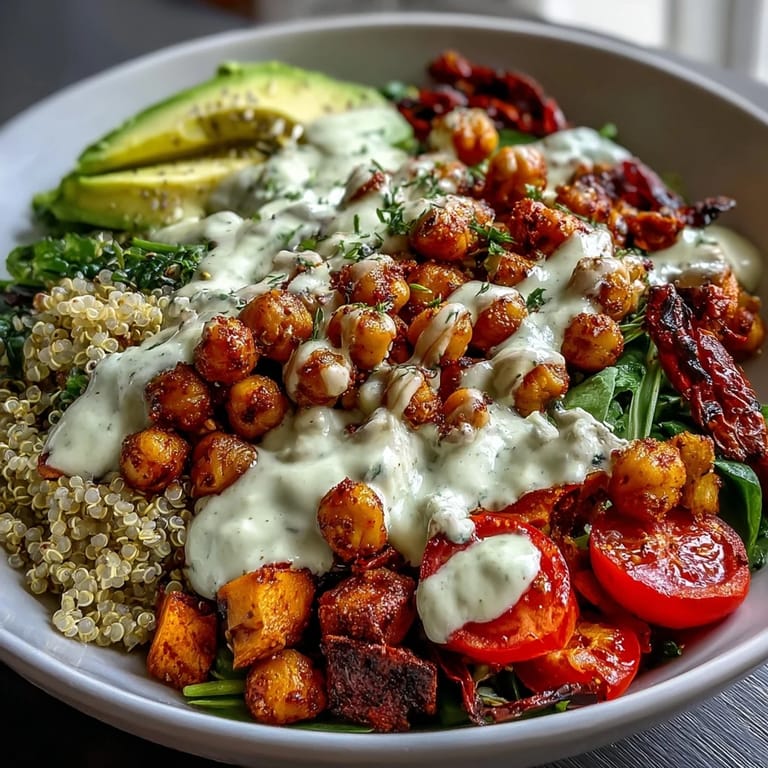
- Start with grains as your base, then create little piles of roasted vegetables and spiced chickpeas around the bowl, tuck in cherry tomatoes and avocado, scatter fresh herbs and seeds if you're using them, and drizzle tahini sauce generously over everything. The assembly is part of the fun, and it makes the bowl look intentional rather than just thrown together.
- Eat while everything is still warm:
- The contrast between warm grains and vegetables and cool, fresh toppings is the whole point, so don't let it sit around getting room temperature before eating.
 Save to Pins
 My partner once asked why I got so excited about a bowl that's technically just a bunch of separate components, and I realized it's because there's something deeply satisfying about building something beautiful and nourishing with your own hands. It became our weekend ritual, and soon we were experimenting with different vegetables depending on what looked good at the market.
Why This Bowl Works as a Meal
A really good bowl feels complete because it hits multiple needs at once: protein from the chickpeas and grains, healthy fats from tahini and avocado, carbs for energy, and enough fiber that you actually feel full for hours afterward. The tahini sauce ties it all together so nothing feels like a separate obligation but rather part of a cohesive, intentional meal. When you layer flavors like this—earthy grains, warm spices, bright acid from lemon, fresh herbs—something magical happens that you can't get from eating components alone.
Making This Work for Meal Prep
I started prepping components separately on Sunday nights and it changed everything: cook your grains and store in the fridge, roast your vegetables and chickpeas, make the tahini sauce and keep it in a jar. During the week, assembly takes maybe five minutes, which means you actually eat well instead of stress-ordering takeout because cooking feels impossible. The only thing you add fresh the morning you eat is the avocado and herbs, so nothing gets soggy and everything tastes like you made it that day.
Flavor Swaps and Variations
This bowl is a template more than a strict recipe, so play with it: swap grains for farro or cauliflower rice, roast different vegetables based on the season, add leafy greens underneath the warm components, throw in a soft-boiled egg if you eat eggs, drizzle with hot sauce if you want heat. The only rule is that the tahini sauce anchors everything, so keep that consistent while you experiment with what goes on top.
- Try harissa mixed into the tahini for a smoky, spicy kick that changes the whole vibe.
- Add pomegranate seeds or dried cranberries for bursts of tartness and color that make the bowl feel festive.
- Substitute cumin and paprika with za'atar or berbere spice blends if you want to travel to different flavor territories.
 Save to Pins
 This bowl became the thing I reach for when I want to feel good without trying hard, when I'm feeding people with different needs, or when I need to remember that sometimes the best meals are the ones you build yourself. Make it for someone you care about and watch them relax a little.
Frequently Asked Questions
- → How do I make the chickpeas flavorful?
Toss drained chickpeas with olive oil, smoked paprika, cumin, garlic powder, and salt before roasting for a crispy, seasoned finish.
- → Can I substitute the grains in this bowl?
Yes, quinoa or brown rice works well. For variation, try farro or cauliflower rice for a different texture.
- → What vegetables are best for roasting in this bowl?
Sweet potato, bell pepper, zucchini, and red onion are ideal for roasting together, offering a balance of sweetness and savory flavors.
- → How is the tahini sauce prepared?
Whisk tahini with lemon juice, minced garlic, salt, and water to create a smooth, creamy sauce that complements the bowl’s ingredients.
- → Can this bowl be customized with additional toppings?
Absolutely, add cherry tomatoes, avocado, fresh parsley or cilantro, and toasted seeds like pumpkin or sunflower for extra flavor and texture.
- → Is this dish suitable for special diets?
Yes, it’s vegan, dairy-free, nut-free, and naturally gluten-free when prepared with gluten-free grains like quinoa.