 Save to Pins
 I discovered this noodle board concept at a vibrant open-air market in Bangkok, where vendors displayed their ingredients like edible art on wooden planks. Years later, I recreated that memory in my own kitchen, realizing how much joy comes from building your own bowl—choosing exactly what speaks to you that day. That's when this recipe became my favorite way to feed both body and soul, turning a simple meal into an interactive celebration of flavors.
I'll never forget the first time I served this to my sister's book club—they spent an hour building bowls and talking, barely noticing how healthy they were eating. One guest said it felt like traveling to Southeast Asia without leaving my dining room, and honestly, that's the highest compliment this dish could receive.
Ingredients
- Rice noodles or soba noodles, 300 g: These are the foundation that carries every flavor. Soba has a delicate earthiness, while rice noodles stay silky and delicate—I learned the hard way that rinsing them in cold water after cooking is non-negotiable, otherwise they clump into sad noodle clusters
- Sesame oil, 1 tbsp: This isn't just oil; it's liquid gold that prevents sticking and adds that toasted aroma that signals you're doing something special
- Cooked chicken breast, thinly sliced, 200 g: Poach it gently in broth if you have time—it stays so much more tender than boiling. Thin slicing means it picks up sauce in every bite
- Cooked shrimp, 150 g: The sweet pop of the sea that elevates everything around it. Buy them already cooked if that's your style—no shame in shortcuts that let you focus on the beautiful arrangement
- Boiled eggs, 2, halved: Those creamy yolks become an instant sauce when you break into them. Hard boil for 11 minutes if you like fully set centers, 10 minutes if you love that tender, jammy middle
- Julienned carrots, 1 cup: The natural sweetness brightens the board and those matchstick cuts catch the light beautifully
- Thinly sliced cucumber, 1 cup: The cooling element that reminds you this meal refreshes as much as it satisfies
- Red bell pepper, julienned, 1: Raw and crisp, it provides both visual drama and a subtle sweetness
- Thinly sliced red cabbage, 1 cup: This gives you crunch and that deep jewel tone that photographs as gorgeously as it tastes
- Cooked and shelled edamame, 1 cup: Little pockets of protein and a signal to your guests that this is thoughtfully constructed
- Thinly sliced radishes, 4: Their peppery bite cuts through richness and those thin coins add a delicate texture
- Sliced scallions, 2: Fresh, sharp, and the last-minute green that ties everything together
- Fresh cilantro leaves, 1/4 cup: Don't chop it—let people choose how much herbaceous brightness they want in their bowl
- Fresh mint leaves, 1/4 cup: A secret weapon that transforms a good bowl into a memory
- Chopped roasted peanuts, 1/4 cup: Crunch and richness in one. Toast your own if you can—the kitchen will smell like a street market
- Toasted sesame seeds, 2 tbsp: A whisper of nutty flavor that appears when you least expect it and delights every time
- Lime wedges: The magic that pulls every flavor into focus at the very end
- Soy sauce, 1/3 cup: Use the good kind—you taste the difference in a dipping sauce
- Spicy peanut sauce, 1/3 cup: Either homemade (peanut butter, sriracha, lime, fish sauce) or store-bought, this is the sauce that converts skeptics
- Hoisin sauce, 1/3 cup: Sweet, deep, and reliable—the comfort in your sauce quartet
- Sweet chili sauce, 1/3 cup: Bright, hot, and unapologetic about its job to wake up your taste buds
Tired of Takeout? 🥡
Get 10 meals you can make faster than delivery arrives. Seriously.
One email. No spam. Unsubscribe anytime.
Instructions
- Cook the noodles into silky strands:
- Bring a pot of water to a rolling boil and add your noodles, stirring gently so they separate. You want them tender but still with a whisper of resistance when you bite. Drain them through a colander and rinse under cool running water—this stops the cooking and prevents that gluey mess. While they're still slightly warm, toss with sesame oil, coating every strand. This is where the magic begins; you're not making noodles, you're creating a vehicle for flavor.
- Prepare vegetables with love and attention:
- Wash everything, then cut with purpose. Julienne your carrots and peppers into matchsticks, slice cucumbers and radishes paper-thin using a mandoline if you have one, finely cut your cabbage into ribbons. This isn't busywork—each cut determines how your vegetables behave on the board and in the mouth. Stack them separately on your cutting board, and feel the satisfaction of having everything ready. Professional kitchens call this mise en place; I call it the moment you know you've got this.
- Arrange proteins with confident placement:
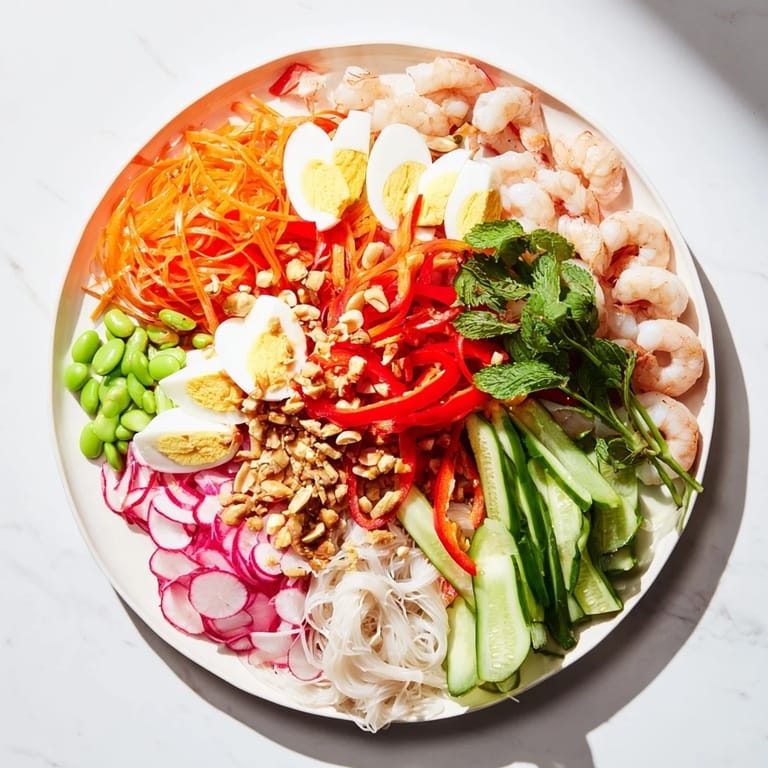
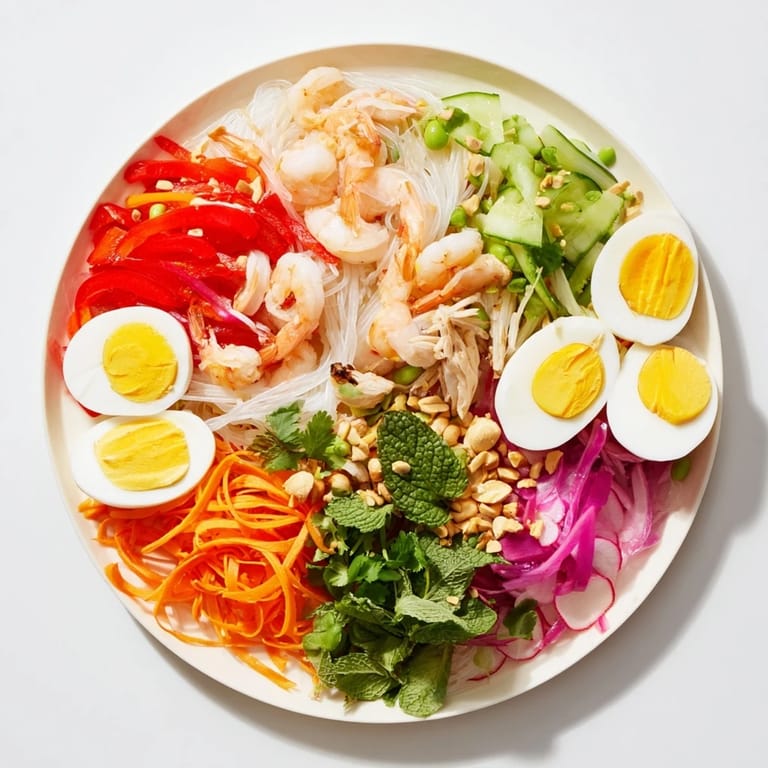
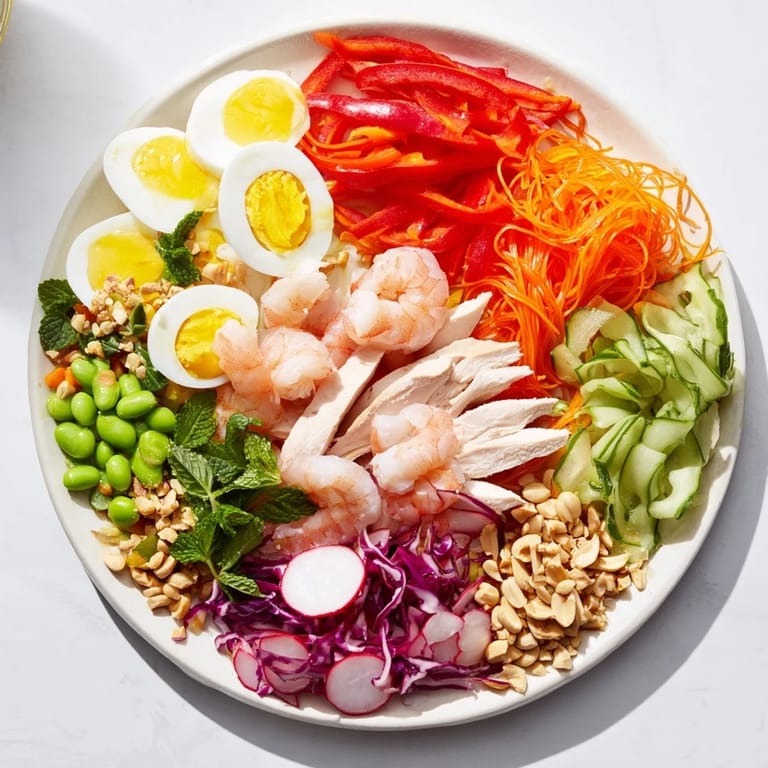
- On your large board or platter, create distinct sections for your chicken, shrimp, and halved eggs. Space them so they each have room to breathe. This isn't just practical—it's an invitation. Each protein says something different to your guests, and they should be able to see every option clearly.
- Build the sauce foundation:
- Place your divided bowl or four small bowls in the center of the board. This is your landscape's centerpiece. Fill each section with its sauce—soy sauce, peanut sauce, hoisin, and sweet chili. Watch how the colors complement each other. This is where your friends will dip, mix, and discover their perfect flavor combination.
- Fill the remaining space with an artist's eye:
- Fan your noodles in a section. Create rows or careful stacks with your vegetables—carrots here, cucumber there, radishes in a line. Place edamame in clusters. You're not just feeding people; you're showing them that you care enough to create something beautiful. The noodles and vegetables fill the gaps, but the arrangement makes it art.
- Add the finishing touches:
- Scatter cilantro and mint across the board like you're adding the final brushstrokes. Sprinkle peanuts and sesame seeds where they'll catch the light. Position lime wedges around the edges. Step back and look at what you've created. This is the moment you realize you've made something worth sharing.
 Save to Pins
 The moment I knew this recipe had become something special was when my dad—a man who orders the same sandwich every week—asked if I could make this board again for his bridge night. He told me his friends spent the whole evening rearranging their bowls, experimenting with sauce combinations, and actually talking about the flavors. That's when I understood that this wasn't just a recipe; it was permission to play with food again, like we all did as children.
The Art of Building Your Bowl
There's no wrong way to construct your bowl, and that's the whole point. Some people build a noodle base first, then add vegetables in neat layers. Others start with proteins and let everything else find its place around them. The beauty is watching someone's face as they discover their ideal ratio of sauce to noodles to vegetables. It's deeply personal, and every bowl tells the story of who's eating it.
Sauce Combinations Worth Exploring
This is where experimentation becomes your favorite part of cooking. The peanut and hoisin together create a sweet-savory depth. The soy and chili sauce pairing gives you umami with heat. But the real discovery happens when someone combines all four into their own signature blend. I've learned that people love having choices, and these four sauces represent every flavor note—salty, sweet, spicy, and umami—giving your guests complete control.
Making It Your Own
This board is endlessly adaptable, and your kitchen instincts matter more than following instructions perfectly. Add grilled summer squash in August, swap in roasted cauliflower in winter, use whatever fresh herbs are at your farmer's market. Add crispy wonton strips for texture, drizzle black sesame oil if you're feeling elegant, scatter kimchi across the top for fermented funk. The framework stays; the soul is entirely yours. Some final thoughts to remember:
- Keep proteins warm by arranging them last, or arrange them earlier and let everyone know they're meant to be eaten at room temperature—both work beautifully
- If anyone at your table has nut allergies, keep the peanuts and peanut sauce separate and clearly labeled so they can still celebrate this meal
- Make extra noodles. There's always someone who wants to go back for more, and cold noodles tossed in any leftover sauce become an instant next-day lunch
 Save to Pins
 Every time I make this board, I'm grateful for that day at the Bangkok market when I learned that food becomes memorable not because of complexity, but because of generosity and beauty. Make this recipe, gather people around it, and watch how a simple arrangement of noodles and vegetables becomes the center of connection.
Frequently Asked Questions
- → What noodles work best for this dish?
Rice noodles or soba noodles are perfect for their texture and ability to soak up flavors without becoming mushy.
- → How should the vegetables be prepared?
Julienne or thinly slice fresh vegetables like carrots, bell peppers, and cucumbers for a crisp, colorful presentation.
- → Can I substitute proteins for vegetarian options?
Yes, firm tofu works well as a plant-based alternative to chicken or shrimp, maintaining flavor and texture balance.
- → What is the best way to arrange the board?
Arrange ingredients in neat rows or fans on a large board, placing dipping sauces centrally for easy access and visual appeal.
- → Are there allergen considerations to keep in mind?
This dish contains soy, peanuts, eggs, and shellfish. Adjust or omit ingredients to accommodate allergies as needed.
- → How can the dipping sauces be varied?
Use a mix of soy, peanut, hoisin, and sweet chili sauces to provide a range of savory, spicy, and sweet flavor profiles.