 Save to Pins
 There's something about stuffed peppers that feels like you're actually cooking, you know? I was deep in my plant-based phase when a friend casually mentioned she'd never had a vegan version that didn't taste like cardboard, and I took that as a personal challenge. That afternoon, I stood at my kitchen counter staring at four beautiful bell peppers, wondering if soaked cashews could really pull off creamy without dairy. Spoiler: they absolutely can, and the result was so unexpectedly luxurious that I've made these peppers at least a dozen times since.
I'll never forget bringing these to a potluck where half the guests were vegan and half were definitely not. The non-vegans went back for seconds, which honestly tells you everything. My sister kept saying "wait, it's actually creamy" between bites, like she was investigating a magic trick. That's when I realized these weren't just a vegan meal, they were a meal that happened to be vegan, which is the whole point.
Ingredients
- Bell peppers (4 large): Pick whatever colors appeal to you because you'll want to look at these while they roast, and the slight sweetness develops beautifully as they soften in the heat.
- Fresh spinach (2 cups, chopped): Don't use frozen here unless you're in a real pinch, because fresh spinach wilts down to almost nothing and gives you a better texture in the filling.
- Canned artichoke hearts (1 cup, drained and chopped): These bring an earthy, briny quality that elevates the whole dish from basic to actually interesting.
- Onion and garlic (1 small onion, 2 cloves): The foundation of flavor, so don't skip the step of getting them properly softened and fragrant.
- Cooked quinoa (1 cup): Brown rice works too if that's what you have, but quinoa adds a nutty texture and complete protein that makes this feel more filling.
- Raw cashews (1/2 cup, soaked): The soaking is non-negotiable because hard cashews will never blend into cream no matter how hard you try; I learned that the messy way.
- Plant-based milk (1/2 cup): Any kind works, though oat milk gives the creamiest result in my experience.
- Nutritional yeast (2 tablespoons): This is what gives the filling that savory, almost cheesy depth without any actual dairy.
- Lemon juice (1 tablespoon), Dijon mustard (1 teaspoon): These bright, sharp notes keep the cashew cream from tasting one-dimensional.
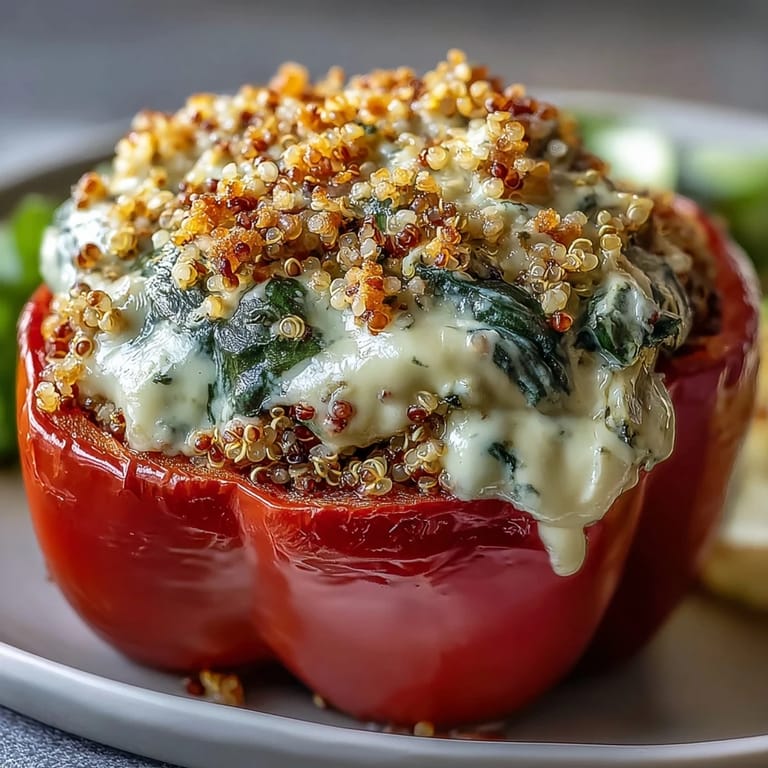
- Breadcrumb topping (1/4 cup with 1 tablespoon olive oil): This crisps up into golden little clusters that add textural contrast you didn't know you needed.
Tired of Takeout? 🥡
Get 10 meals you can make faster than delivery arrives. Seriously.
One email. No spam. Unsubscribe anytime.
Instructions
- Set the stage:
- Preheat your oven to 375°F and lightly brush a baking dish with olive oil, then stand your hollowed peppers upright in it like little edible vessels waiting to be filled. This matters more than you'd think because it keeps them stable and lets them roast evenly.
- Build the savory base:
- Warm a skillet over medium heat and sauté your chopped onion in a splash of olive oil until it turns translucent and starts to smell sweet, about three minutes. Add the minced garlic, fresh spinach, and drained artichoke hearts, letting everything cook together until the spinach wilts completely, just two more minutes.
- Blend the magic:
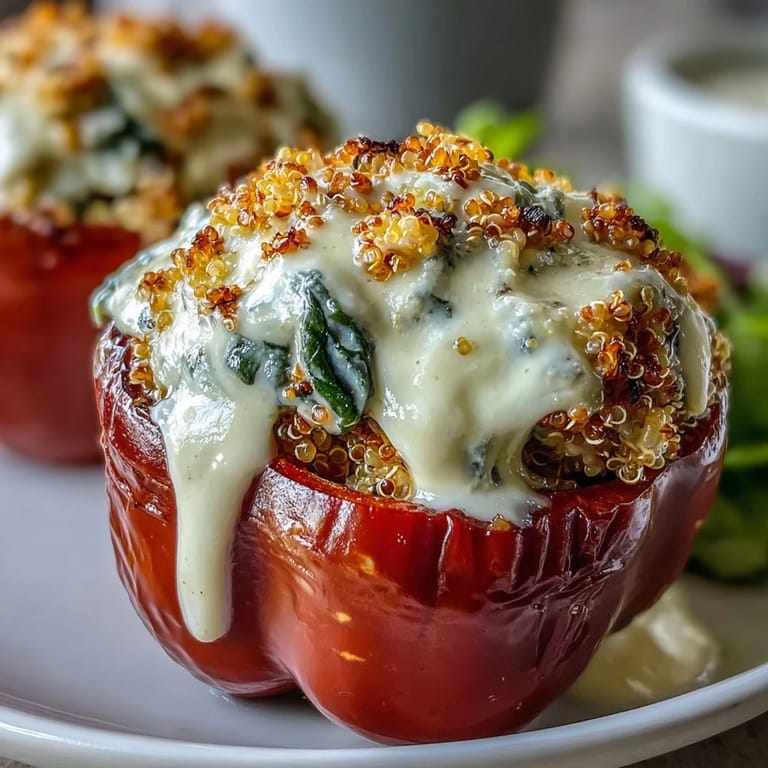
- While your vegetables are cooling, combine your soaked cashews, plant-based milk, nutritional yeast, lemon juice, Dijon mustard, salt, and pepper in a blender and blend until it's completely smooth and creamy. Taste it here and adjust if needed, because this cashew cream is the star and it should make you happy.
- Combine everything:
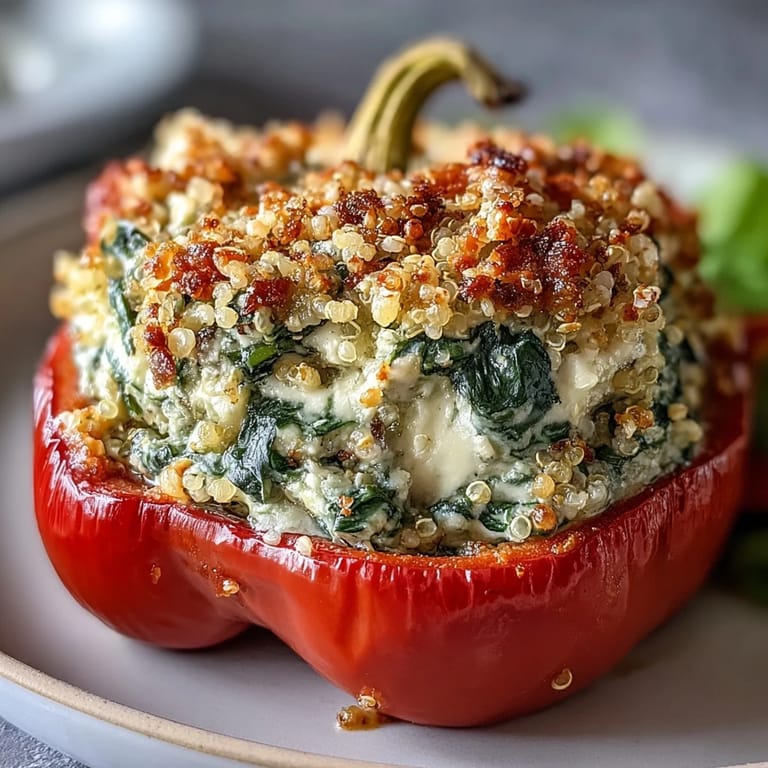
- In a large bowl, mix together your sautéed vegetables, cooked quinoa, and that luxurious cashew cream until it's evenly combined and feels like a cohesive filling. It should be moist but not soupy.
- Fill with intention:
- Spoon the filling evenly into each pepper, pressing down gently so it settles but doesn't compress too much. You want them generously stuffed.
- Add the topping:
- Toss your breadcrumbs with olive oil in a small bowl until they're lightly coated, then sprinkle this mixture over the top of each pepper. This is what creates that satisfying golden crust.
- Bake and reveal:
- Cover your baking dish with foil and bake for 25 minutes, which steams the peppers and lets them soften. Remove the foil and bake another 10 minutes until those breadcrumb tops turn golden and the peppers are tender when you poke them with a fork.
- Rest before serving:
- Let the peppers cool for five minutes out of the oven so the filling sets slightly and you don't burn your mouth.
 Save to Pins
 There was this moment during a dinner party when my friend who eats everything finally understood why I'd switched to plant-based cooking, and it wasn't because of ethics or health, though those matter too. It was because food like this proved that eating differently didn't mean eating less joyfully, and that changed how she thought about her own kitchen forever.
Flavor Variations That Actually Work
I've experimented with adding things to the filling, and the successful additions are the ones that echo the Mediterranean vibe already happening here. Sun-dried tomatoes add a concentrated sweetness and slight tang, while roasted red peppers contribute a smoky depth that plays beautifully against the spinach and artichoke. I've also tried adding finely chopped kalamata olives for a briny punch, or a pinch of smoked paprika to the cashew cream for something unexpected.
What to Serve Alongside These
These peppers are substantial enough to be the main event, but they shine brightest when accompanied by something fresh and crisp on the side. A simple green salad with a bright vinaigrette cuts through the richness, or steamed vegetables like broccoli and carrots give you a lighter counterpoint on the plate. If you want to be fancy, serve them with a grain like farro or couscous on the side to soak up any filling that spills out, because it's too good to waste.
Storage and Reheating Secrets
These peppers actually taste even better the next day after the flavors have gotten to know each other, which is a rare gift in cooking. You can store them covered in the refrigerator for up to four days, and they reheat beautifully covered with foil in a 350°F oven for about 15 minutes until warmed through.
- If you're meal prepping, stuff the peppers the night before and just pop them straight into the oven when you're ready to bake.
- Leftover cashew cream keeps in an airtight container for three days and works beautifully drizzled over salads or roasted vegetables.
- You can also freeze unbaked stuffed peppers for up to a month, though add a few extra minutes to the baking time when cooking from frozen.
 Save to Pins
 These stuffed peppers have become one of those recipes I make when I want to cook something that feels like real food, the kind that nourishes people in every way. They're proof that vegan cooking isn't about restriction; it's about possibility.
Frequently Asked Questions
- → Can I make these stuffed peppers ahead of time?
Yes, you can assemble the stuffed peppers up to 24 hours in advance and store them covered in the refrigerator. Bake when ready to serve, adding a few extra minutes if baking cold. They also reheat well in the oven or microwave.
- → What can I substitute for cashews?
For a nut-free version, replace the cashew cream with white beans blended with lemon juice, nutritional yeast, and a touch of olive oil. Coconut cream or store-bought vegan cheese also work, though the texture will vary slightly.
- → How do I know when the peppers are done?
The peppers are ready when they're tender when pierced with a fork and the breadcrumb topping is golden brown. This typically takes 35 minutes total—25 minutes covered, then 10 minutes uncovered for crisping.
- → Can I freeze these stuffed peppers?
Yes, freeze assembled unbaked peppers individually wrapped, or freeze baked peppers after cooling completely. Thaw overnight in the refrigerator before reheating at 350°F until warmed through, about 20 minutes.
- → What other grains can I use?
Brown rice, farro, wheat berries, or even chickpeas work beautifully. Cook the grain beforehand and adjust the liquid slightly if using grains that absorb more moisture than quinoa.
- → How can I add more protein?
Mix in white beans, lentils, or chopped walnuts with the filling. You can also add vegan sausage crumbles or increase the nutritional yeast to 3 tablespoons for extra B vitamins and protein.