 Save to Pins
 I'll never forget the autumn morning I wandered through the misty trails near Mount Rainier, basket in hand, discovering chanterelles hiding beneath moss-covered logs. That walk inspired this dish—a celebration of the Pacific Northwest forest floor brought right to the plate. It's become my favorite way to honor those earthy, magical ingredients and share that sense of woodland discovery with everyone who tastes it.
I made this for a dinner party last spring when my best friend from Portland came to visit, and watching everyone lean in to smell the herb moss while passing the platter around—that's when I knew this recipe had become something special. The whole table went quiet for a moment, just appreciating the beauty before diving in.
Ingredients
- Mixed wild mushrooms (chanterelle, shiitake, oyster), 200 g: These are the soul of the dish—each variety brings its own earthy personality. Chanterelles have that delicate apricot note, shiitakes add umami depth, and oysters bring tenderness. Hunt for them at farmers markets if possible; the flavor difference is worth it.
- Olive oil, 1 tbsp plus 1 tbsp more: Good quality oil makes a real difference here. You want something that tastes like it came from somewhere, not just a neutral cooking oil.
- Unsalted butter, 1 tbsp: The secret to golden, tender mushrooms. Butter and oil together create magic that neither can achieve alone.
- Garlic clove, minced, 1: Just enough to whisper its presence without shouting. Mince it fine so it melts into the mushroom juices.
- Salt and freshly ground black pepper: Taste as you go—mushrooms are forgiving teachers about seasoning.
- Toasted hazelnuts, 50 g, coarsely chopped: These bring that warm, buttery crunch. The toasting is non-negotiable; it transforms them from mild to memorable.
- Toasted walnuts, 30 g, coarsely chopped: A bit earthier and slightly bitter, they ground the sweetness of the berries beautifully.
- Fresh blackberries, 80 g: These little dark jewels add a subtle tartness that cuts through the richness of the nuts and oil in the most elegant way.
- Fresh blueberries, 60 g: Sweeter than blackberries, they balance the composition like nature intended.
- Fresh flat-leaf parsley, 20 g: The backbone of your herb moss—bright, clean, and forgiving if you're heavy-handed.
- Fresh dill, 10 g: Just a touch, enough to make people wonder what that whisper of flavor is. Too much and it overpowers the delicate moment.
- Fresh chervil or tarragon, 10 g: Chervil is sweeter and more delicate; tarragon brings a slight anise note. Choose based on what you can find or what you're in the mood for.
- Fresh chives, 1 tbsp, finely snipped: The gentle onion note that brings everything into focus without demanding attention.
- Lemon zest, from 1 small lemon: This brightens everything—measure it generously into your palm before adding to the herb moss.
- Flaky sea salt, a pinch: The texture matters here; it adds little bursts of salt as you eat, like tiny flavor exclamation points.
- Edible flowers and microgreens (optional): These are your finishing flourish—the moment you step back and admire what you've created.
Tired of Takeout? 🥡
Get 10 meals you can make faster than delivery arrives. Seriously.
One email. No spam. Unsubscribe anytime.
Instructions
- Prepare your workspace and mushrooms:
- Get your large skillet ready and gently clean your mushrooms—just a quick brush or damp cloth, nothing aggressive. Slice them so they're roughly the same thickness; they'll cook evenly that way and brown more beautifully. This is meditative work, so take your time.
- Sauté the mushrooms to golden perfection:
- Heat your oil and butter together over medium heat until the butter foams and smells nutty—that's your signal that magic is about to happen. Add your minced garlic and let it sizzle for just 30 seconds, then add the mushrooms. Don't stir them constantly; let them sit and brown slightly, maybe 3 minutes, before stirring. You're listening for a gentle sizzle, smelling for that deep toasted aroma. Season with salt and pepper as they cook. They'll release their moisture, then reabsorb it as they brown. This takes 6-8 minutes total. When they look golden and smell incredible, set them aside to cool slightly.
- Create your herb moss:
- On your cutting board, finely chop all your herbs together—parsley, dill, chervil or tarragon, and chives. The finer you chop them, the more they'll cling together and create that lush moss texture. Toss them gently with the olive oil, lemon zest, and flaky sea salt. Use your fingers to rub it together lightly until it starts clumping slightly and smells like a forest after rain. Taste it; that bright lemon and fresh herb combination should make you smile.
- Toast the nuts if needed:
- Spread your hazelnuts and walnuts on a baking tray and toast at 180°C (350°F) for 8-10 minutes if they're not already toasted. You'll know they're ready when the kitchen fills with that warm, toasty aroma and they're golden brown. Let them cool on the tray for a minute, then coarsely chop them—you want some texture variation, not powder.
- Compose your woodland plate:
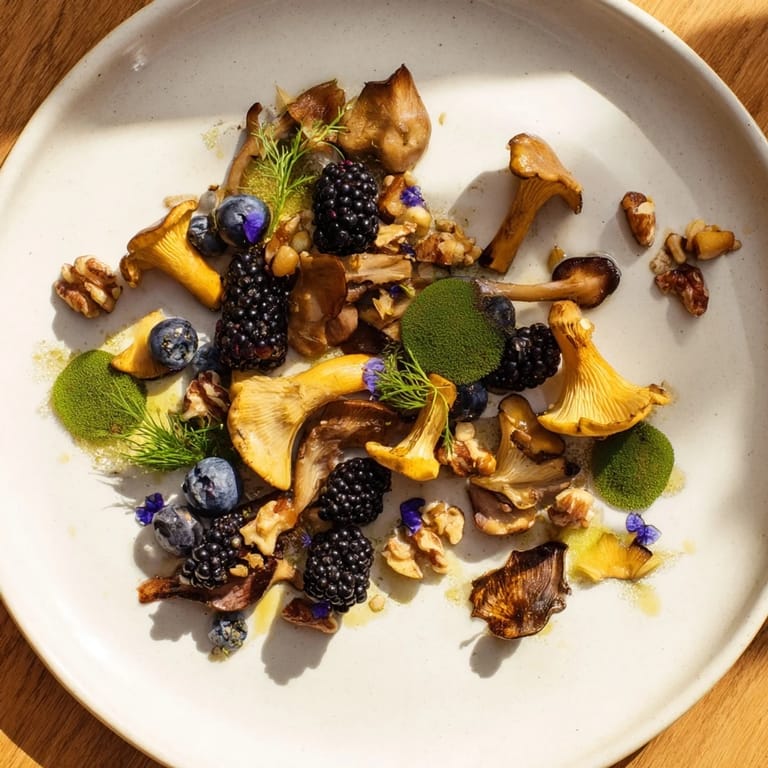
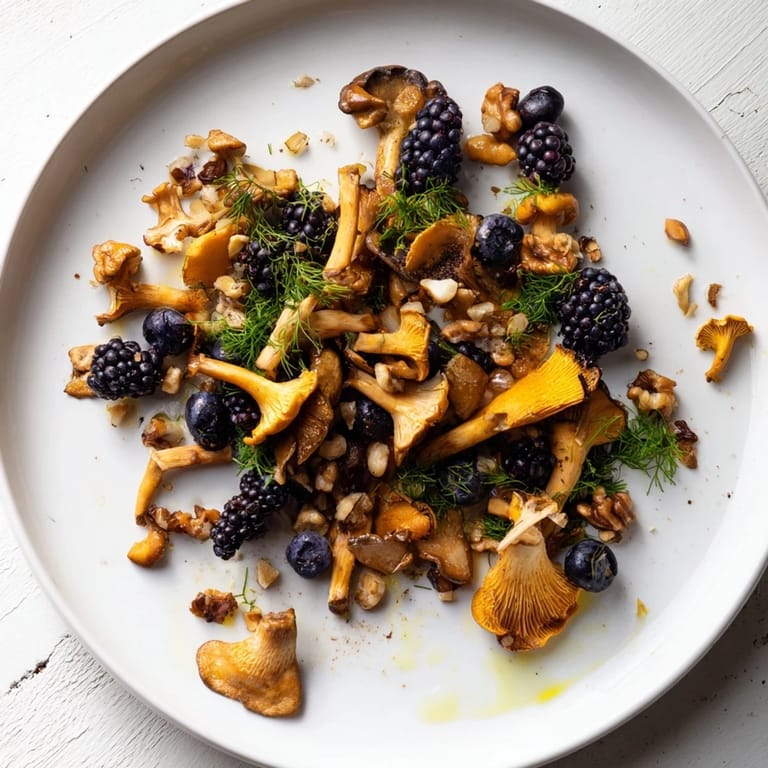
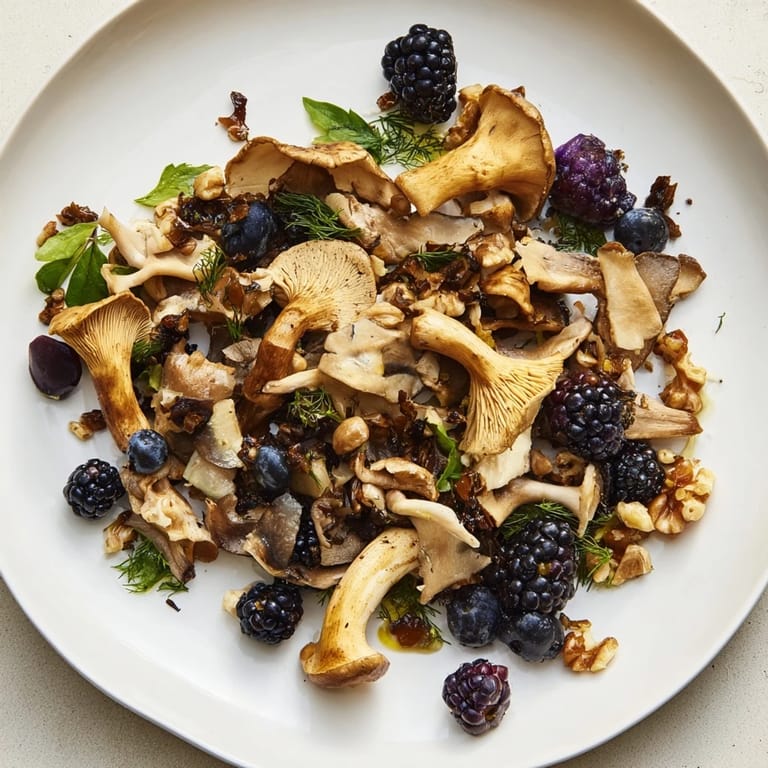
- This is where you become an artist. On a large platter or individual plates, scatter your cooled mushrooms in dense, organic clusters—not a neat line, but how they'd naturally fall. Create little nests of hazelnuts and walnuts in another area, then tuck the blackberries and blueberries between them like you're placing each one with intention. Now take your herb moss and generously spoon it around and between all the clusters, filling the spaces like you're recreating the forest floor. Don't be shy; let it be lush.
- Final flourish:
- If you're using edible flowers or microgreens, scatter them now—they're the last detail that makes people pause and reach for their camera. Serve at room temperature, when all the flavors are awake and singing together.
 Save to Pins
 There's a moment, right after you finish arranging everything and step back to look at the platter, where you realize you've created something that honors both the forest and the people sitting around your table. That's the moment this dish becomes more than food—it becomes a conversation about beauty, seasons, and gratitude all at once.
Why This Dish Speaks to the Pacific Northwest
Growing up in the shadow of the Cascades, I learned early that the forest isn't just scenery—it's a pantry. This recipe channels that abundance, the quiet richness of a woodland walk translated into something you can actually eat. Every element on the plate has a story: the mushrooms that hide and reward patience, the nuts that survived winter, the berries that birds were also looking for. When you serve this, you're sharing that story, inviting people to taste what the Pacific Northwest feels like.
Pairing and Serving Suggestions
This dish is flexible enough to fit into your meal however you want it. Serve it as an elegant appetizer before something lighter, or as the main event with good bread alongside. A crisp dry cider makes an exceptional pairing—the slight sweetness and tartness echo the berries while the carbonation cuts through the richness beautifully. A light Pinot Noir works too, if you're in a wine mood. The beauty of this dish is that it doesn't demand anything from what comes next or before. It stands alone.
Variations and Personalization
Once you make this once, you'll understand the logic well enough to play with it. The framework is what matters—earthy cooked elements, bright fresh elements, textural contrast, and that lush herb garnish. Beyond that, your farmers market, your garden, and your mood are the real recipes.
- Try roasted root vegetables like thin-sliced parsnips or golden beets tossed in the same oil and garlic, arranging them like natural architecture among the other components
- Pickled shallots add a sharp, vinegary note that's unexpected and wonderful—they cut through richness like a well-placed comment in conversation
- Pecans or pine nuts work beautifully if hazelnuts aren't available, each bringing their own character to the plate
 Save to Pins
 This is the recipe I make when I want to slow down and remember why cooking matters. Every time, it reminds me that the most beautiful dishes often start not in a kitchen, but in a forest.
Frequently Asked Questions
- → Which mushrooms work best for this dish?
Mushrooms like chanterelle, shiitake, and oyster offer the ideal earthy flavors and textures that complement the dish’s forest theme.
- → Can I substitute the nuts?
Yes, pecans or pine nuts are great alternatives, bringing similar toasted and nutty qualities.
- → How is the herb moss prepared?
Finely chop fresh herbs like parsley, dill, chervil or tarragon, and chives, then toss with olive oil, lemon zest, and a pinch of flaky sea salt until slightly clumpy.
- → What is the best way to toast the nuts?
Spread nuts on a baking tray and toast in a preheated oven at 180°C (350°F) for 8–10 minutes until golden and fragrant, then cool and chop.
- → Are there suggested pairings for this dish?
This preparation pairs wonderfully with a light Pinot Noir or a crisp dry cider to complement the earthy and fresh flavors.