 Save to Pins
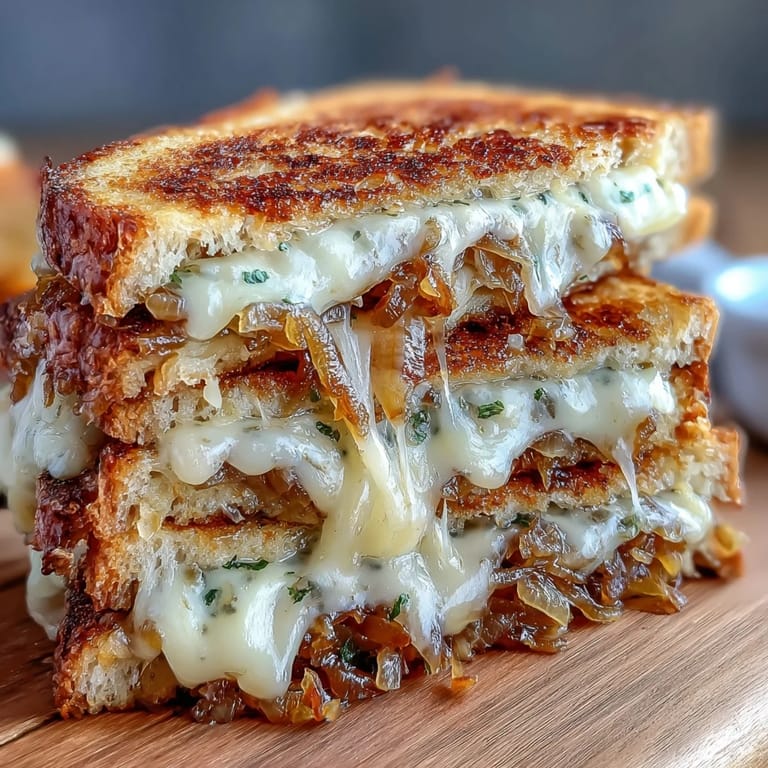
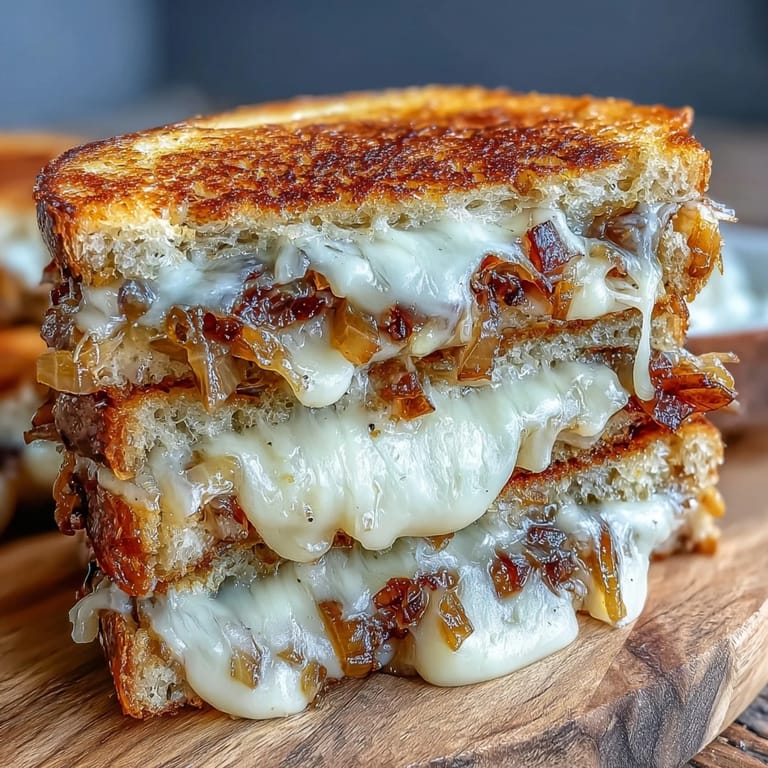
 There's a particular magic that happens when you're standing over a skillet at dusk, watching onions transform from sharp and raw into something sweet and glossy, and you suddenly realize you're making French onion soup but on bread. That's the moment this sandwich was born for me, actually—not in a cookbook or someone else's kitchen, but in my own, on a Tuesday when I had sourdough, Gruyère, and time. The combination felt like cheating in the best way, taking everything I loved about that classic bistro soup and turning it into something you could hold in your hands and bite into without a spoon.
I made these for my sister after she'd had a rough day, and watching her face when she bit into one was worth every minute of caramelizing. She got that quiet, satisfied look people get when food hits exactly right, and she didn't say much—just ate it slowly and asked if I'd make them again next week. That's when I knew this wasn't just a good sandwich; it was the kind that sticks with people.
Ingredients
- Unsalted butter: You need 2 tablespoons for the onions and another 2 tablespoons softened for buttering the outside of the sandwiches, so don't skimp—butter is what makes the bread golden and crispy, not greasy.
- Large yellow onions: Two onions sliced thin will shrink down dramatically as they cook, which is exactly what you want for maximum caramelization and that glossy, almost jam-like texture.
- Sugar and salt: Just one teaspoon of sugar helps coax the onions' natural sweetness out, while salt draws out their moisture so they can actually caramelize instead of just steaming.
- Fresh thyme leaves: Optional, but if you have it, the herbal note connects this directly to classic French onion soup and adds a layer that makes people wonder what your secret ingredient is.
- Dry white wine or sherry: This optional splash deglazes the pan and adds a subtle complexity that lifts the whole thing—use what you'd drink.
- Sourdough bread: The tang is essential here; it cuts through the richness and provides structure that regular white bread simply won't give you.
- Dijon mustard: A thin spread on the inside of each slice adds sharpness that keeps this from feeling heavy or one-note.
- Gruyère and Swiss cheese: Use 1 cup Gruyère and 1/2 cup Swiss—Gruyère brings nutty depth while Swiss adds mild creaminess, and together they melt into something better than either alone.
- Freshly ground black pepper: Grind it just before assembling so it's vibrant and hasn't lost its bite to sitting in a container for months.
Tired of Takeout? 🥡
Get 10 meals you can make faster than delivery arrives. Seriously.
One email. No spam. Unsubscribe anytime.
Instructions
- Start the onions early:
- Melt butter in a large skillet over medium heat, then add your sliced onions with the sugar and salt. You're going to cook these for 20 to 25 minutes, stirring fairly often—this isn't something you can abandon, because the magic is in the gradual browning, the moment when they shift from pale to golden to a deep amber.
- Finish the caramelized onions:
- Once they're deeply colored and almost shiny, stir in thyme if you're using it, then add wine or sherry and scrape up all those flavorful browned bits stuck to the pan. Let everything cook down until the liquid disappears, which takes just a few minutes, then set the onions aside.
- Build your sandwiches:
- Spread a thin layer of Dijon mustard on one side of each bread slice. On two of the slices, layer half your mixed cheeses, then pile on the caramelized onions evenly, season with black pepper, and top with the remaining cheese—this sandwich needs cheese on both layers to hold everything together.
- Close and butter:
- Place the remaining bread slices on top, mustard side facing the fillings, then spread softened butter generously on the outside of each sandwich. Don't be shy; this is what makes the crust golden and crispy.
- Grill until golden:
- Heat a skillet or griddle over medium-low heat—medium-low is key because you want the bread to brown gently while the cheese inside has time to actually melt. Once the pan is hot, place your sandwiches down and cook about 3 to 4 minutes per side, pressing gently with a spatula as you go to encourage the cheese to melt and the bread to make contact with the hot surface.
- Rest and serve:
- Pull them off the heat and let them sit for just a minute—this gives the cheese a moment to set so it doesn't squirt out when you cut into it, and it also makes the sandwich easier to handle.
 Save to Pins
 There's something quietly powerful about a sandwich that makes you slow down. My neighbor came over one afternoon and we made these together, and neither of us said much—just cooked, tasted, smiled. Food doesn't always need commentary; sometimes it just needs to be good enough that people forget to talk.
Why This Combination Works
French onion soup exists because someone figured out that onions, time, and patient cooking create something greater than the sum of their parts. Gruyère was chosen for that soup for a reason too—its nutty, almost sweet profile complements caramelized onions in a way that feels inevitable once you taste it. By moving these elements onto bread, you're not reinventing anything; you're just translating a beloved flavor combination into a format you can eat with one hand and finish in five bites.
How to Customize Without Losing the Soul
The core of this sandwich is strong enough that you can play around without breaking it. If Gruyère isn't available or isn't your thing, Emmental is a thoughtful substitute—milder and creamier. A pinch of garlic powder stirred into the onions as they finish cooking adds whisper of something deeper without announcing itself. Some people swear by a spread of whole grain mustard instead of Dijon, and that absolutely works if that's what's in your fridge.
Pairing and Serving Ideas
A crisp salad on the side balances the richness beautifully, or if you want to lean fully into the French onion soup inspiration, serve these with a bowl of simple tomato soup for dipping. A dry white wine like Sauvignon Blanc is the natural choice, but this sandwich is also perfect with just cold water or sparkling cider.
- If you're making this for guests, prepare the caramelized onions ahead of time—they'll keep in the refrigerator for several days and actually taste better the next day as flavors meld.
- For a crowd, you can assemble all the sandwiches ahead and refrigerate them unbaked, then grill them whenever you're ready to eat.
- Slice diagonally if you're feeling fancy, or cut straight down the middle if you're just hungry—the sandwich doesn't care, and neither should you.
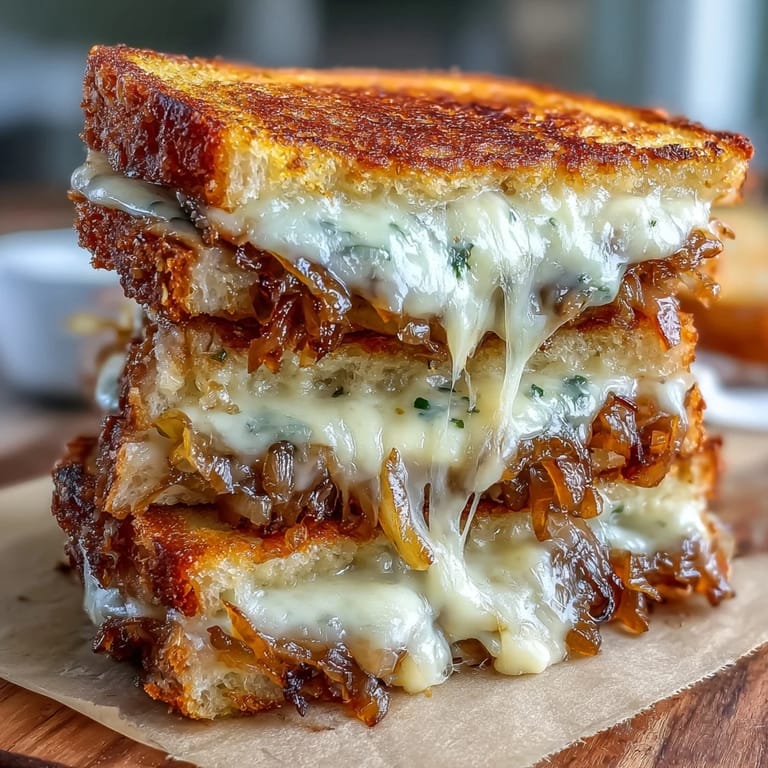 Save to Pins
 This sandwich exists in that sweet spot where comfort meets sophistication, where you feel a little bit fancy making it but genuinely just want to eat it. That's the whole point, really.
Frequently Asked Questions
- → How do I caramelize onions properly?
Cook sliced onions slowly in butter over medium heat, stirring frequently until they turn golden brown and develop a rich sweetness, usually about 20-25 minutes.
- → Can I use other cheeses besides Gruyère?
Yes, alternatives like Emmental or sharp white cheddar work well and offer slightly different flavor profiles that complement the onions.
- → What type of bread works best?
Rustic sourdough bread is ideal due to its sturdy texture and tangy flavor, which hold up well during grilling.
- → Is there a way to add more depth to the onions?
Adding a splash of dry white wine or sherry during caramelization enhances the sweetness and complexity of the onions.
- → How do I achieve a crispy crust on the sandwich?
Spread softened butter on the outside of the bread before grilling it over medium-low heat, pressing lightly to melt the cheese inside and crisp the exterior evenly.