 Save to Pins
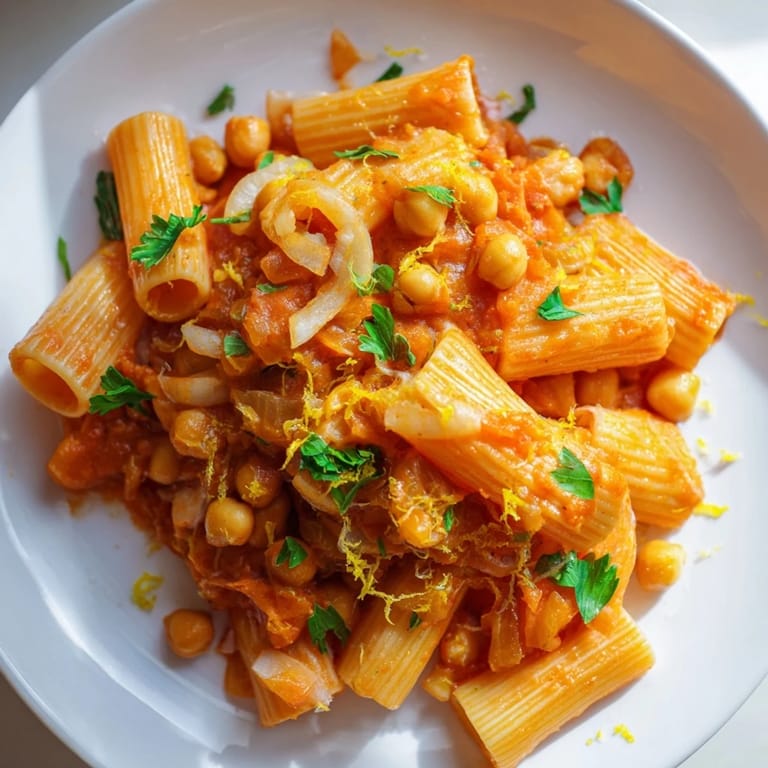
 There's something about harissa that stops me mid-chop. I discovered this pasta years ago when a friend brought a jar of the stuff back from Morocco and challenged me to use it before dinner. I had chickpeas in the pantry, tomatoes in the fridge, and exactly twenty minutes to prove it wasn't just a jar of heat. What came out was alive, spicy, but balanced—the kind of dish that tastes like someone who knows what they're doing, even if you're just improvising.
I made this for my sister's unexpected Friday night visit, when she texted asking if I had anything good to eat. I didn't plan ahead, which meant I was making it from memory and instinct. She watched me stir harissa into the onions and raised an eyebrow—until that first smell hit, and she stopped doubting. We ate directly from the skillet while it was still steaming, passing it back and forth between two forks, and she asked for the recipe before she even finished her bite.
Ingredients
- Pasta (350 g): Use whatever short shape you love—penne catches the sauce in all those little tubes, but rigatoni and fusilli work beautifully too. The shape matters because harissa sauce clings better than cream ever could.
- Olive oil (2 tbsp): Good olive oil deserves to be tasted here, not hidden. It's the foundation for everything that follows.
- Onion (1 medium, finely chopped): The base that softens into sweetness. Don't rush this step—those 4-5 minutes of gentle cooking matter more than you'd think.
- Garlic (3 cloves, minced): Raw garlic is harsh; cooked garlic becomes almost honey-like. Mince it fine so it distributes evenly and cooks quickly.
- Harissa paste (2 tbsp): This is your bold statement ingredient. Start here and add more if you like heat—you can always turn up the fire, but you can't take it back.
- Ground cumin (1 tsp): It deepens the warmth without adding more heat. Trust this spice to make everything taste more intentional.
- Smoked paprika (1/2 tsp): A whisper of smokiness that makes people wonder what you did differently.
- Diced tomatoes (1 can, 400 g): Canned tomatoes are your friend here—they're picked at peak ripeness and cooked down already, so they just soften the harissa's sharpness.
- Chickpeas (2 cans, 400 g total): Drained and rinsed. This removes the extra salt and starchy liquid that would muddy your sauce.
- Vegetable broth or water (1/2 cup): The glue that pulls everything together and prevents the sauce from getting too thick.
- Salt and black pepper: Season by taste, not by habit. You're balancing spice and salt, so go slow.
- Lemon zest and juice (1 whole lemon): The brightness that wakes everything up at the end. Never skip this—acidity is what makes this dish sing.
- Fresh parsley or cilantro (2 tbsp): Cilantro if you're feeling bold; parsley if you want to let the harissa take center stage.
- Feta cheese (optional, crumbled): If you include it, it adds coolness and a salty tang that balances the heat beautifully.
Tired of Takeout? 🥡
Get 10 meals you can make faster than delivery arrives. Seriously.
One email. No spam. Unsubscribe anytime.
Instructions
- Get the pasta going:
- Bring your largest pot of salted water to a rolling boil—the water should taste like the sea. Add pasta and stir immediately so nothing sticks. Set a timer and follow the package, but taste it two minutes early; you want it tender but with just a little resistance when you bite. Reserve that pasta water before you drain—it's liquid gold and you'll need it to loosen the sauce later.
- Build the sauce base:
- While pasta cooks, heat olive oil in a skillet over medium flame. Add your chopped onion and listen for it to start sizzling gently. After about 4 minutes, it should be soft and beginning to turn translucent at the edges—this is when the sweetness releases.
- Wake up the spices:
- Stir in garlic and let it cook for about 30 seconds until the raw edge disappears. Then add harissa paste, cumin, and smoked paprika all at once. The smell that rises from the pan is what you're chasing—intense, complex, making your eyes water a little. Cook for exactly 1 minute, stirring constantly so nothing burns.
- Add the body:
- Pour in your drained chickpeas and diced tomatoes with their juices. Add the vegetable broth and stir everything to combine. Season with salt and pepper, then lower the heat and let it bubble gently for 10-12 minutes. The sauce will thicken and deepen in color as it cooks—taste it halfway through and add more harissa if you want more heat.
- Bring it together:
- When the pasta is done, add it directly to the skillet with the sauce. Toss it gently so every piece gets coated. If the sauce feels too thick, splash in some of that reserved pasta water until it flows like you want it to—think creamy, not soupy.
- Finish with brightness:
- Remove from heat and stir in lemon zest, lemon juice, and your fresh herbs. The lemon should make you smile—it balances the spice and makes the whole thing feel fresh and alive instead of heavy.
 Save to Pins
 The thing I love most is when someone who usually skips vegetables because they think they're boring takes a bite and stops talking mid-sentence. Chickpeas aren't flashy, but they disappear into the sauce and make it substantial in a way that feels almost generous. This pasta has converted skeptics and satisfied people who have no reason to care about what I'm cooking.
Why Harissa Works Magic
Harissa is North African chili paste, usually made from roasted red peppers, chilies, garlic, and spices. It's complex instead of one-note—you get heat, but also depth, a little earthiness, and sometimes even smokiness depending on the brand. In pasta, it does something special: it coats every surface and mellows just enough as it simmers so it becomes flavor instead of just spice. The key is not being afraid of it. Start with two tablespoons and let it prove itself before you add more.
Making It Your Own
This recipe is a starting point, not a rule. I've made it with white beans when I ran out of chickpeas, and honestly couldn't tell the difference. I've added roasted red peppers, a handful of spinach, even caramelized fennel. One winter I threw in some diced butternut squash and cooked it an extra ten minutes—it softened into the sauce and added this subtle sweetness that surprised everyone.
Serving and Pairings
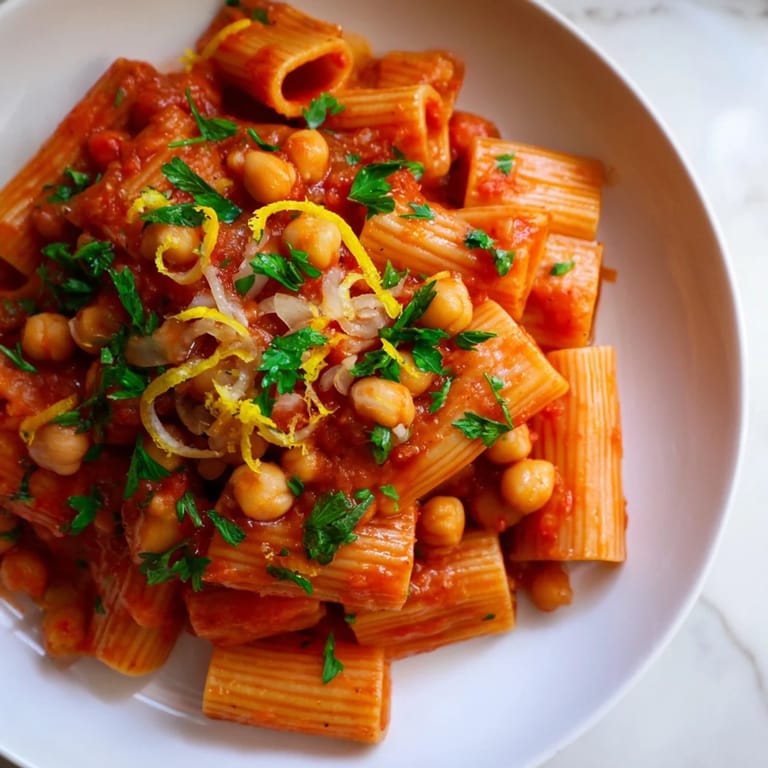
Serve this hot, straight from the pan or plated individually with fresh herbs scattered on top. If you're adding feta, crumble it just before serving so it stays cool against the warmth of the pasta. This pairs beautifully with a crisp white wine, a dry rosé, or even a cold beer. Some people reach for bread to wipe the bottom of the bowl, which is always a sign you've done something right.
- Add a squeeze of lemon juice to your serving bowl for extra brightness.
- Leftover harissa keeps for weeks in the fridge—use it on roasted vegetables, stir it into yogurt, or make this pasta again whenever you need to feel like you cooked something impressive.
- This reheats beautifully; just add a splash of water or broth to loosen the sauce before warming on the stovetop.
 Save to Pins
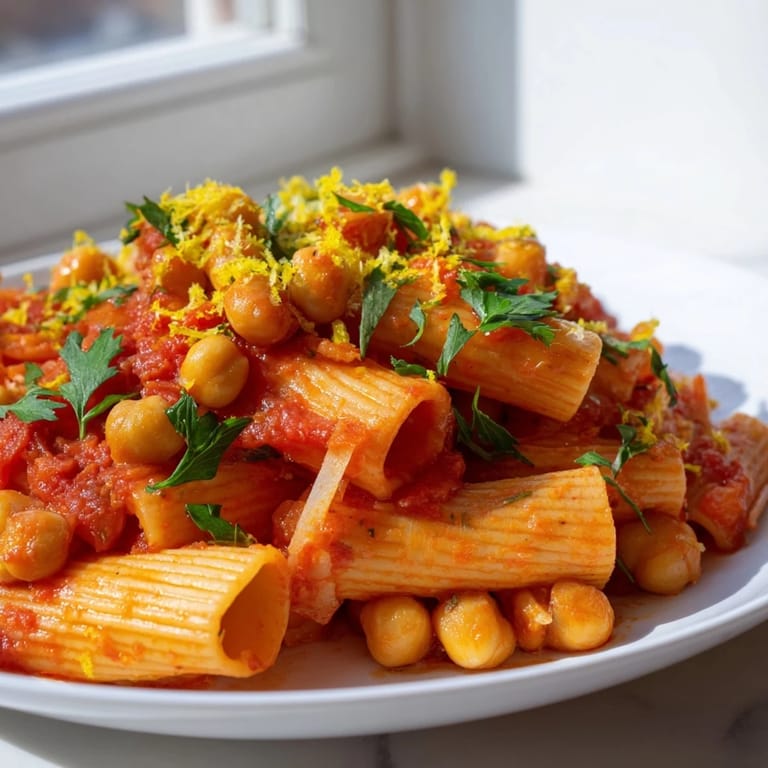
 This is the kind of dish that tastes like you planned it for hours when it actually took less than an hour from thought to table. It's become my answer to the question of what to make when someone's coming over and I want to impress them without fussing.
Frequently Asked Questions
- → How do I adjust the spiciness?
Add more harissa paste to increase heat or include a pinch of chili flakes for extra spice.
- → Can I substitute the chickpeas?
Yes, white beans or roasted vegetables can be used as alternatives for variation.
- → What pasta types work best?
Short shapes like penne, rigatoni, or fusilli are ideal for holding the sauce well.
- → How to make the sauce creamier?
Reserve some pasta cooking water and stir it in gradually to loosen and enrich the sauce texture.
- → What pairs well with this dish?
A crisp white wine or a chilled rosé complements the bold flavors perfectly.