 Save to Pins
 I discovered this bowl during a lazy Tuesday evening, scrolling through my phone while dinner ideas felt impossible. The salmon I'd roasted the night before was sitting in my fridge, and the cooked rice from meal prep was calling to be used. Three minutes in the microwave, a few thoughtful drizzles, and suddenly I had something that tasted restaurant-quality but required almost no effort. It felt like cheating in the best way possible.
The first time I made this for my partner, I wasn't entirely confident about how it would land. But watching them build each bite with the seaweed wrapper, the way they closed their eyes at that first taste—suddenly I understood why this bowl had gone viral. It wasn't fancy or complicated, just deeply satisfying and thoughtful in its simplicity.
Ingredients
- Cooked salmon fillet (about 170 g): Flakes beautifully when just cooked and cooled, lending a buttery texture that anchors the whole bowl—roasted or pan-seared both work equally well.
- Cooked white rice (2 cups, preferably leftover): Cold leftover rice actually works better here than freshly cooked, as it won't turn mushy when warmed and mixed with sauce.
- Soy sauce (1 tablespoon): The umami backbone that makes everything taste intentional and layered.
- Sesame oil (1 teaspoon): A little goes a long way—this fragrant oil is what separates a decent bowl from one you'll crave.
- Japanese mayonnaise (1 tablespoon): Kewpie has more egg yolk than American mayo, making it richer and slightly sweeter, which balances the salty soy beautifully.
- Sriracha or chili sauce (1 teaspoon, optional): Adds heat without overpowering, but leave it out if you prefer a gentler bowl.
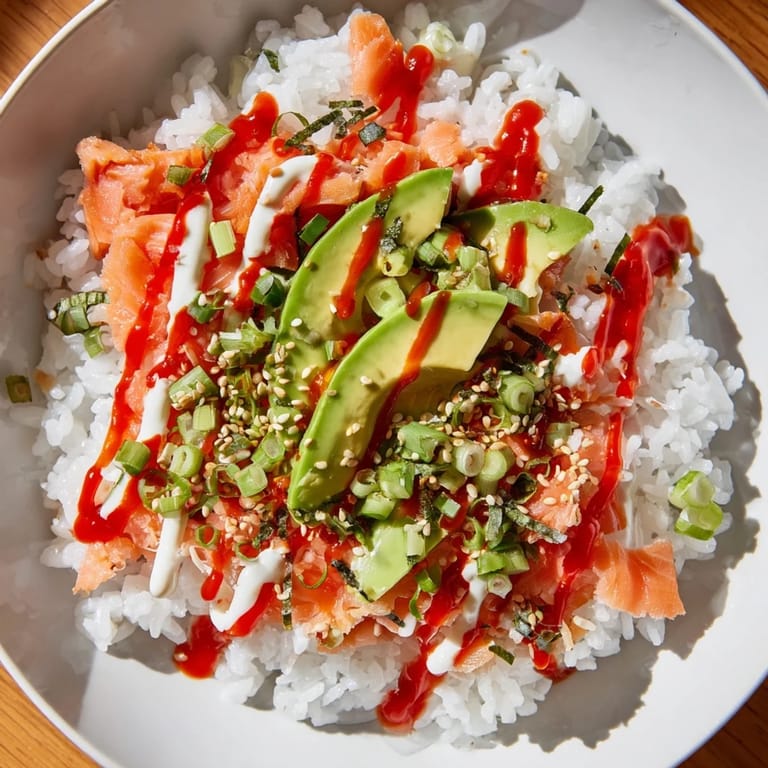
- Avocado (1, sliced): Provides creaminess that echoes the mayo and gives you something soft to bite into between the crispy seaweed.
- Roasted seaweed (1 sheet, cut into squares): Your utensil and your flavor accent—salty, crisp, and meant to be torn and used as a wrapper.
- Toasted sesame seeds (1 teaspoon): The finishing touch that adds nutty depth and a little textural pop.
- Spring onions (2, thinly sliced): Bright, sharp, and just oniony enough to cut through the richness without shouting.
- Pickled ginger (optional): If you have it, a small pinch adds a clean, zingy note that feels sophisticated.
- Lemon or lime wedges (optional): A squeeze at the end wakes up all the flavors and adds a gentle acid that ties everything together.
Tired of Takeout? 🥡
Get 10 meals you can make faster than delivery arrives. Seriously.
One email. No spam. Unsubscribe anytime.
Instructions
- Flake and layer:
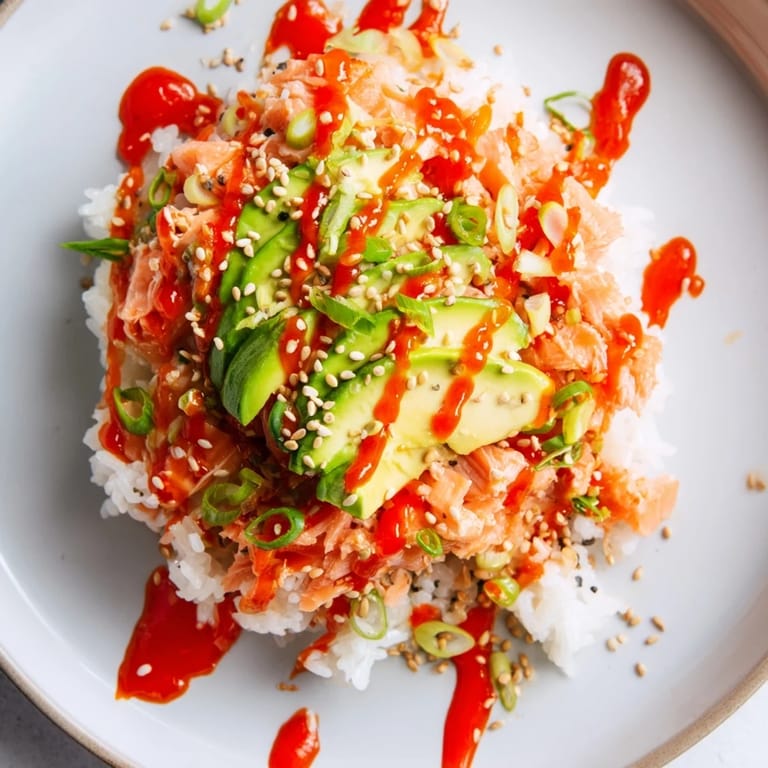
- Scoop your cooked salmon into a microwave-safe bowl and gently break it apart with a fork until you have small, bite-sized pieces. Pile the rice directly on top—don't mix yet, as the layers keep everything distinct at this stage.
- Rehydrate if needed:
- If your rice feels a bit firm or dry, give it a light sprinkle of water. This keeps it from becoming dense when warmed, and helps it absorb the seasonings evenly.
- Warm gently:
- Cover the bowl loosely with a microwave-safe plate or plastic wrap and heat on high for 1 to 2 minutes, just until you can feel warmth radiating from the sides. You're not cooking anything; you're simply bringing it all to a pleasant eating temperature.
- Season and bind:
- Pour in the soy sauce and sesame oil, then mix thoroughly, making sure the salmon and rice are well coated and no dry rice lingers at the bottom. This is where the magic happens—the flavors start to meld and everything becomes cohesive.
- Dress with richness:
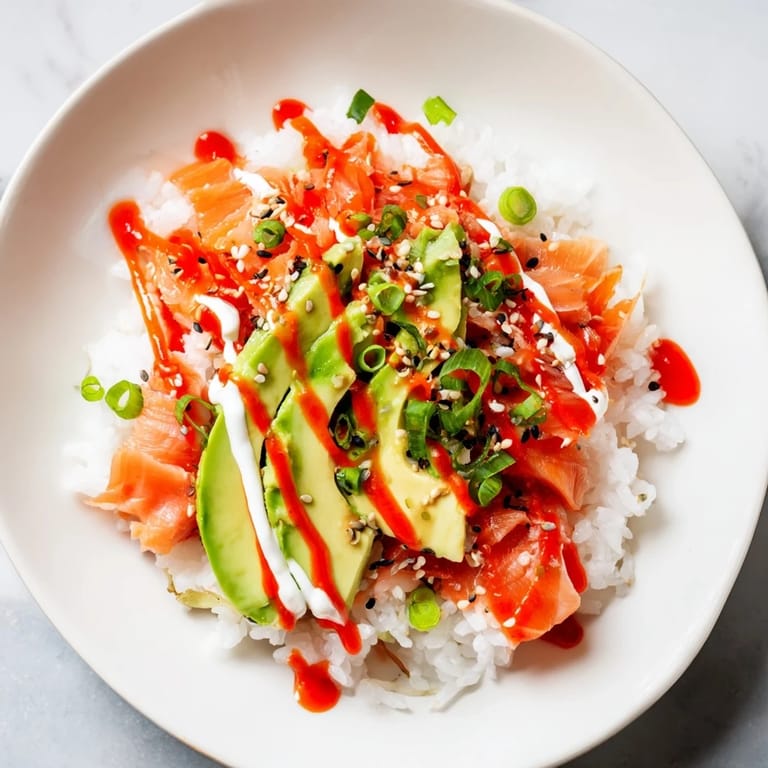
- Drizzle the mayonnaise in thin lines across the top, then add Sriracha if you're using it. Don't stir this in completely; let swirls remain so you get pockets of extra creaminess and heat in each bite.
- Top and garnish:
- Arrange avocado slices on top, scatter the spring onions, sprinkle sesame seeds, and add pickled ginger if you have it. Each topping brings its own flavor and texture, so think of this as building something intentional rather than just piling things on.
- Serve with seaweed:
- Transfer to a serving bowl and place the nori sheets and lemon wedges alongside. Tear off a piece of seaweed, add a small scoop of the rice mixture, maybe a slice of avocado, and eat it like a hand roll—it's interactive and it transforms how the dish tastes as you eat.
 Save to Pins
 One evening, my friend asked me to teach them this recipe because they'd seen it online but felt intimidated. By the time we finished, they realized there was nothing to be afraid of—just good ingredients treated with respect and combined in a way that celebrates each one. Watching someone discover that cooking doesn't have to be complicated to be delicious was unexpectedly moving.
Why This Bowl Works Every Time
The genius of this bowl lies in its balance. Salty, creamy, fresh, crisp, buttery, bright—every element has a job, and none of them compete for attention. The seaweed acts as both a flavor enhancer and a practical vessel, turning the bowl into something interactive and fun rather than just another rice dish you eat with a spoon.
Making It Your Own
This recipe thrives on flexibility. Some mornings I add kimchi for a funky, spicy kick; other times I'll toss in shredded cucumber or pickled carrots if I want something lighter and more refreshing. Smoked salmon works beautifully if that's what you have, and canned salmon is genuinely respectable if you're in a pinch.
Storage and Make-Ahead Tips
The beauty of this bowl is that every component can be prepped ahead, but assembly should happen just before eating so the rice stays fluffy and the avocado doesn't oxidize. I often prepare seasoned salmon and have rice chilling in the fridge, then build the bowl when hunger strikes.
- Cooked salmon keeps refrigerated for up to 3 days, so roast it early in the week and use it across multiple meals.
- Assemble and season the bowl just before serving to keep the rice texture light and prevent avocado from browning.
- If you're meal prepping, keep all components in separate containers and combine only when you're ready to eat.
 Save to Pins
 This bowl taught me that some of the most satisfying meals come not from long hours in the kitchen but from respecting good ingredients and knowing how to let them shine. It's become my go-to when I want something nourishing that feels effortless.
Frequently Asked Questions
- → Can I substitute brown rice for white rice?
Yes, using brown rice adds extra fiber and a nuttier flavor while maintaining the dish's comfort.
- → How can I make this dish gluten-free?
Replace soy sauce with tamari to avoid gluten without compromising the savory depth.
- → Is it necessary to use Japanese mayonnaise and Sriracha?
While traditional toppings add richness and spice, you can adjust or omit them based on preference or dietary needs.
- → What are some good additional toppings?
Try kimchi, shredded carrots, or cucumber for extra crunch and freshness alongside avocado and pickled ginger.
- → How long should I microwave the bowl?
Heat on high for 1–2 minutes until the salmon and rice are warmed through, ensuring a cozy texture.