 Save to Pins
 The first time I made a proper burrito bowl at home, I was standing in line at Chipotle for the third time that week, and it hit me: I could do this better in my own kitchen. I went home, found a pork shoulder in my freezer, and started experimenting with the slow braise that would become my signature carnitas. Hours later, when that meat fell apart at the gentlest touch of a fork, I knew I'd unlocked something worth repeating. Now my kitchen smells like citrus and cumin on bowl nights, and my friends have stopped asking where I get it.
I remember making these bowls for a dinner party last summer, and my neighbor came over early helping me prep while we talked about life changes and career doubts. By the time we finished assembling the bowls, she was smiling wider than when she arrived. There's something about building something beautiful together, even if it's just food, that makes conversations feel easier. That night taught me that this bowl isn't just dinner—it's a reason to slow down and be present with the people you care about.
Ingredients
- Pork shoulder: The magic starts here—choose a cut with marbling so it stays juicy through the long braise, not a lean piece that'll dry out.
- Olive oil: Just enough to create a golden crust on the pork before it braises.
- Salt, pepper, cumin, dried oregano, smoked paprika: This spice blend is your foundation; toast them mentally as you layer them on.
- Garlic and onion: They dissolve into the braising liquid, building flavor you can't quite name but absolutely feel.
- Orange and lime juice: The brightness cuts through the richness of the pork and makes everything feel alive.
- Chicken broth: Keeps the carnitas moist and gentle during that long, slow cook.
- Long grain white rice: Rinse it thoroughly until the water runs clear—this one step changes everything about the final texture.
- Fresh cilantro: Never skip this; add it right after the rice finishes so the heat releases its oils without destroying its color.
- Lime juice: The second lime of the night, doing entirely different work than the first.
- Black beans: Canned is honest and practical; seasoning them yourself makes them taste intentional.
- Monterey Jack and cheddar cheese: Jack brings smoothness, cheddar brings flavor—together they're unstoppable.
- Whole milk and cornstarch: The trick to queso that doesn't break or separate is patience and the right ratio.
- Butter: Adds richness to the queso base before the cheese joins in.
- Jalapeño: Optional in the queso, but recommended for anyone who likes a whisper of heat.
- Fresh tomatoes: Summer tomatoes are ideal, but mid-season ones work too—dice them while they're still warm from your hands.
- Red onion: Fine chop so it doesn't overpower the salsa's delicate balance.
- Fresh cilantro and lime: Again, because salsa without them is just diced vegetables.
- Ripe avocados: Feel them gently; they should yield slightly to pressure but not be mushy.
- Sour cream: The cool finish that rounds out all the heat and richness.
Tired of Takeout? 🥡
Get 10 meals you can make faster than delivery arrives. Seriously.
One email. No spam. Unsubscribe anytime.
Instructions
- Build your spice foundation:
- Pat the pork dry and coat it with salt, pepper, cumin, oregano, and smoked paprika, making sure every surface gets a gentle layer. The paprika especially wants to touch the meat so it can toast against the heat and deepen its flavor.
- Sear the pork until golden:
- Heat olive oil in your Dutch oven until it shimmers, then add the pork in batches so you don't crowd the pot. You're not cooking it through; you're building color and crust that will anchor all the flavors to come. It'll take about 10 minutes total, and the kitchen will smell incredible.
- Layer in the braising elements:
- Once the pork is golden, add minced garlic and the quartered onion, stirring for just a minute until fragrant. Pour in the orange juice, lime juice, and chicken broth—the liquid should come halfway up the pork, not drown it.
- Braise low and slow:
- Cover and move to low heat (or a 300°F oven if you prefer less stovetop attention) for two hours. You'll know it's ready when a fork pulls a piece apart with no resistance. The house will fill with this warm, citrusy aroma that makes waiting almost unbearable.
- Shred and finish:
- Pull the pork from the pot and shred it with two forks, breaking it into the size you prefer. Return it to the pot and simmer uncovered for 10 minutes so the liquid reduces and clings to every strand. Taste a piece—you might want a pinch more salt.
- Cook rice with intention:
- Rinse your rice in a fine mesh strainer under cold water for about a minute, stirring gently with your fingers until the water runs clear. This removes the starch that would make it gluey.
- Bring rice to a boil:
- Add rice, water, olive oil, and salt to a saucepan and bring to a rolling boil over medium-high heat. As soon as the water boils, reduce to the lowest heat, cover, and set a timer for 18 minutes. Don't lift the lid—trust the process.
- Finish the rice with brightness:
- After 18 minutes, remove from heat and let it sit covered for 5 minutes. Fluff gently with a fork, then fold in the fresh cilantro and lime juice while the grains are still warm enough to absorb the flavor.
- Warm the beans gently:
- In a small saucepan, combine your drained beans with cumin, garlic powder, salt, and pepper, then heat over medium until they're warm and the spices have dissolved into them. Don't let them boil; they're already cooked and just need awakening.
- Start your queso base:
- Melt butter in a saucepan over medium heat, then sprinkle cornstarch over it and whisk for about a minute until it becomes a blonde paste. This roux will thicken your queso and keep it smooth.
- Build the queso:
- Slowly whisk in the milk, stirring constantly so no lumps form, and let it cook for about 2 minutes until it thickens slightly. You should be able to draw a line through it with your whisk.
- Melt in the cheese:
- Reduce heat to low and add the shredded Monterey Jack and cheddar, stirring gently until completely melted and smooth. Add the minced jalapeño if using, stir once more, and turn off the heat. The queso will stay creamy as long as you keep it warm.
- Mix your salsa:
- Combine diced tomatoes, finely chopped red onion, seeded and diced jalapeño, cilantro, lime juice, and a pinch of salt in a bowl. Let it sit for a few minutes so the flavors start talking to each other, but don't make it too far in advance or the tomato juice will make it watery.
- Mash and season guacamole:
- Cut your avocados in half, remove the pit, and scoop into a bowl. Mash with a fork until you have the texture you prefer—some people like it smooth, others like it chunky. Immediately stir in red onion, diced tomato, lime juice, cilantro, salt, and pepper. The lime juice is your protection against browning.
- Assemble each bowl with care:
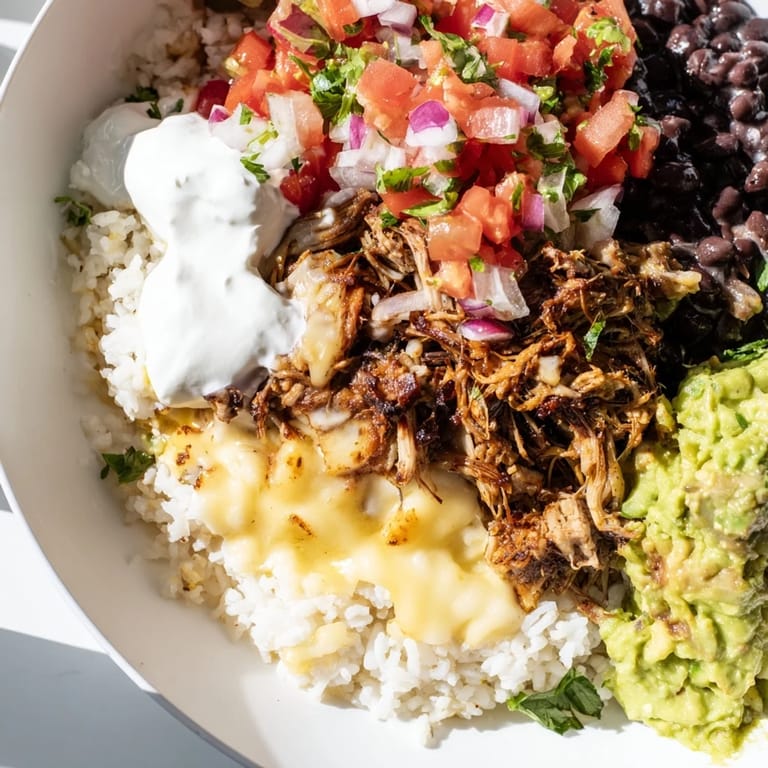
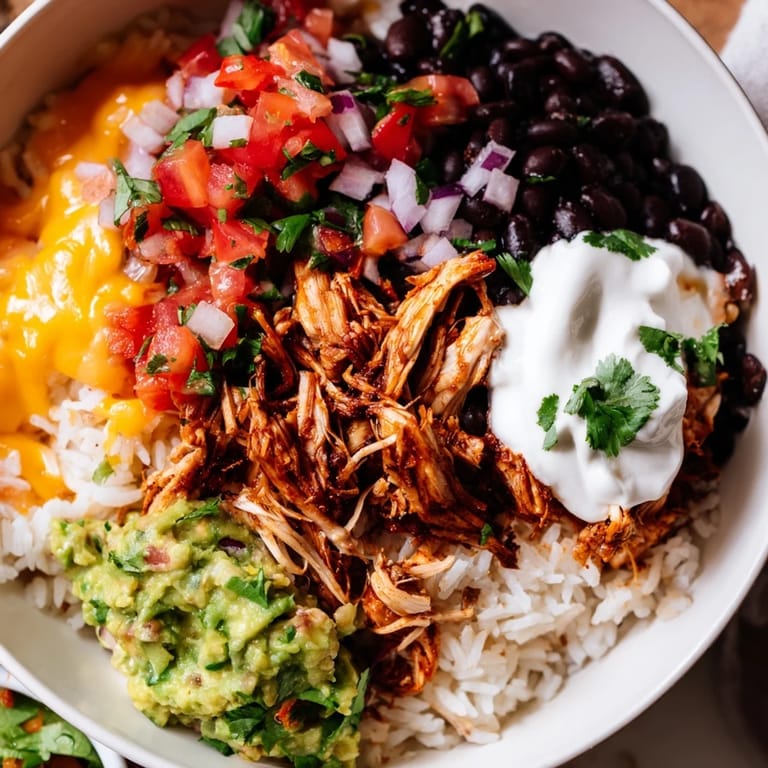
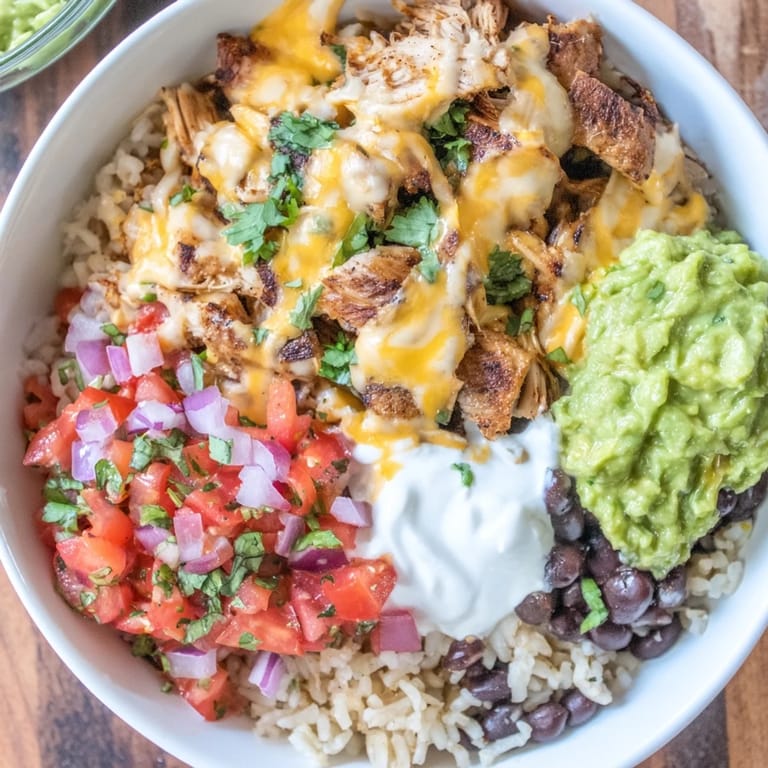
- Start with a base of cilantro lime rice, then add a scoop of warm beans. Top with a generous handful of carnitas, then drizzle with the warm queso. Add a spoonful of fresh salsa, a dollop of sour cream, and a generous heap of guacamole. Serve immediately while everything is still in its prime.
 Save to Pins
 These bowls remind me of a rainy afternoon when my sister came over stressed about a presentation, and we started cooking together almost by accident. By the time we finished assembling everything, her shoulders were relaxed and she was laughing about something ridiculous. Food has this quiet way of bringing people back to themselves when the world feels too much.
Why Homemade is Worth the Time
Making carnitas from scratch takes patience, but it teaches you something about cooking that fast versions never can: that time and gentle heat create tenderness that you can't rush. When you taste the difference between homemade and the fast-casual version, you understand why people used to braise meat for hours without questioning whether they had time. The flavor is incomparable because it's been building, layer by layer, the entire time the pork sits in that fragrant liquid. Your kitchen becomes a place where something worth doing is happening, and that matters more than the clock.
Building Flavor in Layers
A burrito bowl is only as good as each component, and that's what makes it special. You're not relying on one thing to carry the whole dish; instead, the rice is cool and bright, the carnitas are rich and tender, the queso is creamy and comforting, and the salsa and guacamole are fresh and sharp. Each layer has a job, and when they're all built with intention, they elevate each other. This is different from making a burrito where everything gets squeezed together and loses its identity.
Timing and Temperature Matter
The most common mistake people make is trying to rush this meal or letting components sit around until they're cold. Assemble your bowls right before you serve them, with everything still warm or at the right temperature—the rice should be hot, the carnitas should be steaming, the queso should be pourable, and the guacamole should be fresh enough that the color is still bright green.
- Start the carnitas first since they need the longest time, then move through the other components so everything finishes within minutes of each other.
- If you're cooking for a crowd, have everyone assemble their own bowl so each person gets exactly what they want and everything stays at its best temperature.
- Leftover carnitas are amazing in tacos or quesadillas the next day, but the rice, salsa, and guacamole are best enjoyed fresh.
 Save to Pins
 This recipe isn't just about skipping the drive-through; it's about reclaiming the pleasure of making food that tastes like it comes from somewhere real. When you taste the difference, you'll understand why it's worth the time.
Frequently Asked Questions
- → How do I cook the carnitas to ensure tenderness?
Simmer pork shoulder slowly in broth with spices and citrus juices for about 2 hours until it shreds easily for tender carnitas.
- → What rice works best for the cilantro lime rice?
Long grain white rice is ideal as it cooks fluffy and separates well when mixed with fresh cilantro and lime juice.
- → Can I substitute black beans with another variety?
Yes, pinto beans are a great alternative and complement the other ingredients well when seasoned similarly.
- → How to make the queso smooth and creamy?
Melting cheeses slowly with butter, cornstarch, and milk over medium heat while whisking ensures a smooth, creamy queso.
- → What is a good way to add extra crispiness to the carnitas?
Broil shredded carnitas for 3 minutes before serving to create a crispy texture and deepen the smoky flavor.