 Save to Pins
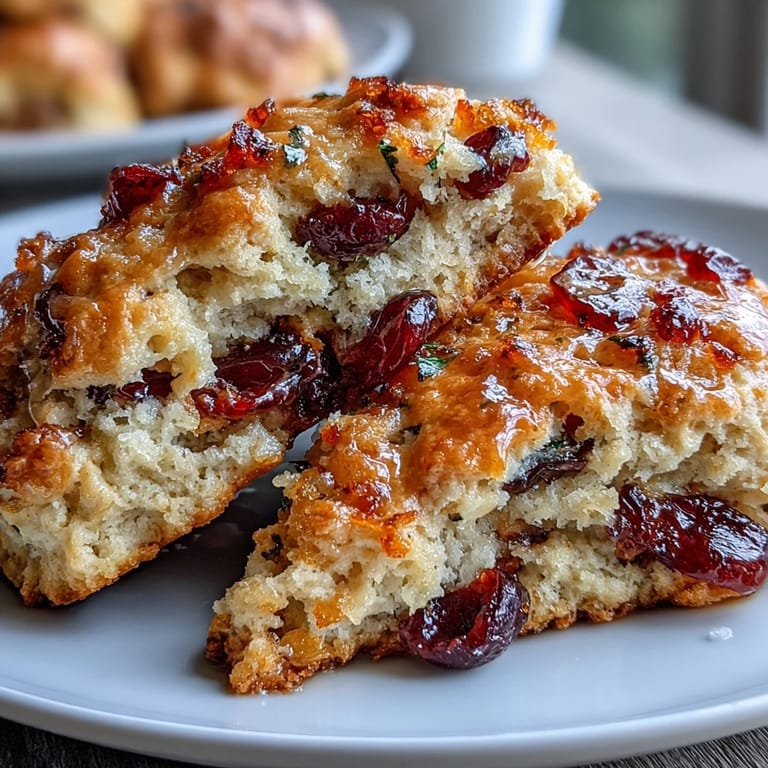
 There's something about the smell of butter and citrus hitting a warm kitchen that makes you stop whatever you're doing. My neighbor knocked on the door mid-bake last February with these scones cooling on her rack, and I remember thinking they looked almost too pretty to eat—golden and studded with bright cranberry pockets. She'd made them for a quiet morning with her daughter, but the house smelled so inviting that she'd doubled the batch. One bite and I understood why she kept the recipe folded in her apron pocket.
I made these for the first time on a gray Sunday, partly because I had a block of butter sitting around and partly because I wanted to prove to myself that scones weren't some impossible British witchcraft. They turned out impossibly good, which made me suspicious that I'd done something wrong—but no. Sometimes the simplest methods work the best. Since then, they've become my go-to when I'm trying to impress without making a fuss.
Ingredients
- All-purpose flour (2 cups): The foundation that keeps these scones light and tender rather than dense; measure by spooning and leveling, not scooping, if you want the ratio exactly right.
- Granulated sugar (1/4 cup): Just enough sweetness to balance the tartness of the cranberries without making them dessert-like.
- Baking powder (1 tablespoon): Your lift and rise—check the expiration date or they'll turn flat and sad.
- Fine sea salt (1/2 teaspoon): Brings everything into focus and keeps the sweetness from being cloying.
- Dried cranberries (1/2 cup): Tart little pockets of flavor that don't need soaking; they'll absorb moisture from the dough as it bakes.
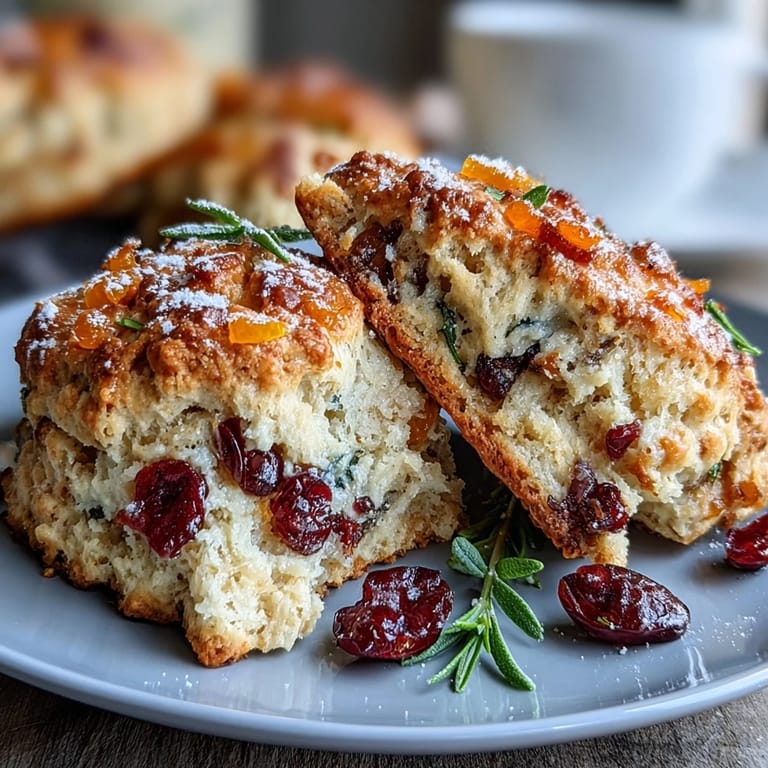
- Candied orange peel (1/3 cup, finely chopped): The secret ingredient that makes people ask what that bright, sophisticated flavor is; chop it small so it distributes evenly.
- Orange zest (from 1 orange): Fresh zest adds a layer of citrus oil that the candied peel alone can't deliver—don't skip it.
- Cold unsalted butter (1/2 cup): Must be cold or you'll lose those tender, flaky layers; cut it into cubes before you start and keep it chilled.
- Heavy cream (2/3 cup, plus extra for brushing): Creates a rich, moist dough that stays tender even the next day; use full-fat cream, not whipping cream alternatives.
- Large egg (1): Binds everything and creates that golden exterior when brushed on top.
- Pure vanilla extract (1 teaspoon): A small amount that whispers in the background without announcing itself.
- Powdered sugar (1/2 cup, for optional glaze): Sweetens the glaze and dissolves smoothly in orange juice.
- Fresh orange juice (1–2 tablespoons, for optional glaze): Ties the whole flavor story together with brightness.
Tired of Takeout? 🥡
Get 10 meals you can make faster than delivery arrives. Seriously.
One email. No spam. Unsubscribe anytime.
Instructions
- Set your oven and prep your stage:
- Preheat to 400°F and line your baking sheet with parchment—this takes just a moment and prevents sticking. A hot oven is key to getting that rise and golden color.
- Whisk dry ingredients together:
- Flour, sugar, baking powder, and salt go into a large bowl; whisking aerates the flour and distributes the leavening evenly. This step takes maybe a minute but makes a real difference.
- Cut in the cold butter:
- Add butter cubes to the flour mixture and use a pastry cutter or your fingertips to rub it in until it looks like coarse crumbs—you want pea-sized pieces, not a smooth paste. This is what creates those flaky layers, so resist the urge to overmix.
- Fold in the fruits and zest:
- Gently stir in cranberries, candied orange peel, and orange zest until evenly distributed. The mix should still look crumbly at this point.
- Combine wet ingredients separately:
- In another bowl, whisk cream, egg, and vanilla until smooth. This ensures even distribution of the egg without overmixing the flour.
- Bring it together gently:
- Pour the wet mixture over the dry ingredients and stir with a spatula or wooden spoon until just combined—stop as soon as no dry flour remains. Overworking develops gluten and makes tough scones; a few lumps are fine.
- Shape your dough:
- Turn the shaggy dough onto a lightly floured surface and gently pat into a 1-inch-thick disc with your hands. A light touch here keeps them tender.
- Cut into wedges:
- Use a sharp knife to cut the disc into 8 wedges, like a pizza. Wipe the knife between cuts if the dough sticks.
- Arrange and brush:
- Place wedges on the prepared baking sheet with space between them for air circulation. Brush the tops with extra cream for a golden, shiny finish.
- Bake until golden:
- Into the hot oven for 16–18 minutes—they should be deeply golden on top but still tender inside. A minute too long and they'll dry out, so keep an eye on them.
- Cool and glaze if desired:
- Transfer to a cooling rack and let rest for a few minutes. Whisk powdered sugar and orange juice into a thin drizzle and pour over cooled scones for extra sweetness and shine.
 Save to Pins
 The first time someone told me they'd made these for their book club and everyone asked for the recipe, I felt genuinely proud on behalf of the scones. There's something about serving warm, buttery food that tastes bright and a little fancy that brings people together in a way other breakfasts don't. It's not just the flavor—it's the feeling of being cared for.
The Orange and Cranberry Story
Candied orange peel gets a bad reputation because some versions taste perfumey and artificial, but the real stuff is just orange rind cooked down with sugar until it's translucent and tender. Pairing it with tart cranberries creates this push-and-pull of flavors that makes your mouth sit up and pay attention. The cranberries cut through the sweetness of the orange peel while the orange adds sophistication to what might otherwise be a straightforward fruit scone. Together, they're greater than the sum of their parts—this is the kind of combination that makes people say, 'What's that?' between bites.
Texture Matters
The whole point of a scone is the contrast between a tender, almost crumbly exterior and a slightly moist interior—not dense like a biscuit, not light like a cake. Getting there depends on three things: cold butter that stays in little pockets rather than melting into the flour, cream instead of milk for richness, and knowing exactly when to stop mixing. I learned this the hard way by making scones that could have doubled as hockey pucks, but now when I get the texture right, it feels like a small victory.
Serving and Storage
Scones are best eaten within hours of baking while they still have warmth and tender crumb, but they freeze beautifully for up to a month if wrapped tightly in plastic wrap and then foil. A quick ten minutes in a 300°F oven brings them back to life, and no one will know they weren't fresh that morning. You can also prep the dough the night before, cut it into wedges, wrap it, and bake it straight from the fridge—add a minute or two to the baking time and you'll have warm scones ready before breakfast.
- Serve them warm with clotted cream and jam, or simply with butter and a cup of strong tea.
- These make excellent edible gifts wrapped in parchment and tied with twine; include reheating instructions so they taste their best.
- Leftover scones are perfect for breakfast the next day or crumbled into morning yogurt.
 Save to Pins
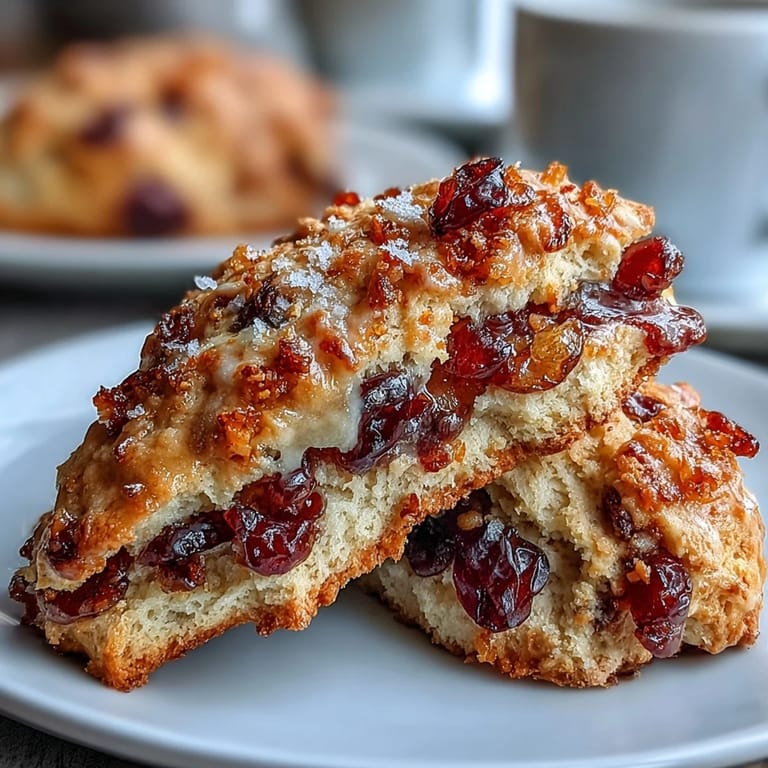
 These scones have become my answer to the question 'what should I bring?' because they feel special without requiring pretense. There's real warmth in something baked with your own hands and shared with people you like.
Frequently Asked Questions
- → What can I use instead of dried cranberries?
Dried cherries or golden raisins make excellent substitutes that maintain the tart-sweet balance.
- → How do I achieve flaky scones?
Use cold butter cut into small cubes and mix it into the flour until the texture resembles coarse crumbs. Handle the dough gently to avoid overworking.
- → Can I prepare these scones in advance?
Yes, scones freeze well. Bake and cool them completely before freezing, then reheat briefly before serving.
- → What is the purpose of brushing cream on the scones?
Brushing extra cream on top before baking promotes a golden, moist crust with a beautiful shine.
- → How do I make the glaze for these scones?
Whisk powdered sugar with fresh orange juice until smooth, then drizzle over cooled scones for a sweet citrus finish.