 Save to Pins
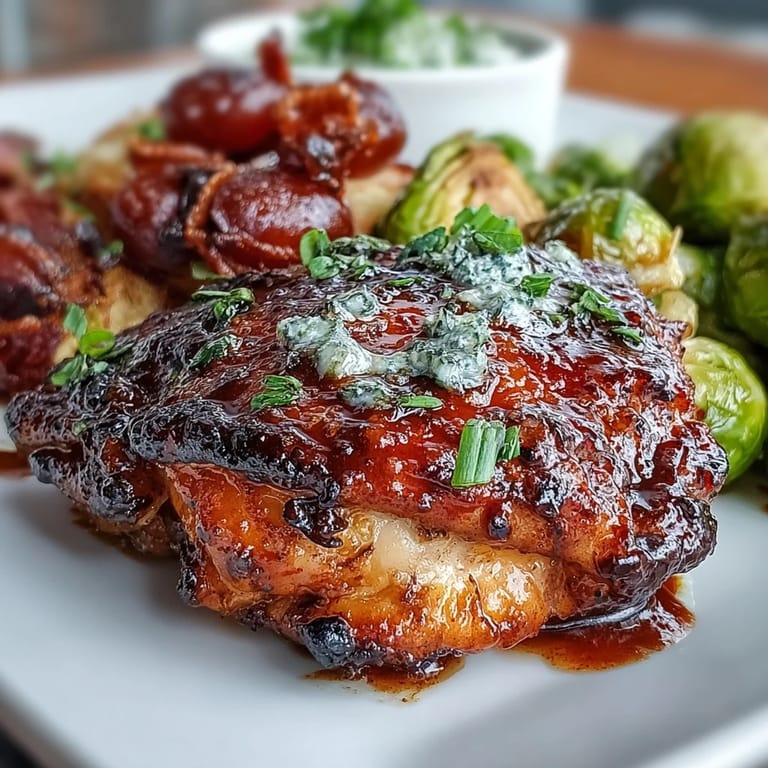
 My neighbor showed up at my door on a Tuesday evening with a bag of gorgeous red grapes from the farmer's market, insisting I had to try them roasted. I was skeptical—grapes on chicken?—but something about her enthusiasm made me dig through my pantry for balsamic vinegar. That single sheet pan dinner became the thing I make when I want to impress without actually trying, and somehow the sweet grapes and tangy glaze just work.
I made this for my book club once, and everyone kept asking if I'd ordered it from somewhere fancy. The way the grapes burst slightly in the heat and the Brussels sprouts turn crispy at the edges just feels more complicated than it actually is, which is the best kind of dinner trick to have up your sleeve.
Ingredients
- Boneless, skinless chicken thighs (4, about 1 lb): Thighs forgive overcooking better than breasts and stay absurdly moist; they're the underrated hero of weeknight cooking.
- Brussels sprouts (1 lb, trimmed and halved): The flat cut side gets gloriously caramelized if you nestle them in right, creating little crispy treasures.
- Seedless red grapes (1 cup): They soften and concentrate their sweetness in the heat, creating pockets of flavor that balance the savory elements perfectly.
- Red onion (1 small, cut into wedges): The heat mellows the sharpness and turns them silky, bringing depth without overpowering.
- Balsamic vinegar (1/4 cup): Quality matters here since it's the star of the glaze, so use one you'd actually taste on its own.
- Honey (1 tbsp): This rounds out the acidity and helps everything caramelize into a glossy coat.
- Dijon mustard (1 tbsp): Adds a subtle tang and helps the glaze cling to the chicken without making it taste mustard-forward.
- Olive oil (2 tbsp total): Use your regular cooking oil here, saving better stuff for drizzling raw.
- Dried thyme (1 tsp), garlic powder (1 tsp), salt and pepper: This simple seasoning trio lets the glaze shine without competing flavors muddying the dish.
Tired of Takeout? 🥡
Get 10 meals you can make faster than delivery arrives. Seriously.
One email. No spam. Unsubscribe anytime.
Instructions
- Set your stage:
- Preheat your oven to 425°F and line a large sheet pan with parchment paper or foil—this step is non-negotiable because cleanup is part of the pleasure here.
- Season the chicken:
- Pat your chicken thighs dry, then toss them with olive oil, thyme, garlic powder, salt, and pepper in a bowl. The dry surface helps them brown beautifully once they hit the heat.
- Prepare the vegetables:
- In another bowl, toss your Brussels sprouts, grapes, red onion, olive oil, salt, and pepper until everything's evenly coated. Don't be shy with the oil here—it helps everything caramelize.
- Arrange on the pan:
- Spread the vegetable mixture across your sheet pan first, then nestle the chicken thighs among them. This arrangement matters because the vegetables create little flavor-sharing pockets.
- Make the glaze:
- Whisk together balsamic vinegar, honey, and Dijon mustard in a small bowl until smooth. Taste it and you'll understand why this comes together so well.
- First coat of glaze:
- Drizzle half the glaze over everything, coating both the chicken and vegetables. Save the rest for later because a final drizzle makes all the difference.
- Roast until golden:
- Slide your pan into the oven for 25 to 30 minutes, watching for the chicken to reach 165°F internally and the Brussels sprouts to turn golden at the edges. The smell alone will make you impatient.
- Final flourish:
- Pull everything from the oven and drizzle with the remaining glaze while it's still hot. Serve immediately while the pan is still sizzling.
 Save to Pins
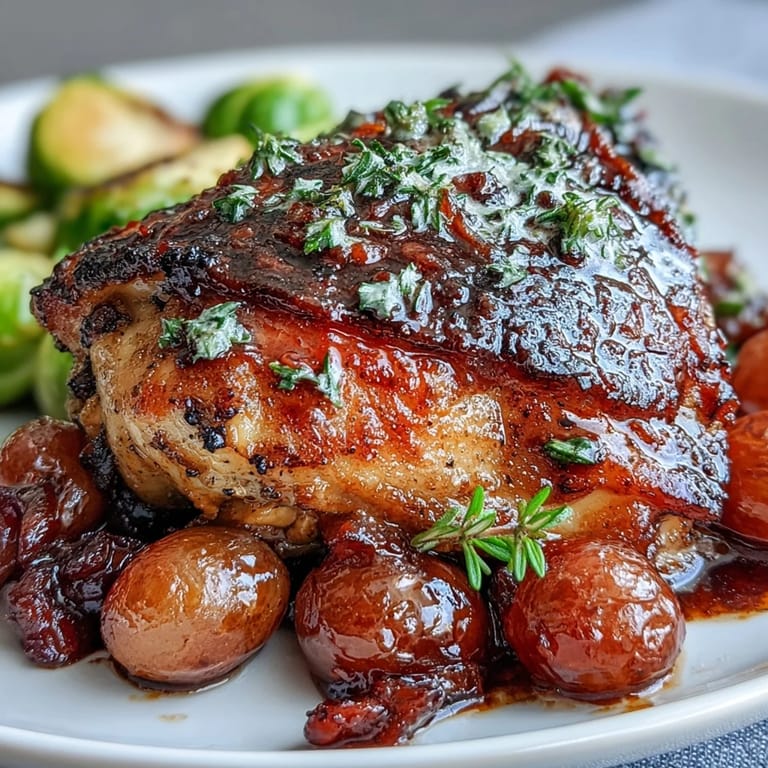
 There was a moment during that book club dinner when someone cut into their chicken and the steam rose up, and the whole room went quiet for a second. That's when you know you've made something that tastes better than it looks, which is honestly the highest compliment a one-pan dinner can get.
Why Chicken Thighs Change Everything
I spent years buying chicken breasts out of habit until someone finally told me that thighs are more forgiving and infinitely more flavorful. The dark meat absorbs the balsamic glaze differently than white meat, creating a deeper, richer taste that makes you wonder why you ever bothered with the other cut. Once you realize thighs stay juicy even if you leave them in for an extra five minutes, there's really no going back.
The Magic of Roasted Grapes
The first time I roasted grapes, I genuinely thought I was making a mistake. But something transformative happens when they're exposed to high heat—they soften, their juice concentrates, and they become this unexpected sweet-tart element that plays beautifully against savory Brussels sprouts. It's the kind of flavor combination that shouldn't work on paper but somehow does on the plate, and once you experience it, you start roasting grapes for everything.
Building Flavor on One Pan
The real skill here is understanding that everything on the sheet pan is cooking at different speeds, so placement matters. The grapes and onions soften first, the Brussels sprouts take their time to caramelize, and the chicken does its thing in the middle. You're not just throwing ingredients together; you're orchestrating a dinner that comes together in perfect harmony.
- Nestle chicken thighs between vegetables so they're not crowded together, allowing steam to circulate and edges to brown.
- Toss everything in the pan halfway through if you're feeling uncertain, though it's not strictly necessary.
- Trust that the balsamic glaze will tighten up and coat everything beautifully as it reduces in the residual heat.
 Save to Pins
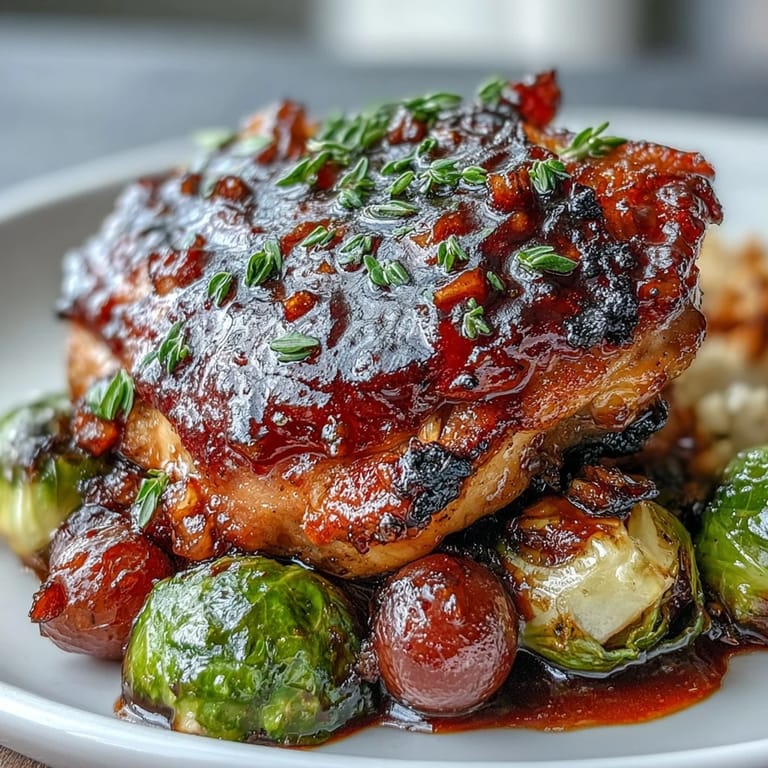
 This is the dinner that made me stop apologizing for simple food and start celebrating it instead. Every time I make it, I remember that Tuesday evening and feel grateful for neighbors who show up with farmers market finds and encourage you to be brave in the kitchen.
Frequently Asked Questions
- → Can I use chicken breasts instead of thighs?
Yes, chicken breasts can be substituted. Adjust cooking time accordingly as breasts may cook faster and can dry out if overcooked.
- → How do I know when the chicken is fully cooked?
Check that the internal temperature reaches 165°F (74°C) for safe consumption. The juices should run clear when pierced.
- → What can I use to add extra crunch?
Chopped pecans or walnuts sprinkled on top before serving add a pleasant crunch and complement the sweetness of the grapes.
- → Is it necessary to use foil or parchment paper on the pan?
Lining the sheet pan with foil or parchment helps prevent sticking and makes cleanup easier but can be skipped if the pan is well-seasoned.
- → What side dishes pair well with this meal?
A light-bodied red wine like Pinot Noir pairs beautifully, along with crusty bread or a simple green salad for a balanced dinner.