 Save to Pins
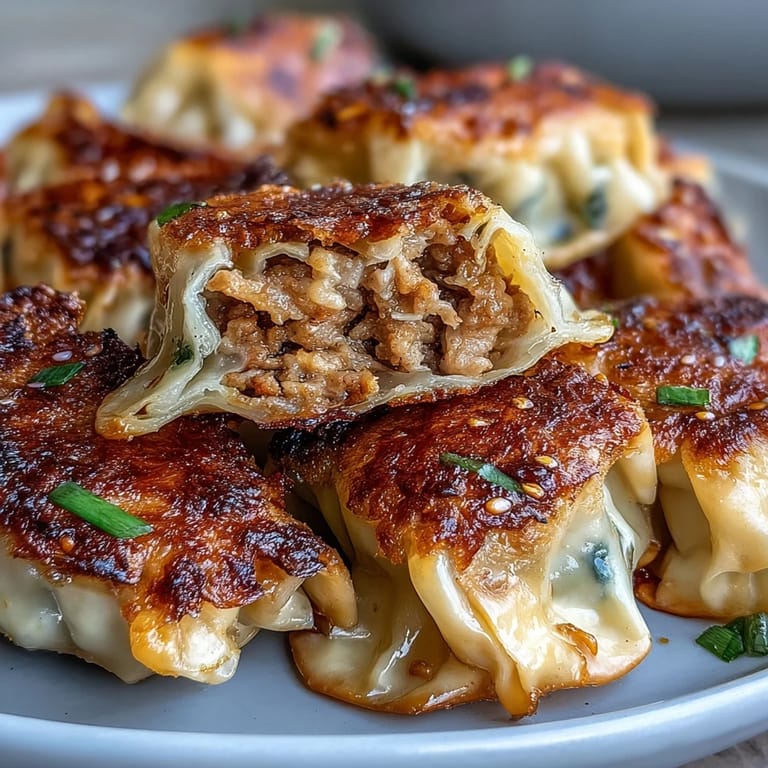
 There's something about the sound of gyozas hitting hot oil that makes a kitchen feel alive. I discovered these smashed beauties on a random Tuesday when I was craving dumplings but couldn't be bothered with the folding ritual that traditional gyoza requires. Wonton wrappers sat in my fridge, and suddenly this shortcut version became my new weeknight secret. The crispy bottoms, the steamy centers, the whole thing takes barely half an hour from start to table.
My partner watched me make these for the first time with visible skepticism until that moment when I lifted the lid and the steam rolled out carrying the most savory, ginger-forward aroma through our tiny kitchen. The look on his face when he bit into one and that crispy shell gave way to juicy filling was worth every second of chopping. Now these show up on our table at least twice a month, and friends who try them always ask how I make them look so restaurant-quality without the restaurant effort.
Ingredients
- Ground pork: 200 grams of good quality matters here because it's doing most of the flavor work; chicken works too if you want something lighter, but pork gives you richness you'll actually taste.
- Napa cabbage: Shred it fine and honestly squeeze it a little in paper towels before mixing, otherwise your filling gets weepy and the wrappers tear when you fold them.
- Green onions: The bright note that keeps these from tasting heavy; slice them thin so they distribute evenly instead of creating cabbage clumps.
- Garlic and ginger: Mince both finely, not because the recipe demands it but because these are what actually make people stop mid-bite and ask what that incredible flavor is.
- Soy sauce and sesame oil: These two are the backbone; don't skimp on the sesame oil or it tastes like regular pork dumplings, which defeats the whole point.
- Wonton wrappers: Store-bought squares work perfectly here and they crisp up beautifully once pan-fried; find them in the refrigerated section near the tofu, not the frozen aisle.
- Neutral oil: You need enough to build a good sear but not so much that you're essentially deep-frying; two tablespoons per batch is the sweet spot.
Tired of Takeout? 🥡
Get 10 meals you can make faster than delivery arrives. Seriously.
One email. No spam. Unsubscribe anytime.
Instructions
- Mix your filling with intention:
- Combine the pork, cabbage, green onions, garlic, soy sauce, sesame oil, ginger, sugar, and pepper in a bowl and stir until everything clings to the pork and looks like an actual mixture rather than separate ingredients thrown together. The sugar, though small, actually balances the salt and ginger in a way your palate will register as sophisticated.
- Set up your wrapping station:
- Lay out all 16 wrappers on a clean, dry surface and have a small bowl of water nearby because once you start, you want to keep moving. Place one heaping teaspoon of filling in the center of each wrapper, which sounds small until you realize that's exactly the amount that lets you seal it without the filling squishing out during cooking.
- Fold and smash with confidence:
- Wet your finger in water and run it along the edges of each wrapper, then fold the whole thing over the filling to make a half-moon and press down firmly to seal it closed. The secret move here is using the heel of your hand to gently flatten the dumpling so it's not puffy and round but rather sits flat on the pan like it's meant to sear.
- Get your pan screaming hot:
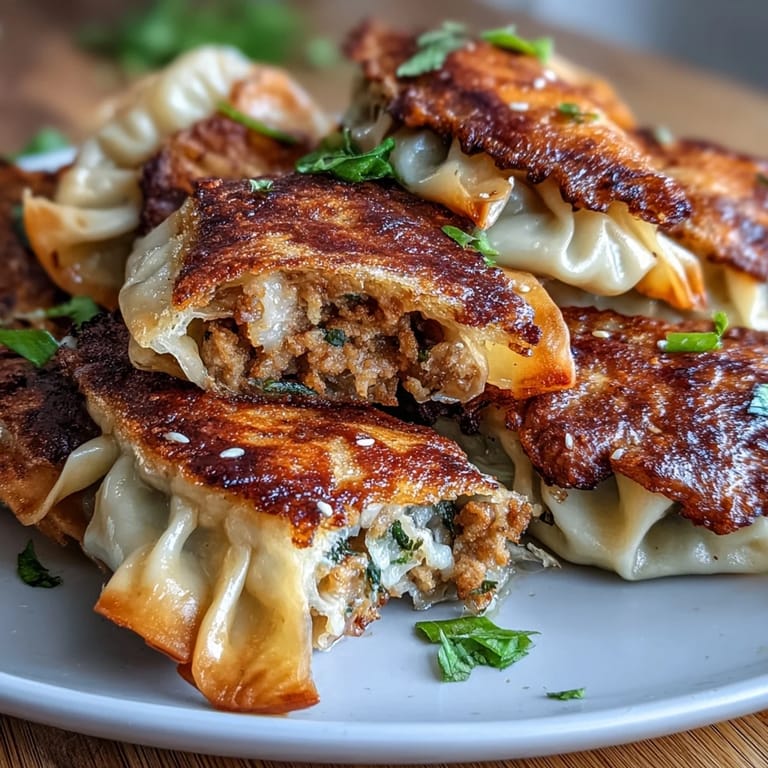
- Heat one tablespoon of oil in a large nonstick skillet over medium-high heat and let it shimmer for about a minute, then you're ready. Place half your dumplings flat side down into the pan and don't move them for 2 to 3 minutes while they develop that golden, crispy bottom that makes people close their eyes when they bite in.
- Steam them into tenderness:
- Pour 2 tablespoons of water directly into the pan away from the dumplings and cover immediately with a lid, then step back because the steam does all the work for the next 2 to 3 minutes. You'll hear it hissing and feel the moisture rising, and that's exactly what's cooking the pork through and softening the wrapper to that perfect tender-but-not-mushy texture.
- Crisp up the finish:
- Remove the lid and let any remaining water evaporate, then cook for one more minute without the lid so the bottoms get back to being gloriously crispy instead of steamed-soft. Repeat the entire process with your remaining dumplings and another tablespoon of oil.
- Build your dipping sauce:
- While the second batch cooks, whisk together soy sauce, rice vinegar, chili oil if using, and toasted sesame seeds in a small bowl; taste it and adjust the vinegar if it needs more brightness. This sauce is the final flourish that ties everything together.
 Save to Pins
 Last month someone described eating these as tasting like a restaurant snuck into our home, and honestly that's when I realized how much this humble weeknight recipe had quietly become a small marker of hospitality in our kitchen. The fact that they're easy doesn't diminish them, it just means more people get to eat something genuinely good without stress getting in the way.
Why Wonton Wrappers Changed Everything
Traditional gyoza folding has this meditative quality that I respect, but there's also something liberating about deciding that texture and flavor matter more than traditional technique. Wonton wrappers are thinner than gyoza wrappers, which means they crisp up faster and more dramatically, creating this satisfying contrast between the crunchy exterior and the steamy filling that feels almost better than the original. When you pan-fry them and then steam them, that wrapper becomes something with actual personality instead of just a delivery mechanism.
The Sear-and-Steam Method Explained
This two-stage cooking technique is what separates these from being just another dumpling recipe. The initial sear creates a golden, crispy bottom through direct heat contact, then the steam finishes cooking the filling and softens the wrapper so the pork and cabbage actually become tender instead of chewy. Finally removing the lid and cooking for one more minute re-crisps everything, which is a small move with a huge payoff because that contrast of textures is what makes people actually notice what they're eating.
Customization Without Losing Your Way
The beauty of this recipe is that it's flexible without being unstable, so you can swap the protein or add vegetables without things falling apart. Chicken works beautifully if you want something lighter, tofu if you're feeding vegetarians, or just add finely chopped mushrooms or carrots to the filling for extra texture and earthiness. The core technique and seasoning stay the same, which means whatever variation you land on will still taste intentional and good.
- Always taste your filling raw before wrapping anything; a tiny pinch of extra salt or sesame oil now saves you from a batch of underwhelming dumplings later.
- Don't prep these hours ahead and leave them on the counter or they'll dry out and won't seal properly, but you can fill them up to two hours before and keep them covered loosely on a plate.
- Leftover dumplings reheat beautifully in a hot skillet with just a spritz of water, which makes these perfect for meal prep if you can resist eating them all the first night.
 Save to Pins
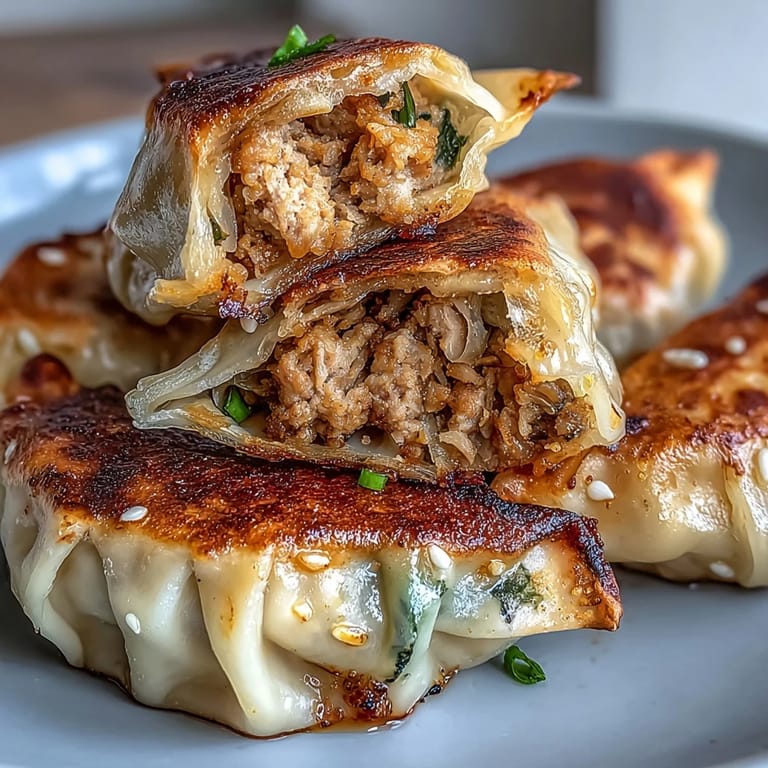
 These smashed gyozas have become my answer when someone texts asking what I'm making for dinner and I have exactly 45 minutes before people arrive hungry. There's something quiet and satisfying about putting together something that tastes this good without wrestling with complicated technique or obscure ingredients.
Frequently Asked Questions
- → What makes smashed gyozas different from regular dumplings?
Smashed gyozas are flattened before cooking, creating more surface area for crispy edges. The unique pan-fry then steam technique yields irresistibly crunchy bottoms while keeping the filling moist and tender inside.
- → Can I freeze uncooked smashed gyozas?
Yes, arrange uncooked dumplings in a single layer on a baking sheet and freeze until firm. Transfer to a freezer bag for up to 2 months. Cook directly from frozen, adding 1-2 extra minutes to the steaming time.
- → What can I use instead of wonton wrappers?
Gyoza wrappers work perfectly and are often thinner. Round dumpling skins or even fresh pasta dough rolled thin can substitute. Avoid egg roll wrappers as they're too thick for the delicate smash technique.
- → How do I achieve the crispiest results?
Use a well-heated nonstick skillet with enough oil to coat the bottom. Don't overcrowd the pan, and let the bottoms get golden before adding water. Remove the lid for the final minute to re-crisp any softened areas.
- → Can I make these vegetarian?
Absolutely. Replace ground pork with crumbled firm tofu, finely chopped mushrooms, or a meat substitute. Add extra vegetables like shredded carrots, bok choy, or water chestnuts for texture and flavor.
- → What's the best way to reheat leftover gyozas?
Reheat in a dry skillet over medium heat for 2-3 minutes per side to restore crispiness. Avoid microwaving as they'll become soggy. Alternatively, bake at 375°F for 8-10 minutes until heated through and crispy.