 Save to Pins
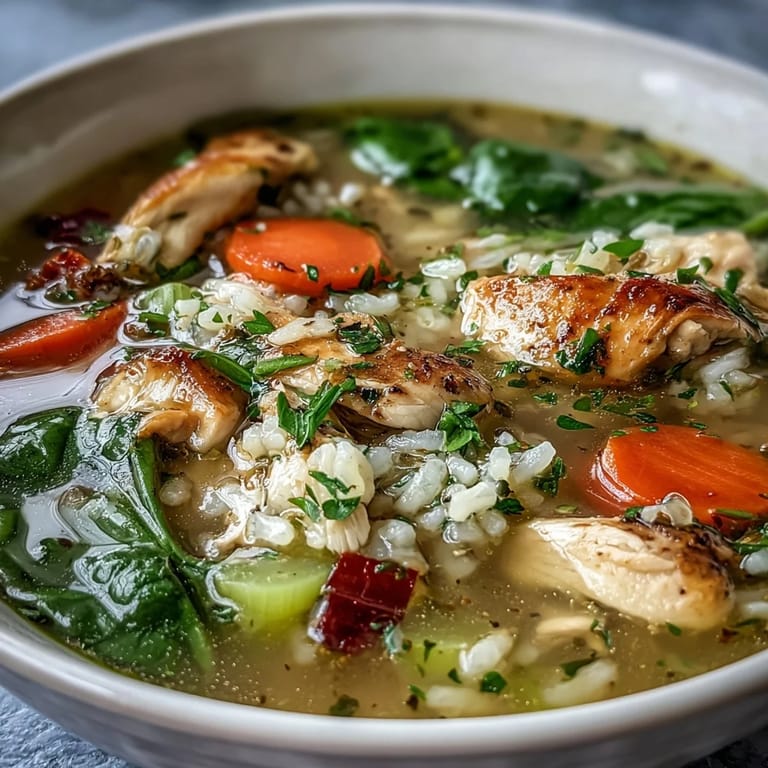
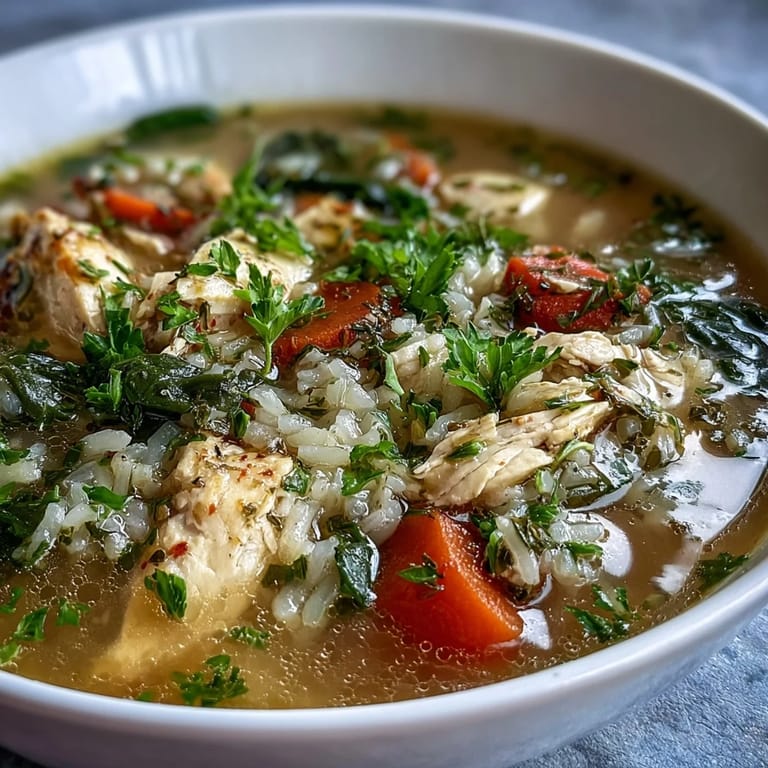
 There's something about a pot of simmering chicken and rice soup that stops the noise in my head. I discovered this recipe on a Tuesday afternoon when I had nothing but tired groceries and a sudden craving for something that tasted like care. Within an hour, my kitchen smelled like home, and I realized I'd been making it wrong for years by overthinking things. This one-pot approach strips away all pretense and delivers pure comfort, the kind that heals without apology.
I made this for my neighbor who'd just started chemo, and she asked for seconds before I'd even sat down. That's when I understood that the best recipes aren't about technique or ingredients, they're about what happens when someone feels seen through food. She kept a quart of it in her freezer for weeks, and watching her get stronger while eating something I'd made felt like small magic.
Ingredients
- Chicken breasts: Cut into bite-sized pieces so they cook evenly and won't require hunting through the pot with your spoon.
- Yellow onion: Diced finely enough to almost melt into the broth, creating a subtle sweetness that anchors the whole soup.
- Carrots: Sliced thin so they soften but hold their shape, giving you little pockets of natural sweetness.
- Celery: The unsung hero that adds depth most people can't identify but absolutely taste.
- Garlic: Three cloves minced fine, because garlic burned is garlic ruined.
- Baby spinach or kale: Optional, but it adds color and nutrition in the last moments before serving.
- Fresh parsley: Keep some for cooking and save some for the top, where it catches the light and makes the soup look alive.
- Long-grain white rice: Rinsed thoroughly to remove excess starch so it doesn't turn your broth into gravy.
- Low-sodium chicken broth: Eight cups is your foundation, so choose something you'd actually drink straight if you had to.
- Dried thyme and oregano: These herbaceous notes make you feel like you're cooking with intention.
- Bay leaf: A single leaf transforms the whole pot into something that tastes like it's been simmering for hours.
- Black pepper and salt: The silent adjusters that let every other flavor sing.
- Lemon juice: Optional but essential, a squeeze that wakes everything up at the very end.
- Olive oil: Just a tablespoon to start the soffritto and keep things honest.
Tired of Takeout? 🥡
Get 10 meals you can make faster than delivery arrives. Seriously.
One email. No spam. Unsubscribe anytime.
Instructions
- Sauté your foundation:
- Heat olive oil in a large pot over medium heat and add your diced onion, carrots, and celery. Let them soften for 4–5 minutes, listening for the gentle sizzle and watching the onion turn translucent at the edges.
- Add the garlic:
- Once everything looks soft and inviting, add your minced garlic and give it just one minute to perfume the whole pot. You'll know it's ready when you can smell it clearly without the bite.
- Begin the chicken:
- Add your bite-sized chicken pieces and cook for 2–3 minutes, stirring occasionally until they lose their raw look but aren't fully cooked. This step is about searing them just enough to build flavor, not cooking them through.
- Build the broth:
- Stir in your rinsed rice, dried thyme, oregano, bay leaf, salt, and pepper, then pour in all the chicken broth. Bring everything to a boil, then reduce the heat to a gentle simmer and cover.
- Let it simmer:
- Cook covered for 20 minutes, stirring occasionally to keep the rice from sticking and to ensure everything cooks evenly. You'll notice the broth turning slightly cloudy as the rice releases its starches, which is exactly right.
- Add the greens:
- Stir in your spinach or kale and let it wilt for 2–3 minutes, turning from raw to tender before your eyes.
- Taste and finish:
- Remove from heat and discard the bay leaf, then taste carefully. Add more salt or pepper if needed, squeeze in the lemon juice for brightness, and stir through the fresh parsley.
- Serve with intention:
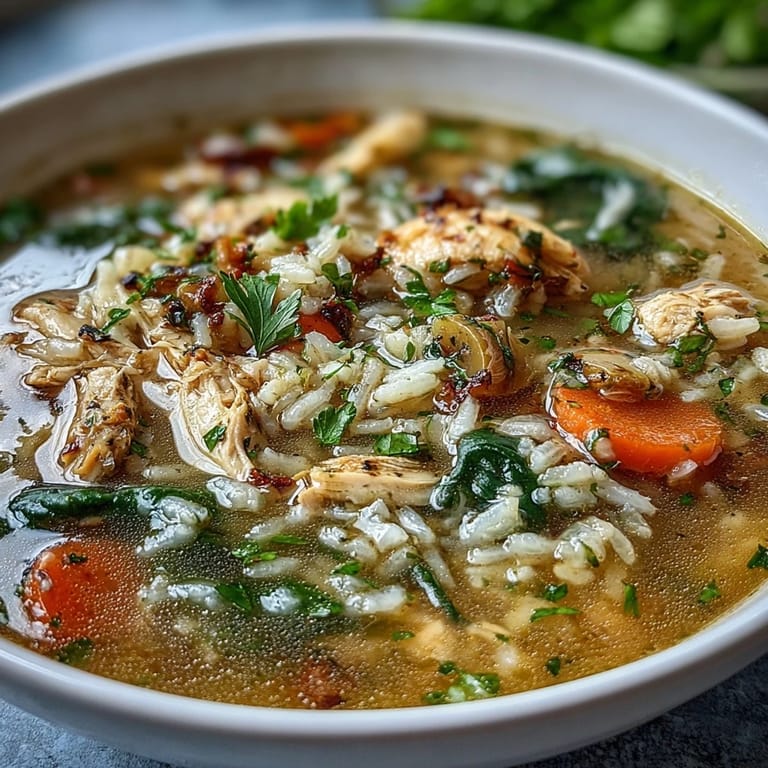
- Ladle into bowls and garnish with extra parsley, then watch someone's face as they take the first spoonful.
 Save to Pins
 My daughter asked for this soup three times in one week, which is how I knew I'd created something that transcended the usual recipes I'd tried. It wasn't fancy or complicated, just honest and sustaining in a way that made her feel safe.
How to Make It Your Own
This soup is a canvas waiting for your personal touch. I've learned that the base is flexible enough to handle your preferences without falling apart, whether that means swapping vegetables or changing the grains entirely. The real secret is tasting as you go and adjusting seasoning not once but twice, because salt behaves differently in hot broth than it does in a bowl.
Storage and Reheating
Leftovers belong in airtight containers in the refrigerator for up to four days, though they rarely last that long in my house. When you reheat, do it gently over medium heat and add a splash of broth to bring the soup back to its original silky consistency, since the rice will have absorbed quite a bit.
Variations Worth Trying
Once you've made this soup the way it's written, the possibilities expand naturally. Brown rice instead of white will make the soup earthier and require about 15 extra minutes of simmering time, which is worth it on a weekend when you're not rushing. For vegetarians, skip the chicken entirely and use vegetable broth instead, then add a can of drained chickpeas for protein and texture that feels substantial.
- A parmesan rind simmered in the broth for the full cooking time adds a savory umami depth that makes people ask what your secret ingredient is.
- Fresh dill stirred in at the very end gives the soup a brighter, more unexpected flavor profile.
- Red pepper flakes add just enough heat to make you sit up straighter while eating.
 Save to Pins
 This soup proves that the simplest recipes are often the ones that matter most, the ones people remember not for their complexity but for how they made them feel. Make it when someone needs comfort, and let the steam rising from the pot do the talking.
Frequently Asked Questions
- → What type of rice works best?
Long-grain white rice is recommended for a tender texture, but brown rice can be used for a heartier bite, though it requires longer cooking.
- → Can I add leafy greens?
Yes, stirring in chopped spinach or kale near the end adds a fresh, nutritious boost and vibrant color.
- → How do I adjust seasoning?
Season with salt, pepper, and herbs like thyme and oregano; finish with lemon juice to brighten the flavors according to taste.
- → Is it suitable for special diets?
This meal is naturally gluten- and dairy-free, accommodating those with related dietary restrictions.
- → Can leftovers be reheated?
Leftovers thicken as rice absorbs broth; add extra broth or water when reheating to maintain the desired consistency.