 Save to Pins
 I remember the first time I stood in a small trattoria in Tuscany, watching the owner arrange a wooden board with such casual elegance that it seemed like poetry. Chunks of cheese fell naturally into place, prosciutto draped itself in generous folds, and suddenly I understood that the most memorable meals aren't always cooked—sometimes they're simply gathered. That afternoon taught me that an Italian farmhouse board isn't just about the ingredients; it's about the spirit of gathering people around something beautiful and honest.
I made this board for friends on a Friday evening when I wanted to celebrate the end of a long week without spending hours in the kitchen. As we stood around the table, tearing bread and reaching for slices of prosciutto, someone said, 'This tastes like Italy.' That's when I knew it wasn't just about the ingredients—it was about creating a moment that felt like a small vacation together.
Ingredients
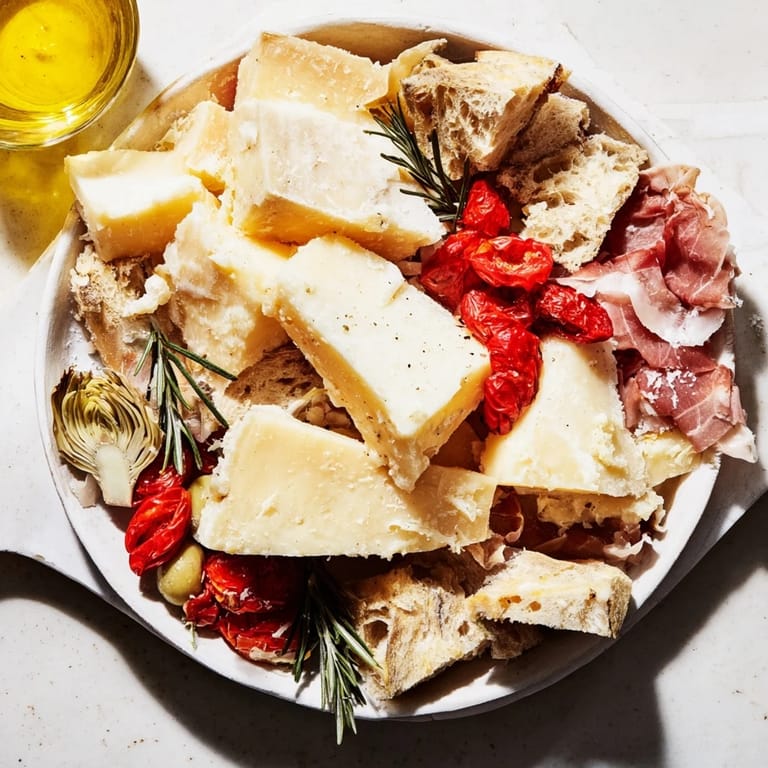
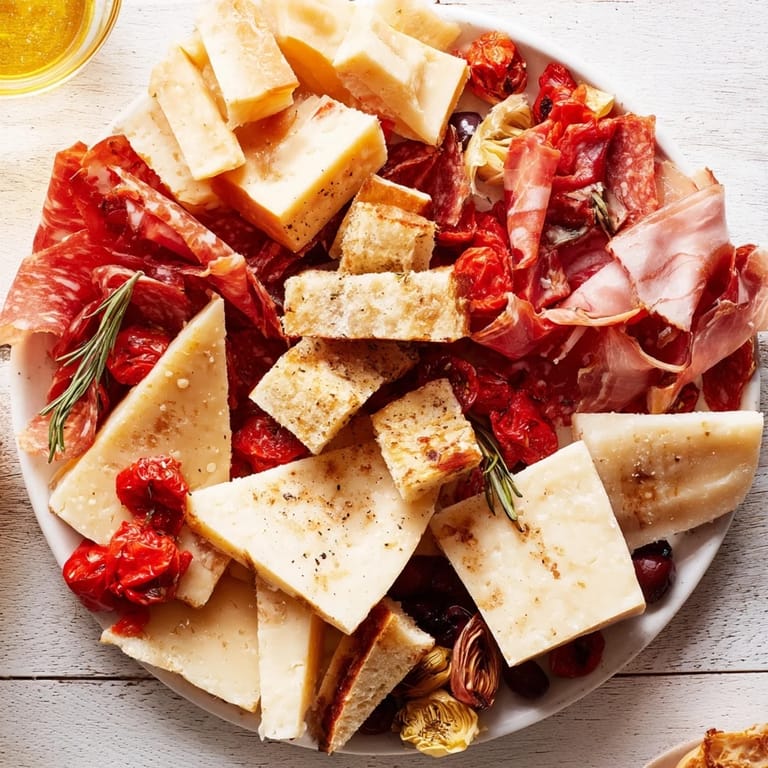
- Parmigiano-Reggiano, 200 g broken into large chunks: This is the backbone of your board. I learned to break it rather than cut it—those irregular edges catch the light and invite people to pick at it. The aged crystalline crunch is non-negotiable.
- Pecorino Toscano, 200 g cut into wedges: Sharper and more assertive than its cousin, this cheese cuts through the richness of the cured meats beautifully. Cut wedges show off its creamy interior.
- Taleggio, 150 g torn into rustic pieces: This washed-rind cheese has a gentle funk that surprises in the best way. Tearing it rather than slicing creates an inviting, casual look that says 'help yourself.'
- Prosciutto di Parma, 150 g loosely piled: The silky delicacy here deserves respect—pile it loosely so each slice can shine. I learned this from a producer in Emilia-Romagna who insisted that prosciutto wants to breathe.
- Finocchiona salami, 120 g thickly sliced: The fennel in this Tuscan salami brings an unexpected warmth. Thick slices show off the beautiful marbling and hold together as you eat them.
- Coppa, 120 g arranged in rustic folds: This funky, rich cured meat deserves prominence. The way fat ribbons through it is almost too beautiful to eat—almost. Arrange it in natural folds for drama.
- Rustic Italian loaf like ciabatta, 1 large loaf torn into rough pieces: Tear it the day of serving for the best texture. I've learned that the imperfect, uneven pieces are more inviting than perfectly sliced bread.
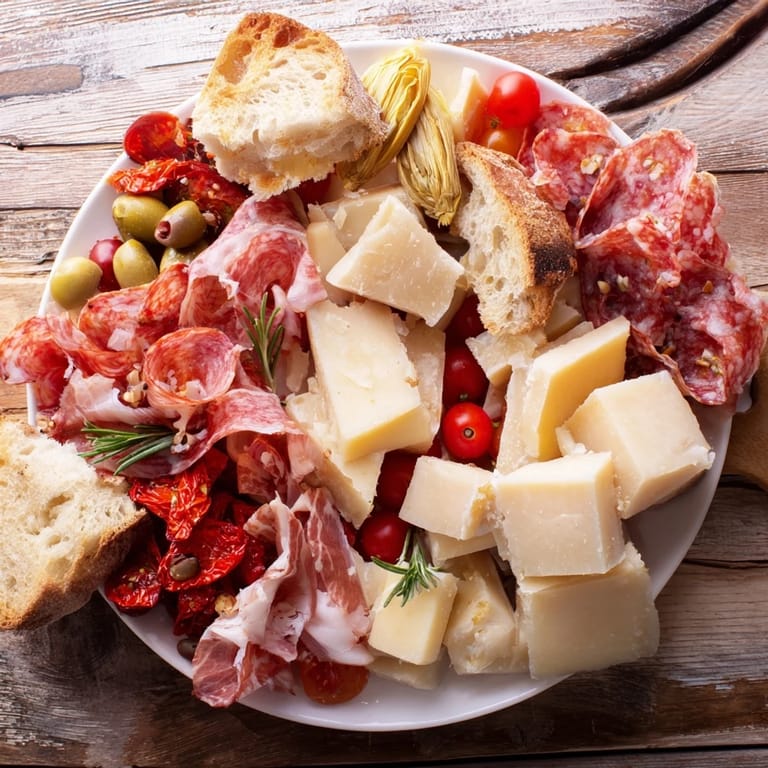
- Castelvetrano olives, 1 cup: These buttery, mild olives are nothing like the briny ones you might expect. They bridge the gap between the salty meats and everything else.
- Sun-dried tomatoes in olive oil, 1 cup drained: The concentrated sweetness here balances the savory elements. I drain them well and sometimes add them to a small bowl to keep their oil from making the board slippery.
- Marinated artichoke hearts, 1 cup quartered: These add brightness and acidity that refreshes your palate between bites. They're the unsung heroes of a great board.
- Fresh grapes or figs, 1 small bunch halved: The sweetness here feels like a small luxury. I choose whichever is in season and at its best.
- Extra-virgin olive oil, 1/4 cup for drizzling: This is not the place for cooking oil. Use something you'd drink if you were being fancy. A gentle drizzle over the bread makes it irresistible.
- Fresh rosemary sprigs, for garnish: Beyond their beauty, these woody herbs remind everyone where this food comes from. A single sprig tucked among the cheeses is all you need.
- Coarse sea salt and cracked black pepper, to taste: Don't skip the finishing seasoning. A light hand with both brings everything into focus.
Tired of Takeout? 🥡
Get 10 meals you can make faster than delivery arrives. Seriously.
One email. No spam. Unsubscribe anytime.
Instructions
- Set your stage:
- Find your largest wooden board or platter—the bigger, the more generous it looks. Run your hands over its surface and imagine the feast it's about to become. Think of this as your canvas.
- Place the cheeses with intention:
- Begin by arranging your three cheeses in different areas of the board, leaving space between them. Break the Parmigiano into irregular chunks—let your hands guide you, aiming for visual movement. Cut the Pecorino into wedges and tear the Taleggio. The key is asymmetry and generosity. These aren't meant to be neat; they're meant to be inviting.
- Create flowing layers of cured meat:
- Pile the prosciutto loosely in one area—let it gather in soft folds as it naturally wants to. Take your time arranging the coppa nearby, again in generous overlapping folds. For the salami, overlap the slices generously, as if you're painting with them. Think about color balance; the pink of the prosciutto, the deeper red of the coppa, the speckled beauties of the finocchiona should dance across the board.
- Scatter the bread with abandon:
- Tear your rustic bread into uneven pieces—don't aim for perfection. Some pieces will be small and toasted on the edges; others will be larger with soft centers. Scatter these around the board as if you've just torn into the loaf and couldn't help but place pieces as you went. They should fill gaps and create texture.
- Distribute the accompaniments in generous piles:
- Now the olives, artichokes, sun-dried tomatoes, and fruit. Rather than spreading them thinly, create little piles—small mounds of each that catch the eye and invite discovery. These aren't meant to be uniform. One pile of olives here, sun-dried tomatoes peeking out there, the grapes creating a pop of color in a corner. Let your eye guide you toward balance.
- Add the finishing touches:
- Drizzle your best olive oil over the bread and across some of the cheeses—let it pool slightly in a corner. Tuck fresh rosemary sprigs into gaps, using them as both flavor and garnish. A light dusting of coarse sea salt and cracked black pepper across the board, particularly over the cheeses and bread, adds a whisper of flavor and catches the light beautifully.
- Step back and admire:
- Before anyone approaches, look at what you've created. A truly good board should look effortlessly abundant, like you've simply gathered the best things you could find. If there are gaps, you haven't gone far enough. If it looks too organized, start again. A farmhouse board should feel alive, chaotic in the most beautiful way.
 Save to Pins
 What surprised me most about making these boards is how they transform gatherings. It's not the food—though the food is certainly part of it. It's that something about arranging food this way, with such visible generosity, gives people permission to linger. I've watched conversations deepen, laughter emerge from unexpected places, all while people reached for another slice of prosciutto or chunk of cheese.
The Art of the Arrangement
There's a lesson hiding in how to build a farmhouse board, and it applies to more than just food. I learned that constraints breed creativity—the challenge of making a flat wooden board look abundant and inviting taught me about balance, about negative space, about how sometimes the gaps between things are as important as the things themselves. When you stop trying to cover every inch and instead think about creating focal points and visual flow, magic happens. The board becomes less about quantity and more about intention.
Pairing and Wine Moments
I discovered early on that the right wine transforms a board from meal into experience. The robust tannins of a Chianti cut through the fat of the cured meats like magic, while a Sangiovese's earthiness echoes the sunbaked origins of these ingredients. But here's what I learned the hard way: the wine doesn't just pair with the food—it changes how people eat. A glass in hand slows everything down. Suddenly people taste more, savor more, remember more. The board becomes an excuse for something larger than hunger.
Building Your Board on a Budget
You don't need expensive cheeses to create a stunning board, though quality matters. I've learned that one truly excellent cheese (like authentic Parmigiano-Reggiano) paired with one accessible regional alternative creates better balance than three premium options. The same applies to cured meats—a little prosciutto di Parma goes further when arranged generously than when you're stretching a larger budget too thin. The bread, the olives, the simple accompaniments—these are where a board becomes abundant without becoming expensive. I've made boards that cost less than ordering takeout for the same number of people, and they've been the most remembered meals.
- Buy whole wheels of cheese when possible and break them yourself—it's cheaper and looks more rustic
- Visit a deli counter where they can slice meats thickly and you can buy exactly what you need
- Seasonal fruit and vegetables reduce costs while increasing freshness and flavor
 Save to Pins
 There's something profoundly right about gathering people around beautiful food that requires no cooking, just care. This board is my love letter to simplicity, to Italy, and to the belief that some of life's best moments happen when we stop trying so hard and simply let good things come together.
Frequently Asked Questions
- → What cheeses work best on this board?
Parmigiano-Reggiano, Pecorino Toscano, and Taleggio provide a mix of aged, creamy, and soft textures, but you can swap in Gorgonzola or Asiago for variety.
- → How should the cured meats be arranged?
Arrange prosciutto and coppa loosely in rustic folds, and layer thickly sliced salami to create a generous overlapping display.
- → What bread is ideal for this platter?
A large rustic Italian loaf like ciabatta torn into uneven pieces complements the rich cheeses and meats well.
- → Which accompaniments enhance the board’s flavors?
Castelvetrano olives, sun-dried tomatoes in olive oil, marinated artichoke hearts, and fresh grapes or figs provide balanced flavors and textures.
- → How can I serve this board for best results?
Drizzle extra-virgin olive oil over the bread and cheeses, garnish with fresh rosemary, season lightly with sea salt and cracked black pepper, and serve immediately.