 Save to Pins
 My neighbor appeared at my door one autumn afternoon with a basket of roasted red peppers from her garden, insisting I do something special with them before they turned soft. I'd never made soup from scratch before, but standing in my kitchen with those glossy charred peppers, I felt oddly confident. The harissa paste she'd tucked into the basket seemed to whisper promises of warmth and complexity. That first bowl, topped with croutons I'd made myself, became the moment I realized homemade soup could taste nothing like the canned versions I'd grown up eating.
I made this soup for my book club on a rainy evening, and what started as appetizer course turned into people asking for seconds and thirds. Someone asked if I'd added cream, and when I told them it was just the roasted peppers and time spent blending, I watched their skepticism transform into genuine surprise. That's when I understood the real magic here: it's humble ingredients treated with care.
Ingredients
- Red bell peppers: Choose ones that feel heavy for their size and have smooth, unblemished skin, as these will roast into the silkiest soup base you've ever encountered.
- Yellow onion: The sweetness matters here more than you'd think, balancing the harissa heat with gentle caramelization.
- Garlic: Mince it finely so it disappears completely into the sauce, adding depth without any harsh bite.
- Carrot: This adds natural sweetness and body to the soup, and peeling matters because the skin can leave specks in your finished purée.
- Olive oil: Use good quality if you can, especially the tablespoon you'll drizzle on the peppers before roasting.
- Harissa paste: This North African chili paste is the secret backbone that makes people ask what that incredible flavor is, so don't skip it or substitute gently.
- Smoked paprika: This one ingredient adds a campfire quality that makes the whole soup taste intentional and sophisticated.
- Ground cumin: Just a teaspoon, but it rounds out the spice profile and prevents the soup from tasting one-note.
- Vegetable broth: Use the best broth you can find or make your own, as this becomes your soup's backbone.
- Canned diced tomatoes: The acidity brightens everything and adds complexity that fresh tomatoes wouldn't provide at this time of year.
- Heavy cream or coconut cream: Optional but transformative, turning velvety into luxurious with just a quarter cup.
- Day-old bread: Slightly stale bread absorbs seasoning better and crisps more evenly than fresh, so don't discard that loaf that's been sitting out.
Tired of Takeout? 🥡
Get 10 meals you can make faster than delivery arrives. Seriously.
One email. No spam. Unsubscribe anytime.
Instructions
- Prepare and roast the peppers:
- Heat your oven to 425°F and halve the peppers lengthwise, removing seeds and white ribs with your fingers. Arrange them skin-side up on a baking sheet, drizzle with olive oil, and roast for 25 to 30 minutes until the skins blacken and the flesh collapses slightly. This charring is essential—it's where the deep, almost smoky sweetness comes from.
- Make the croutons simultaneously:
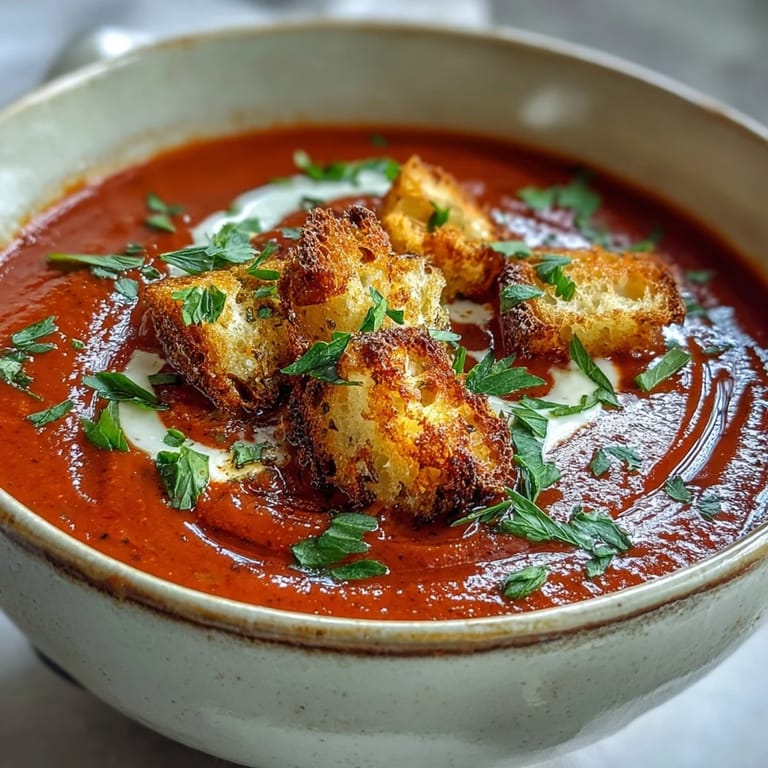
- While peppers roast, toss bread cubes with olive oil, garlic powder, oregano, and salt, then spread on a separate tray and bake for 10 to 12 minutes until they're golden and crispy all the way through. Shake the pan halfway through so they brown evenly.
- Cool and peel the peppers:
- Once roasted, let the peppers cool for a few minutes until you can handle them, then gently peel away the blackened skin under cool running water. The skin should slip off easily if they roasted properly, revealing the silky flesh beneath.
- Build the aromatic base:
- Heat the remaining olive oil in a large pot over medium heat, add the chopped onion, minced garlic, and diced carrot, and sauté for 5 to 7 minutes until the onion turns translucent and everything smells sweet and caramelized. You're not rushing this step—give the vegetables time to soften and develop flavor.
- Bloom the spices:
- Stir in the harissa paste, smoked paprika, and cumin, cooking for just one minute so the spices wake up and release their essential oils into the hot oil. You'll smell the shift immediately—from simple vegetables to something exotic.
- Combine and simmer:
- Add the roasted peppers, canned tomatoes with their juice, vegetable broth, salt, pepper, and sugar if you're using it, then bring everything to a boil and reduce to a gentle simmer for 15 minutes. This resting time lets the flavors marry and deepen.
- Purée until silky:
- Remove from heat and use an immersion blender to purée the soup until it's completely smooth and velvety, or carefully transfer it to a blender in batches if you prefer that method. Work slowly and don't overfill the blender to avoid hot soup escaping.
- Finish with cream:
- Stir in the cream or coconut cream if using, taste the soup, and adjust the salt, pepper, and spices until it tastes exactly right to you. Remember that some harissa pastes vary in saltiness and heat, so tasting and adjusting is crucial.
- Serve with intention:
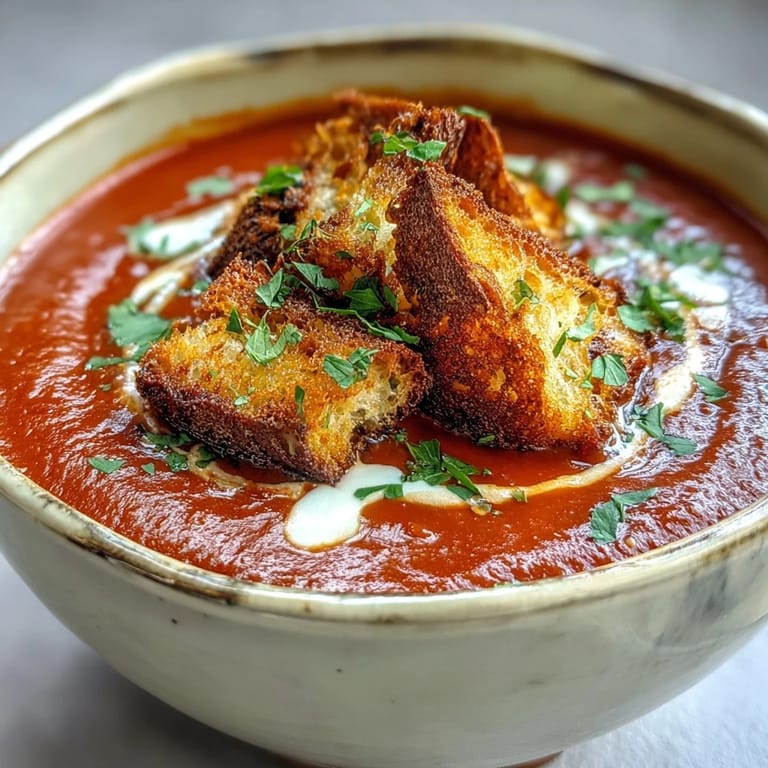
- Ladle the soup into bowls and top each one with a generous handful of crispy croutons, a sprinkle of fresh parsley or cilantro, and an extra swirl of harissa or cream if you want to impress. The croutons will stay crispy for at least ten minutes before slowly softening, so time your serving to your preference.
 Save to Pins
 Years later, that neighbor still mentions that soup when we see each other, and it's become a fixture on my table every fall without fail. There's something about serving something you made from actual ingredients, watching people taste it and close their eyes for a moment, that feels like a small kind of magic.
Why Roasting Matters
The difference between roasted and raw peppers in soup is the difference between a flat, vegetal broth and something that tastes intentionally constructed. Roasting concentrates the peppers' natural sugars through the Maillard reaction, creating subtle caramel notes and eliminating the raw, slightly bitter edge that raw peppers can have. The charred skin also adds a hint of smokiness that no amount of seasoning could replicate. I learned this the hard way when I once tried to speed up the process by skipping roasting, and the resulting soup was thin and forgettable. Now I'm religious about this step.
The Harissa Question
Harissa paste isn't something that should hide in the background—it's the main character of this soup, and every brand tastes slightly different. Some lean more toward heat, others toward depth and smoke, and a few brands add unexpected ingredients like caraway or rose. I've learned to taste my harissa before committing a full tablespoon to the pot, adjusting up or down depending on what I'm working with. The goal isn't to make the soup aggressively spicy but to add a warm, lingering complexity that makes people wonder what they're tasting.
Crouton Secrets and Sunday Suppers
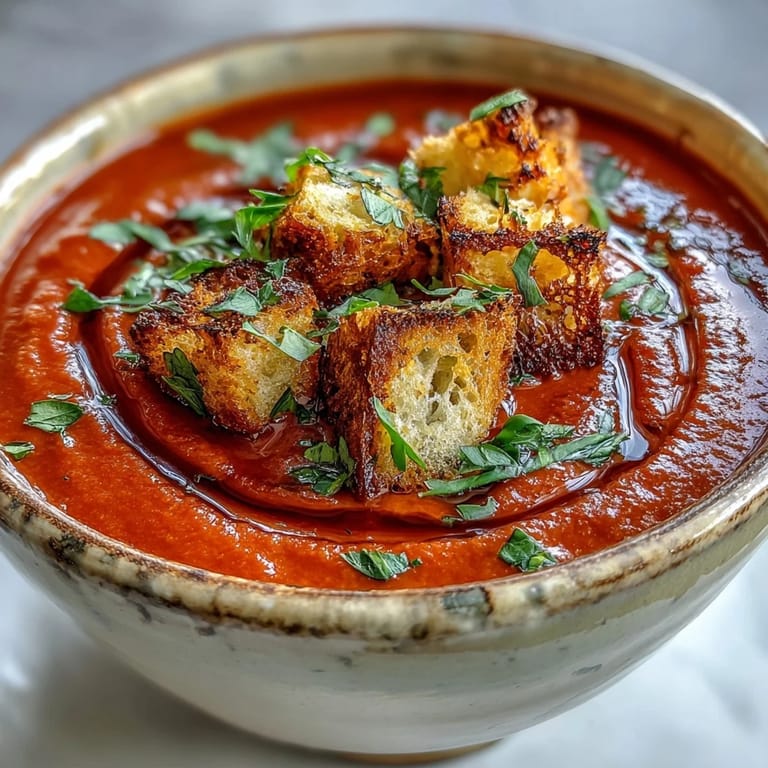
Homemade croutons are one of those things that seem unnecessary until you taste how much better they are than store-bought, and then you can never go back. The day-old bread matters because it absorbs seasoning better and won't turn to mush, while fresh bread tends to stay soft in the center even after crisping the outside. I've started saving bread heels and stale slices specifically for crouton-making, and my family now expects them on any soup I serve. The aromatics matter too—garlic powder and oregano are classic, but you could also try paprika, Italian seasoning, or even a whisper of cayenne if you want to tie them more closely to the soup itself.
- Make extra croutons and store them in an airtight container for up to five days so you have them ready for impromptu bowls of soup.
- If your bread isn't stale enough, cut it into cubes and leave it on the counter overnight before seasoning and baking.
- The croutons should be golden brown and sound crispy when you tap them, not pale or soft.
 Save to Pins
 This soup has taught me that the most elegant dishes often come from understanding a few simple ingredients and treating them with respect. Every time I make it, someone asks for the recipe, and that never gets old.
Frequently Asked Questions
- → Can I make this soup ahead of time?
Absolutely. This soup actually tastes better the next day as flavors have time to meld. Store in an airtight container in the refrigerator for up to 4 days. Reheat gently over medium-low heat, adding a splash of broth if needed. Keep croutons separate to maintain their crunch.
- → What can I use instead of harissa?
If harissa isn't available, try a combination of tomato paste, smoked paprika, and a pinch of cayenne pepper. Alternatively, use roasted red pepper flakes with a touch of hot sauce. Sriracha can work in a pinch, though it has a different flavor profile.
- → How do I roast peppers without an oven?
You can char peppers directly over a gas burner on high heat, turning frequently with tongs until blackened on all sides. Alternatively, use a grill or even a kitchen torch. Place in a bowl, cover, and steam for 10 minutes before peeling.
- → Can I freeze this soup?
Yes, this soup freezes beautifully for up to 3 months. Cool completely before transferring to freezer-safe containers. Thaw overnight in the refrigerator and reheat gently. For best texture, add fresh cream after reheating rather than before freezing.
- → How can I make the soup extra smooth?
After blending, pass the soup through a fine-mesh sieve for an ultra-silky texture. Use a high-speed blender and blend for longer than you think necessary—about 2-3 minutes. Adding the cream at the very end helps achieve a luxurious consistency.
- → What bread works best for croutons?
Day-old French bread, sourdough, or ciabatta are ideal choices as they hold their texture well without becoming too hard. Avoid very soft sandwich bread which can turn mushy. Stale bread actually works better than fresh as it absorbs the seasonings while maintaining crunch.