 Save to Pins
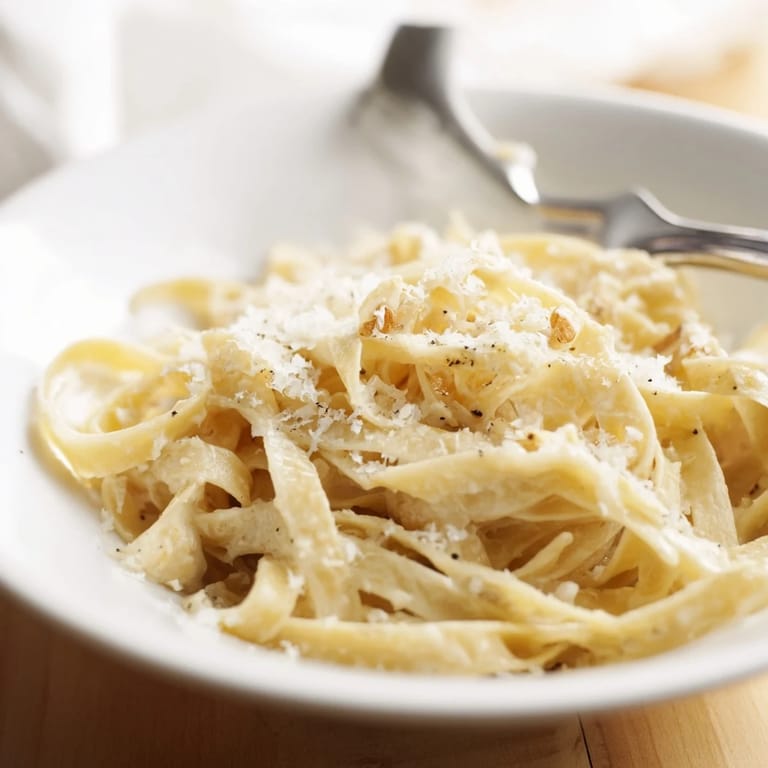
 The oven timer had just gone off when my neighbor knocked on the door, drawn by the smell of roasting garlic wafting through the hallway. I hadn't planned on sharing dinner, but one look at those golden, caramelized cloves and I knew I'd be setting an extra plate. This pasta came together that night almost by accident, born from a head of garlic I'd been meaning to use and a craving for something rich and simple. The sauce clung to every strand of fettuccine like silk, and we ate in near silence, too busy twirling forks to talk. It's been my go-to ever since whenever I want comfort without complexity.
I made this for my sister the week she moved into her first apartment, back when her kitchen consisted of two pots and a questionable spatula. We sat on her living room floor with bowls in our laps, and she declared it the best thing she'd eaten all month. She still texts me photos every time she makes it, usually with the caption just like you showed me, even though I'm pretty sure she's improved the recipe by now. That night, with boxes stacked around us and the windows open to let in the spring air, this pasta felt like a small anchor in all the newness.
Ingredients
- Garlic bulbs: Roasting whole bulbs mellows the garlic into a sweet, spreadable paste that becomes the soul of this sauce, so don't skimp on quality here.
- Olive oil: Just a drizzle keeps the garlic from drying out in the oven and helps those cloves turn golden and tender.
- Fettuccine or spaghetti: Wide noodles grab onto the cream sauce better, but honestly any long pasta works as long as you cook it just shy of tender.
- Heavy cream: This is what gives the sauce its luxurious texture, though you can cut it with milk if you want something a little less rich.
- Parmesan cheese: Freshly grated melts smoothly into the sauce without clumping, and the nutty flavor ties everything together.
- Shallot: Adds a subtle sweetness that balances the richness of the cream, and it cooks down almost invisibly.
- Nutmeg: A tiny pinch brings warmth without announcing itself, one of those secret ingredients you taste but can't quite name.
Tired of Takeout? 🥡
Get 10 meals you can make faster than delivery arrives. Seriously.
One email. No spam. Unsubscribe anytime.
Instructions
- Roast the garlic:
- Slice off the tops of the bulbs to expose the cloves, drizzle with olive oil, and wrap them snugly in foil before roasting at 200°C until they're soft enough to squeeze out like butter. The kitchen will smell incredible, like a promise of what's coming.
- Cook the pasta:
- Boil the noodles in generously salted water until they still have a slight bite, then save half a cup of that starchy water before draining. That pasta water is liquid gold for loosening the sauce later.
- Sauté the shallot:
- Melt the butter over medium heat and let the shallot soften until it's translucent and fragrant, about two minutes. Don't rush this, the sweetness develops slowly.
- Build the sauce base:
- Mash the cooled roasted garlic into a rough paste and stir it into the shallot, letting it bloom in the butter for a minute. The smell alone will make you hungry.
- Add the cream:
- Pour in the cream and milk, whisking gently as it heats, and let it simmer until it thickens just enough to coat the back of a spoon. This takes patience, but the texture is worth it.
- Finish with cheese:
- Stir in the Parmesan along with the salt, pepper, and nutmeg, and watch the sauce turn glossy and smooth. Taste as you go, adjusting seasoning until it feels right.
- Toss and serve:
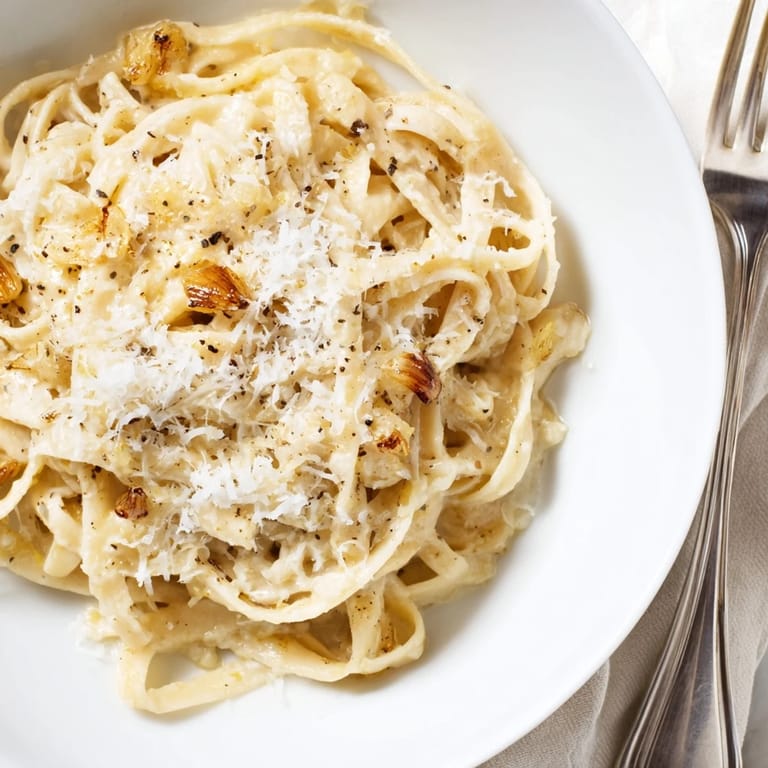
- Add the drained pasta directly to the skillet and toss everything together, adding splashes of reserved pasta water until the sauce clings to every strand. Serve immediately with extra Parmesan and a scattering of parsley if you have it.
 Save to Pins
 There was a dinner party where I served this to a friend who claimed she didn't like garlic, and I watched her go back for seconds without saying a word. Later she admitted she'd been wrong about garlic all along, she just hadn't met it roasted. That quiet moment of watching someone change their mind about an ingredient they thought they knew felt like a tiny victory. Food has a way of rewriting our assumptions when we let it.
Making It Lighter
If the full cream version feels too heavy, swap half of it for whole milk or even half and half, and you'll still get a sauce that coats beautifully. I've done this on nights when I want the flavor without feeling weighed down afterward, and it works surprisingly well. The roasted garlic carries so much richness on its own that the sauce doesn't need to be quite as indulgent to satisfy. You can also toss in a handful of baby spinach at the end, it wilts into the sauce and adds a pop of color without changing the essence of the dish.
Pairing and Serving
This pasta doesn't need much on the side, maybe a simple arugula salad with lemon and olive oil or some crusty bread to soak up any extra sauce. I've served it with a crisp white wine, something like Pinot Grigio or Sauvignon Blanc, and the acidity cuts through the cream in the best way. On quieter nights, though, it's just as good with sparkling water and a candle on the table. Sometimes the dish itself is enough of an occasion.
Storage and Reheating
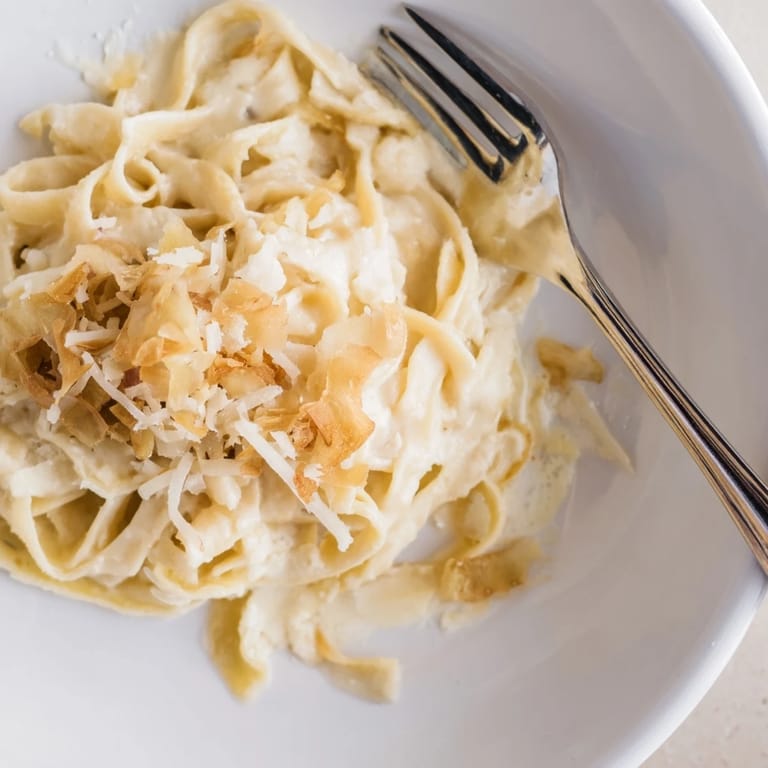
Leftovers keep in the fridge for up to three days, and they reheat better than most cream sauces I've tried. Add a splash of milk or cream to the pan and warm everything gently over low heat, stirring often so the sauce doesn't break. I've even reheated individual portions in the microwave with decent results, though the stovetop method is gentler and brings back that silky texture.
- Store in an airtight container to keep the pasta from drying out.
- Reheat slowly and add liquid gradually, it's easier to thin the sauce than to thicken it again.
- If the sauce separates, a quick whisk and a tablespoon of pasta water usually brings it back together.
 Save to Pins
 This pasta has a way of turning an ordinary weeknight into something that feels a little special, without asking much of you in return. I hope it finds a place in your rotation the way it has in mine.
Frequently Asked Questions
- → How do I know when the roasted garlic is ready?
Roast the garlic for 35-40 minutes at 200°C until the cloves are soft and golden brown. They should squeeze out easily from their skins when cooled slightly.
- → Can I make this ahead of time?
You can roast the garlic bulbs several hours ahead. However, it's best to prepare the sauce and assemble just before serving to maintain the cream's silky texture and prevent the pasta from becoming overcooked.
- → What type of pasta works best?
Fettuccine and spaghetti are ideal for coating with cream sauce. Pappardelle or linguine also work beautifully. Avoid small pasta shapes that don't capture the sauce as well.
- → How do I prevent the sauce from breaking?
Keep heat at medium and avoid boiling vigorously. Whisk cream and milk together before adding, and stir gently when incorporating the Parmesan to ensure it melts smoothly without separating.
- → What can I add for extra nutrition?
Sautéed spinach, mushrooms, or broccoli work wonderfully. Add them to the sauce just before combining with the pasta. These vegetables complement the garlic flavor beautifully.
- → Is there a lighter version of this dish?
Substitute half-and-half or even whole milk for some of the heavy cream to reduce fat content. The sauce will be less rich but still delicious and creamy.