 Save to Pins
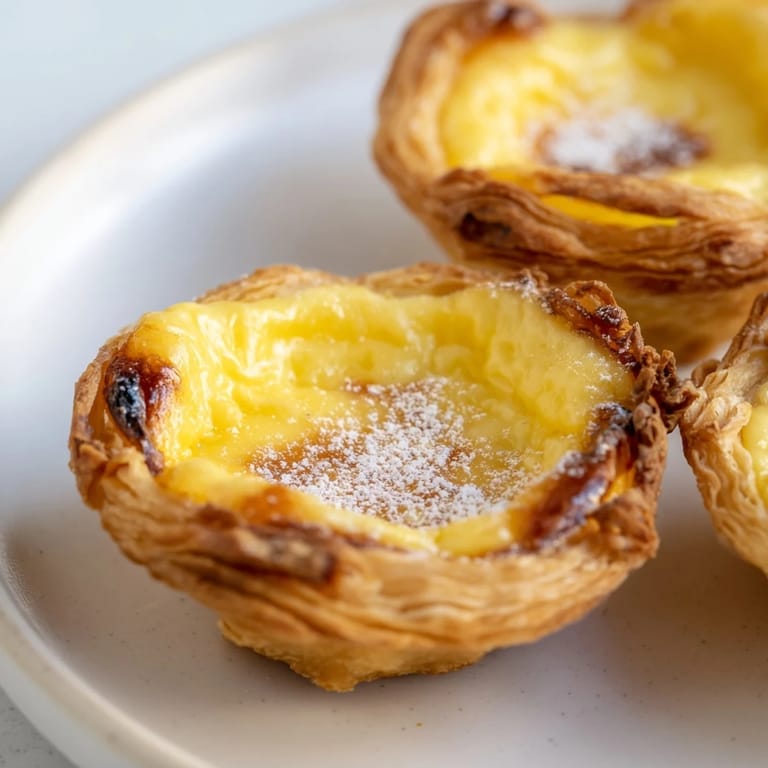
 My grandmother kept a tin of Portuguese egg tarts in her kitchen, and I'd steal one whenever she wasn't looking, biting into that crispy phyllo shell to find the warm, spiced custard inside. Years later, I tried making them myself on a quiet Sunday afternoon, and the moment that cinnamon-scented custard came together in the pan, I understood why she guarded that tin so carefully. There's something almost magical about how the delicate pastry shatters against the creamy filling, and how a simple combination of eggs, cream, and butter becomes something that tastes like a pastry shop secret. These tarts have become my answer to "what should I bring?" at every gathering.
I made these for my partner's office party last spring, nervous about whether they'd be popular or just sit on the table. Within twenty minutes, only crumbs remained, and I caught someone sneaking a second one when they thought no one was looking. That's when I knew these tarts had officially earned their place in my regular rotation.
Ingredients
- Phyllo pastry sheets: Buy them fresh or thawed from frozen, and keep them covered with a damp towel while you work so they don't dry out and crack.
- Unsalted butter, melted: This is your binding agent and flavor base, so don't skimp on quality.
- Whole milk: This creates the foundation for a smooth, rich custard without graininess.
- Cornstarch: The secret to achieving that silky texture that holds just right without becoming rubbery.
- Heavy cream: Use the full amount because it's what makes the filling luxurious and prevents a thin, watery result.
- Granulated sugar: I've learned to cream this with the egg yolks first gives you a smoother custard.
- Egg yolks: Room temperature yolks blend more seamlessly and create a richer custard.
- Pure vanilla extract: The real thing makes a noticeable difference in the final flavor profile.
- Ground cinnamon: This is the signature spice that makes people ask for the recipe, so use good-quality cinnamon.
- Salt: Just a pinch to amplify all the other flavors without announcing itself.
- Powdered sugar for topping: A dusting at the end gives you that bakery-fresh look and a delicate sweetness.
Tired of Takeout? 🥡
Get 10 meals you can make faster than delivery arrives. Seriously.
One email. No spam. Unsubscribe anytime.
Instructions
- Prepare your oven and phyllo:
- Preheat to 200°C (400°F) and lay out your phyllo sheets, keeping them covered with a barely damp towel so they stay pliable. Brush each sheet generously with melted butter—you want them golden and crispy, not papery and dry.
- Build the phyllo cups:
- Stack three buttered sheets together, then cut into squares large enough to line your muffin tin. Press each stack gently into the cups, letting the edges ruffle naturally—those ruffles crisp up beautifully in the oven.
- Bake the shells:
- Bake for 8–10 minutes until the phyllo turns pale golden. They'll continue crisping as they cool, so don't wait until they're dark brown.
- Make the custard:
- In a saucepan, whisk milk and cornstarch together first to avoid lumps, then add cream, sugar, egg yolks, vanilla, cinnamon, and salt. Heat over medium, whisking constantly—this takes patience, but around 5–7 minutes you'll feel it suddenly thicken and become glossy.
- Fill and finish baking:
- Divide the warm custard carefully among the phyllo cups and bake for another 8–10 minutes until the tops are barely set and lightly golden. They'll continue setting as they cool.
- Cool and dust:
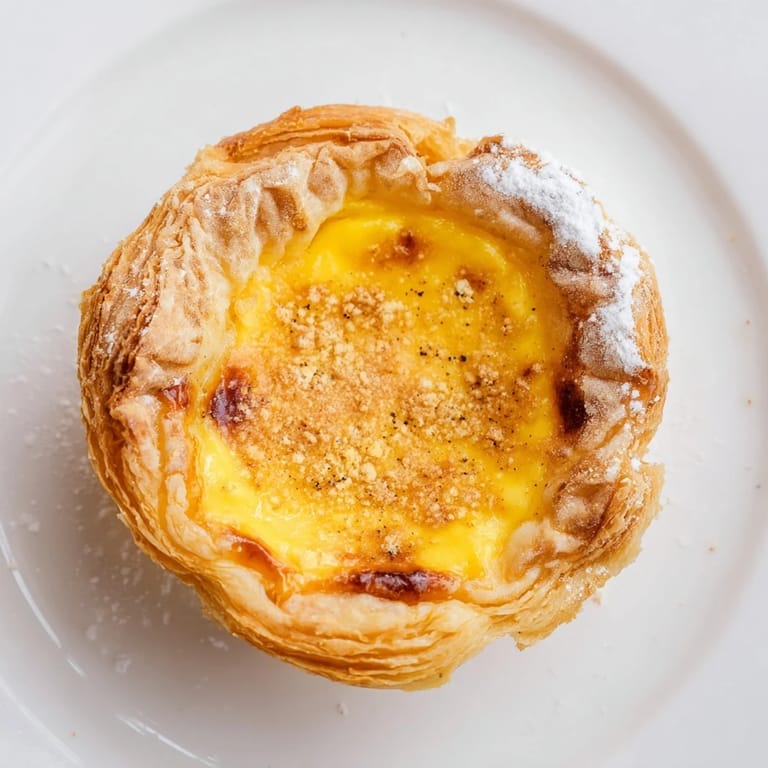
- Let them rest for a few minutes, then dust with cinnamon and powdered sugar while they're still slightly warm for the best effect.
 Save to Pins
 The first time I served these to someone who grew up in Portugal, they closed their eyes after that first bite and smiled like they'd just traveled back in time. Watching someone taste something that connects them to home or memory is a privilege, and these tarts have given me that moment more than once.
Why the Phyllo-to-Custard Ratio Works
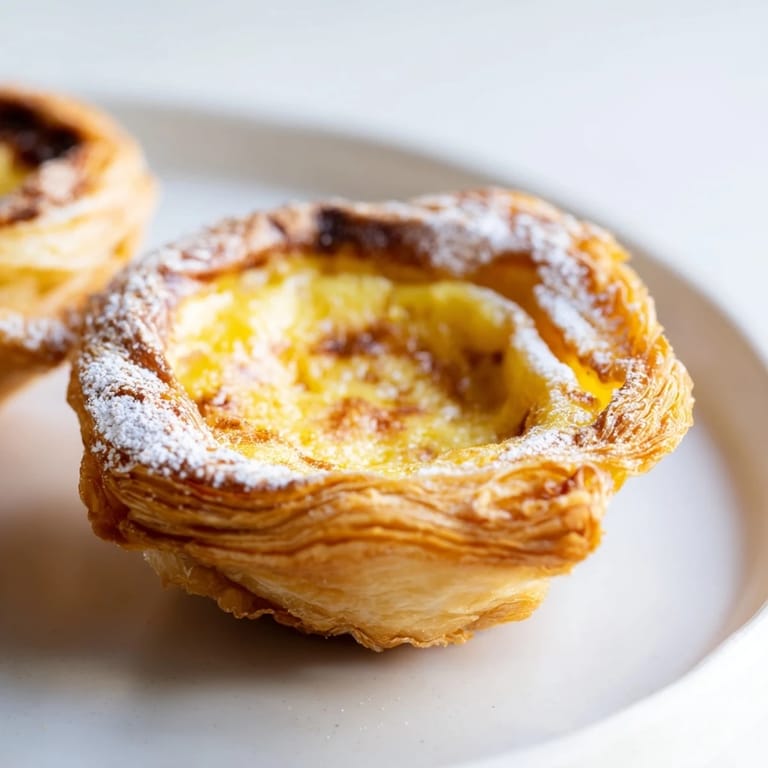
The three-layer phyllo stack gives you enough structure to hold the custard without being thick and doughy, while the shallow muffin tin cups mean the pastry and filling bake at the same pace. This balance is what keeps the phyllo crispy instead of turning soft and soggy from the filling. The melted butter between each layer acts as both a flavor enhancer and moisture barrier, which is why brushing generously really matters here.
Timing and Temperature Secrets
Serving these slightly warm is non-negotiable because the phyllo is at its crispiest in that window between coming out of the oven and cooling completely. The custard is also more velvety at warm temperature, and the cinnamon flavor blooms more intensely. If you're making them ahead, let them cool completely, refrigerate, then give them 3–4 minutes in a 160°C oven to restore the pastry's crispness without drying out the filling.
Flavor Variations and Pairings
Once you've mastered the basic custard, you can play with it—a tiny grating of lemon zest adds brightness, or a whisper of cardamom adds an unexpected warmth. I've made versions with a touch of orange extract and a hint of nutmeg, and they were equally addictive. These pair beautifully with strong espresso in the morning, chilled white port in the evening, or even a small glass of dessert wine.
- Try a tiny pinch of ground clove or allspice if you love warm spices.
- Serve at room temperature for afternoon tea, or warm from the oven for evening dessert.
- Store in an airtight container in the fridge for up to three days, and they taste almost as good reheated as they do fresh.
 Save to Pins
 These Portuguese egg tarts are my favorite reminder that the simplest ingredients, treated with care and a little patience, become something worth sharing. Once you make them, they'll likely become a fixture in your kitchen too.
Frequently Asked Questions
- → How do I make the phyllo cups crisp?
Brush each phyllo sheet with melted butter and bake the stacked layers before adding the filling to achieve a golden, crisp texture.
- → Can I prepare the custard filling ahead of time?
Yes, cook the custard until thickened and cool it before refrigerating. Rewarm gently before filling the cups.
- → What spices enhance the custard’s flavor?
Ground cinnamon and pure vanilla extract provide warmth and depth, balancing the creamy custard perfectly.
- → How should I serve these tarts for best texture?
Serve slightly warm to enjoy the contrast between crisp phyllo and smooth custard, with a dusting of powdered sugar.
- → What beverage pairs well with these tarts?
A glass of chilled white port or a strong espresso beautifully complements the sweet and spiced flavors.