 Save to Pins
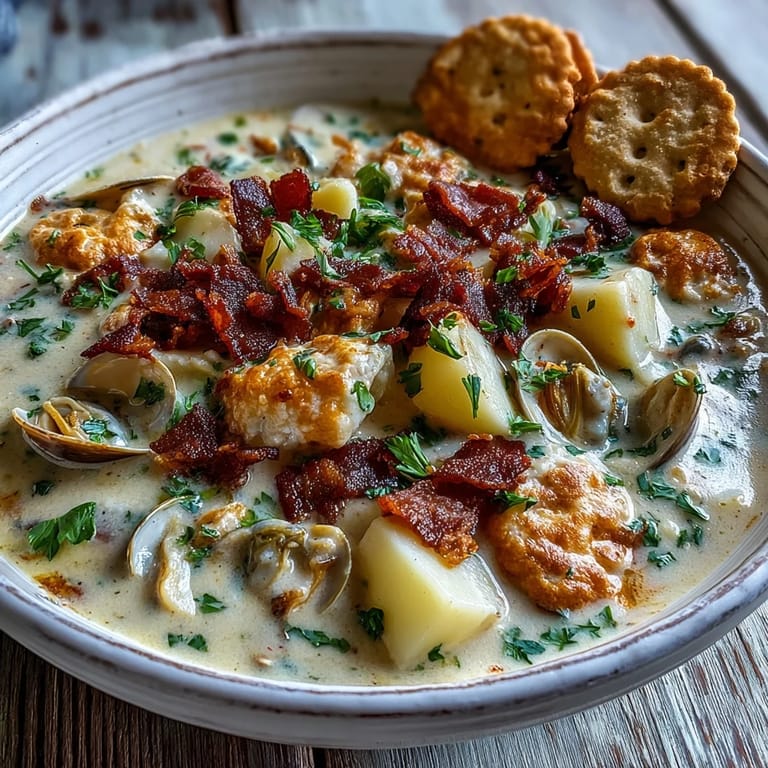
 There's something about a bowl of New England clam chowder that pulls you back to a specific moment, mine being a grey October afternoon when my aunt decided to teach me the art of making it properly. She'd grown up near Boston, and watching her hands work through each step felt like inheriting a quiet tradition. The kitchen filled with the briny aroma of clams steaming open, and I realized this wasn't just soup—it was comfort wrapped in cream and potato. Now, every time I make it, that same smell transports me instantly.
I served this for the first time at a dinner party where I barely knew half the guests, and somehow a second bowl appeared at almost every seat. One person asked for the recipe, then another, and by dessert I'd written it down three times on scraps of paper. That's when I understood it wasn't about impressing anyone—it was about giving them something that felt genuine and nourishing.
Ingredients
- Fresh clams (littlenecks) or canned chopped clams: Fresh clams give you control over the steaming liquid and taste briny and pure, but honestly, canned clams save time and work beautifully when life gets busy.
- Yukon Gold potatoes: They hold their shape better than russets and have a naturally creamy texture that feels intentional in the soup.
- Salt pork or bacon: This renders fat that flavors everything—it's the savory backbone of the whole thing, so don't skip it or substitute with oil.
- Heavy cream and whole milk: The combination creates richness without being overwhelming; if you want lighter chowder, this ratio is what you adjust.
- Bay leaf and thyme: These dried herbs do the heavy lifting in terms of flavor, so make sure yours aren't ancient dust in the back of your cabinet.
- All-purpose flour: Just two tablespoons create a roux that thickens everything naturally without making it gluey.
Tired of Takeout? 🥡
Get 10 meals you can make faster than delivery arrives. Seriously.
One email. No spam. Unsubscribe anytime.
Instructions
- Start with fresh clams if you have them:
- Scrub them under cold water to remove grit. In a large pot, combine clams with 1 cup water, cover, and steam over medium heat until shells open, about 6–8 minutes. Listen for that gentle hiss and watch for the shells to part—it's your signal they're ready. Discard any stubborn ones that won't open, remove the rest with tongs, strain and reserve that precious cooking liquid, then chop the clam meat and set it aside.
- Render the salt pork or bacon:
- Cut it into small dice and cook it slowly in your large Dutch oven or soup pot over medium heat until the fat turns translucent and the meat gets crisp. This takes about 5 minutes and fills your kitchen with an irresistible aroma—remove the meat with a slotted spoon but leave every bit of fat behind.
- Build the base with butter and vegetables:
- Add butter to that flavorful fat, then sauté your diced onion and celery until they soften and turn translucent, roughly 5 minutes. Stir in minced garlic and cook for just 1 minute more until it stops being raw and becomes fragrant.
- Create the roux:
- Sprinkle flour directly over the vegetables and stir constantly for 2 minutes. You're cooking out the raw flour taste and creating the thickener that will give your chowder that silky body.
- Whisk in the liquids slowly and patiently:
- Pour in your clam juice (including reserved steaming liquid), milk, and cream while whisking to prevent lumps from forming. This is the step where patience matters more than speed—take your time and you'll have a smooth base.
- Add potatoes and aromatics:
- Stir in your diced potatoes along with the bay leaf and thyme. Simmer uncovered for 12–15 minutes, stirring occasionally so nothing sticks to the bottom of the pot. The potatoes should be fork-tender but not falling apart.
- Finish with clams and the cooked meat:
- Add your chopped clams (fresh or canned with their juice) and the bacon you cooked at the start. Simmer gently for 3–5 minutes—this is crucial, keep the heat gentle or the clams become tough and rubbery.
- Season and serve:
- Remove the bay leaf, stir in fresh parsley, then taste carefully as you add salt and pepper. Each clam brings its own saltiness, so go slowly here and trust your palate.
 Save to Pins
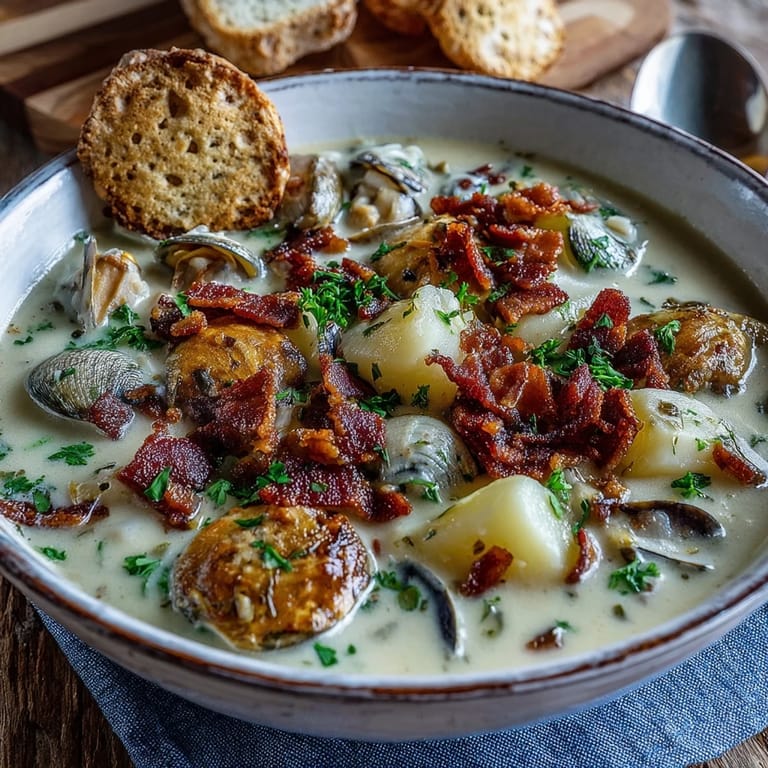
 My clearest memory is my cousin's daughter tasting it for the first time, her eyes widening at that first spoonful, the way she went quiet and focused. Sometimes food becomes a small miracle in a moment, and that's what this chowder does.
Choosing Between Fresh and Canned Clams
Fresh clams feel fancy and intimidating, but they're actually forgiving once you understand what you're doing. The steaming liquid they release becomes part of the magic, carrying brine and mineral notes into the broth. Canned clams remove all the theater and anxiety—they're pre-cooked, they're consistent, and frankly, they work. The choice isn't about one being superior; it's about what serves you that day.
The Roux and Why It Matters
A roux is just flour cooked in fat, but it's the invisible hand that changes everything from brothy to silky. When you whisk your liquids into it, the flour granules swell and thicken, creating that quintessential chowder texture. I once skipped this step thinking I'd save time, and ended up with a thin, sad soup that looked nothing like what I'd imagined. That taught me that shortcuts sometimes cost more than they save.
Storage and Reheating Tips
This chowder actually tastes better the second day when the flavors have time to meld together overnight. Store it in an airtight container in the refrigerator for up to three days, and reheat gently on the stovetop over medium-low heat, stirring occasionally. If it thickens too much, thin it with a splash of milk or cream.
- Freezing changes the texture slightly due to the cream and potatoes, so eat fresh when possible.
- Warm it slowly and never let it boil once it's reheated, or the dairy will break.
- A sprinkle of fresh parsley or oyster crackers on top refreshes it each time you serve.
 Save to Pins
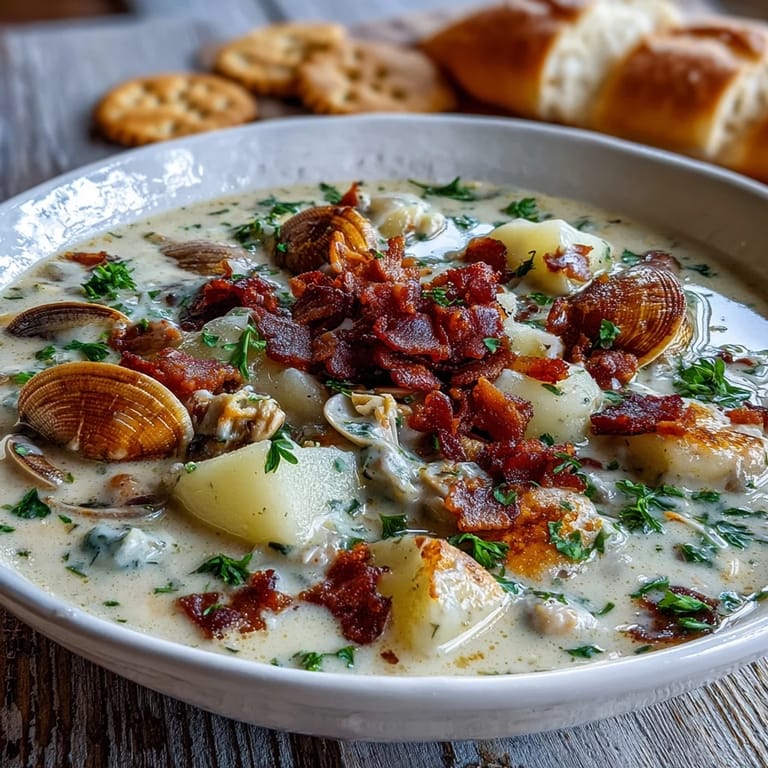
 There's something elemental about making chowder that connects you to generations of cooks who understood that good food comes from patience and care. This recipe is your invitation to join them.
Frequently Asked Questions
- → Can I use canned clams instead of fresh?
Yes, canned chopped clams work beautifully. Use two cups along with their juice, which provides essential clam flavor. If you prefer fresh clams, steam them in water until they open, then chop the meat and reserve the cooking liquid.
- → How do I prevent the dairy from curdling?
Avoid boiling the chowder once cream and milk are added. Keep the heat at a gentle simmer and stir occasionally. Adding dairy gradually while whisking helps incorporate it smoothly into the roux-based broth.
- → What's the difference between salt pork and bacon?
Salt pork is cured but not smoked, offering pure savory richness without bacon's smokiness. Bacon works perfectly as a substitute and adds a pleasant smoky dimension. Both render fat that flavors the vegetables beautifully.
- → Can I make this chowder ahead of time?
Absolutely. The flavors actually improve overnight. Prepare the chowder completely, cool it, and refrigerate. Reheat gently over low heat, adding a splash of cream or milk if it thickens too much. Avoid high heat to prevent separation.
- → What type of potatoes work best?
Yukon Gold or russet potatoes are ideal because they hold their shape during simmering while becoming tender. Avoid waxy varieties like red potatoes, which won't break down enough to contribute to the chowder's body.
- → How should I store leftovers?
Cool completely and refrigerate in an airtight container for up to three days. The chowder may thicken significantly—simply thin with a little milk or cream when reheating. Freezing isn't recommended as dairy can separate upon thawing.