 Save to Pins
 My friend Sarah brought me my first proper matcha latte on a grey Tuesday morning, and I remember being skeptical—how could a green powder taste like anything but grass? But that first sip, with its delicate bitterness balanced by the silky milk, changed something. Now whenever I whisk matcha at home, I chase that same feeling of comfort wrapped in ceremony, even if it's just in my kitchen before work.
I made this for my mom during one of her stress-filled work weeks, and she sat at the kitchen counter watching me whisk the matcha with the bamboo whisk—something she'd never seen before. The whole process felt meditative, and when I crowned it with that cloud of foam, her face just lit up. She asked me to make it again the next morning, and the next, until it became our quiet ritual together.
Ingredients
- High-quality matcha powder: Don't skip on this—cheap matcha tastes chalky and bitter in the worst way, but good matcha has an almost sweet, vegetal quality that makes all the difference.
- Hot water (80°C/175°F): Too hot and you'll burn the delicate flavor; too cool and it won't fully dissolve, so get a thermometer if you're particular about it.
- Milk of choice: Whole milk creates the creamiest base, but oat milk froths beautifully and adds a subtle sweetness if you're going plant-based.
- Cold milk for foam: Barista-style plant milks (the kind specifically made for steaming) froth better than regular milk alternatives.
- Sugar or simple syrup: Simple syrup dissolves instantly into cold foam, but granulated sugar works fine if you froth long enough.
Tired of Takeout? 🥡
Get 10 meals you can make faster than delivery arrives. Seriously.
One email. No spam. Unsubscribe anytime.
Instructions
- Sift your matcha:
- Pour the matcha powder through a fine mesh sieve into your bowl or mug, breaking up any lumps with the back of a spoon. This step feels tedious but prevents those gritty clumps that hide in unsieved matcha.
- Whisk until frothy:
- Add the hot water and whisk in quick, circular motions with your bamboo whisk, angling it slightly to incorporate air. You'll know it's ready when it looks bright green and foamy, with no visible powder settling at the bottom—usually takes about 30 seconds of actual effort.
- Warm and add the milk:
- Heat your chosen milk in a small saucepan or microwave until it's steaming but not boiling; you want it hot enough to marry with the matcha but cool enough that you can still hold the cup. Pour it gently into your whisked matcha and stir to combine.
- Create the cold foam:
- Pour cold milk and sugar into your frothing pitcher or jar, then either use an electric frother or seal the jar and shake it vigorously for about 60 seconds until it doubles in volume and looks like a cloud. The cold foam should be airy and thick, not just bubbly.
- Assemble and serve:
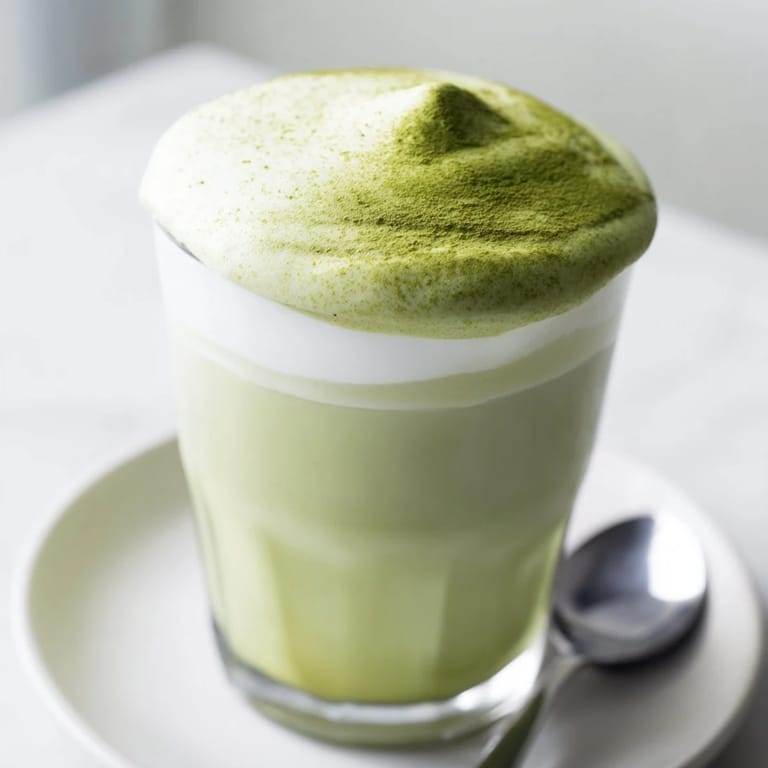
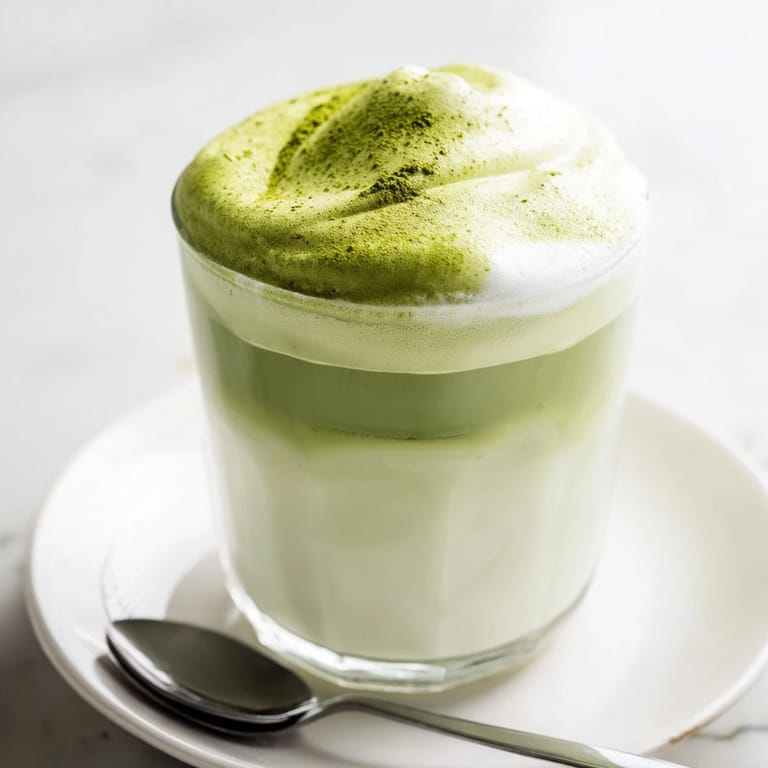
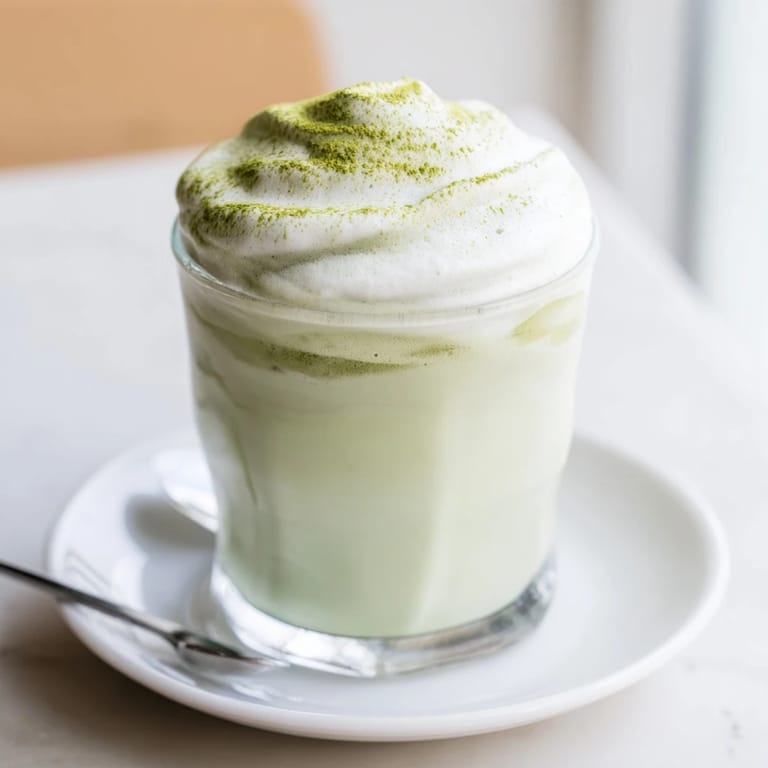
- Pour your matcha latte into a glass, add ice if you like, then spoon that beautiful foam right on top so each sip gets a taste of both the creamy latte and the sweet foam.
 Save to Pins
 There's something about the color of matcha that makes people pause—that impossible, almost artificial green that's actually just pure plant powder. My coworker took one look at my drink and asked if it was safe to drink, and I realized matcha carries this mystique that makes the everyday moment of sipping it feel a tiny bit ceremonial.
The Magic of Temperature
Water temperature is genuinely the invisible hand that determines whether your matcha tastes like a delicate tea or a regretful mistake. I learned this the hard way by scalding matcha with boiling water and wondering why it tasted so aggressively bitter. Now I keep my kitchen thermometer nearby, but even without one, you can test the water by dipping your pinky in—if you can comfortably hold it for 10 seconds, it's about right.
Choosing Your Milk
The milk you choose shapes the entire drink in subtle ways. Whole milk is rich and forgiving, oat milk adds a gentle sweetness that mirrors matcha's natural flavors, and almond milk keeps things light if that's your preference. I've found that the kind of milk you use for the latte base and the foam can be different—I often use whole milk for the base and barista oat milk for the foam because it froths more reliably and adds a nice textural surprise.
Timing and Ritual
Making a matcha latte isn't just about the drink—it's one of those small kitchen rituals that can reshape a rushed morning into something intentional. The whisking forces you to slow down, the warmth of the cup feels good in your hands, and the final pour of foam feels like the punctuation mark on a moment you've actually paid attention to.
- Whisk by hand whenever you have 30 seconds of patience—it genuinely tastes better than using an electric frother alone.
- If you're making this for someone else, let them watch the whisking; people love seeing the transformation from powder to liquid.
- Serve it immediately after assembling, because the foam is most impressive when it's still sitting proud on top of the latte.
 Save to Pins
 This latte has become the drink I make when I want to feel present, or when I want to give someone else permission to slow down for 10 minutes. It's small, but it matters.
Frequently Asked Questions
- → What type of milk works best for this matcha latte?
Whole dairy milk or barista-style plant milk produces a creamy texture and rich foam. Oat, soy, or almond milk are good vegan alternatives.
- → How do you create the cold foam topping?
Combine cold milk with sugar, then froth vigorously using a milk frother or by shaking in a jar until doubled in volume and foamy.
- → What tools are needed to prepare this latte?
A bamboo whisk (chasen) or small frother for the matcha base, a small saucepan or microwave to warm milk, and a frothing pitcher or jar for the cold foam.
- → Can this drink be served iced?
Yes, adding ice cubes to the matcha base before topping with cold foam creates a refreshing chilled version.
- → How can sweetness be adjusted in this drink?
Sweetness can be increased or decreased by modifying the amount of sugar or simple syrup added to the cold foam.