 Save to Pins
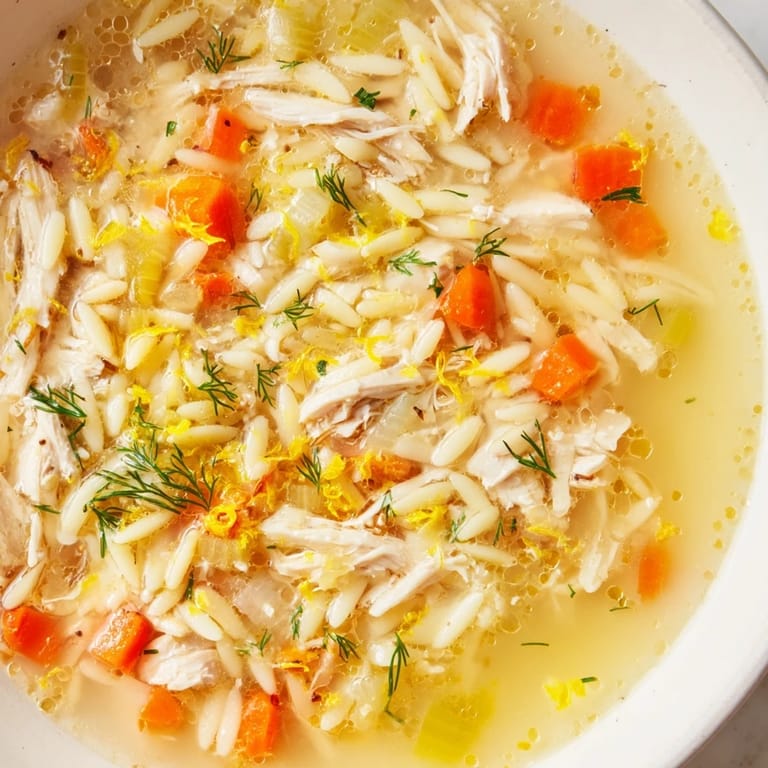
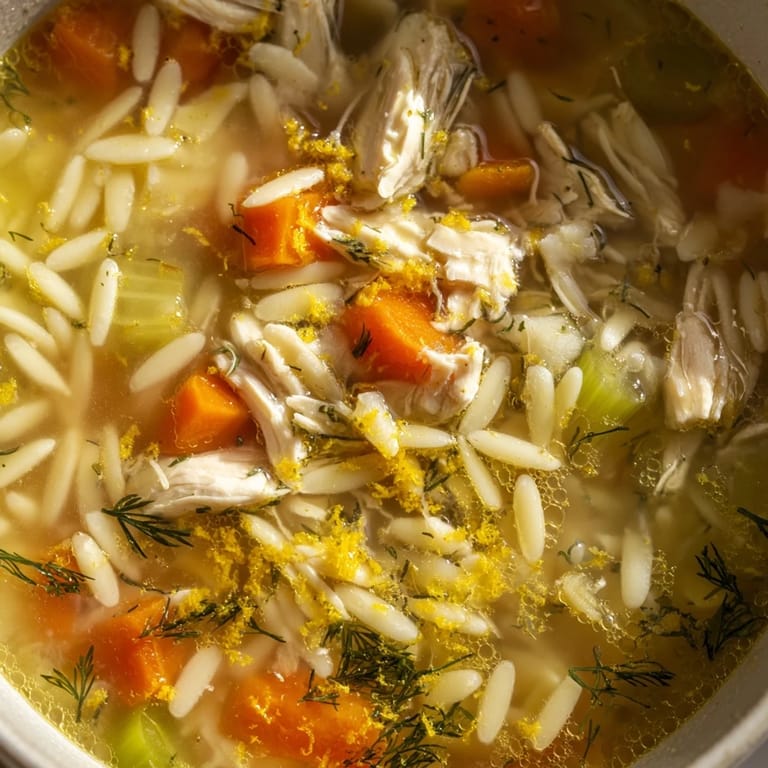
 The smell of lemon and chicken broth used to drift from my neighbor's kitchen every Sunday afternoon, and I'd wonder what she was making that smelled so clean and comforting at the same time. One winter evening, she invited me over and ladled out bowls of this golden soup with tiny pasta floating like clouds. I went home that night and recreated it from memory, tweaking and tasting until the broth sang with just the right amount of citrus. Now it's my go-to when I need something that feels like a hug but doesn't weigh me down.
I made this soup for a friend recovering from a bad cold, and she called me the next day to say it was the first thing that actually tasted good in a week. There's something about the balance of lemon and dill that wakes up your senses without being harsh. Since then, I've brought it to new parents, tired coworkers, and anyone who needs a little brightness in a bowl. It's become my quiet way of saying I care without making a fuss.
Ingredients
- Cooked chicken breast: Leftover roast chicken or a store-bought rotisserie bird keeps this effortless, and the dark meat adds even more flavor if you have it.
- Yellow onion: The foundation of the soup's sweetness, diced small so it melts into the broth and disappears into each spoonful.
- Carrots: They add a gentle earthiness and a pop of color, and dicing them evenly ensures they cook at the same rate as the celery.
- Celery: It brings a subtle vegetal note that balances the brightness of the lemon, and I always use the leafy tops for extra flavor.
- Garlic: Three cloves might seem like a lot, but they mellow beautifully in the broth and add a warm, savory backbone.
- Lemon: Both the zest and juice are essential, the zest gives you aromatic oils and the juice delivers that clean, tangy finish.
- Fresh dill: This herb is non-negotiable for me, it has a delicate anise-like quality that makes the soup taste uniquely refreshing.
- Parsley: A handful of chopped parsley on top adds a final layer of color and a hint of peppery freshness.
- Orzo pasta: These rice-shaped grains turn tender and silky in the broth, soaking up all the lemony goodness as they cook.
- Chicken broth: Low-sodium is key because you can always add salt, but you can't take it away once it's too salty.
- Olive oil: A good quality olive oil at the start builds richness and helps the vegetables soften without browning too quickly.
- Bay leaf: It adds a subtle herbal depth that you won't taste directly but will miss if you leave it out.
- Dried thyme: A pinch of thyme ties the vegetables and broth together with a hint of earthy warmth.
- Salt and black pepper: Season gradually and taste often, the lemon will affect how much salt you need at the end.
- Parmesan cheese: Optional but wonderful, a little grated cheese on top adds a salty, umami punch that makes each bite even more satisfying.
Tired of Takeout? 🥡
Get 10 meals you can make faster than delivery arrives. Seriously.
One email. No spam. Unsubscribe anytime.
Instructions
- Start with the vegetables:
- Heat the olive oil in a large pot over medium heat, then add the onion, carrot, and celery. Sauté them for about 5 minutes, stirring occasionally, until they soften and the onion turns translucent.
- Build the aromatics:
- Stir in the garlic, thyme, and bay leaf, cooking for just 1 minute until the garlic releases its fragrance. Be careful not to let it brown or it will turn bitter.
- Add the broth:
- Pour in the chicken broth and bring everything to a boil over medium-high heat. The vegetables will continue to soften as the broth heats up.
- Cook the orzo:
- Add the orzo to the boiling broth and reduce the heat to a simmer. Stir occasionally to prevent the pasta from sticking to the bottom, and cook for 8 to 10 minutes until the orzo is just tender.
- Stir in the chicken and lemon:
- Add the cooked chicken, lemon zest, and lemon juice to the pot. Let it simmer for 3 to 4 minutes to heat the chicken through and let the lemon infuse every spoonful.
- Finish and season:
- Remove the bay leaf and stir in the fresh dill, salt, and pepper. Taste and adjust the seasoning, adding more lemon juice if you want extra brightness.
- Serve:
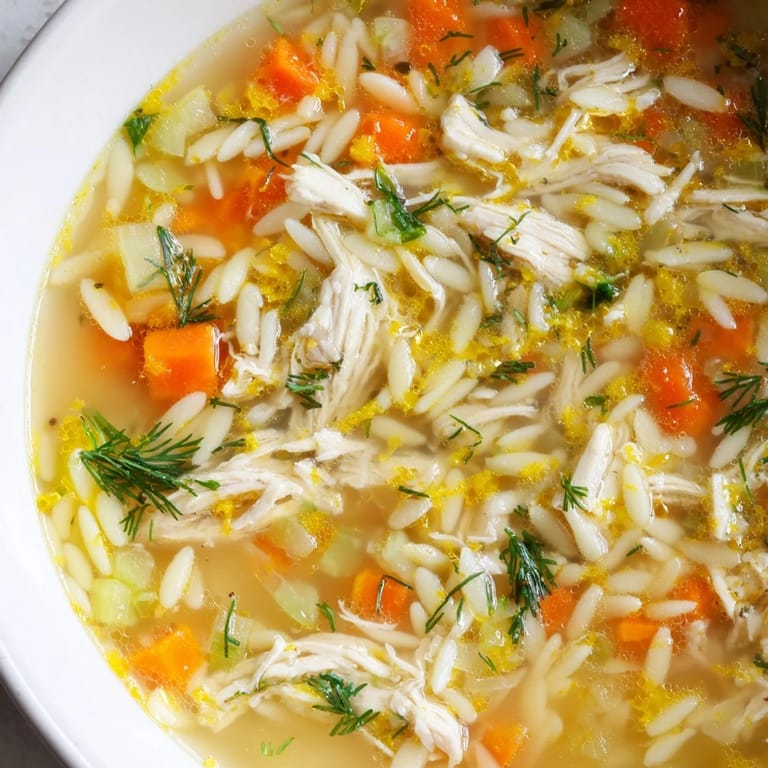
- Ladle the soup into bowls and garnish with chopped parsley and a sprinkle of Parmesan if you like. Serve it hot with crusty bread on the side.
 Save to Pins
 One rainy Saturday, I made a double batch of this soup and froze half in individual containers. A few weeks later, I pulled one out after a long day at work and heated it up while still in my coat. That first spoonful reminded me why I cook, it's not just about feeding yourself, it's about having something good waiting when you need it most.
Storing and Reheating
This soup keeps well in the fridge for up to 4 days in an airtight container, though the orzo will continue to absorb liquid as it sits. If it gets too thick, just add a splash of broth or water when you reheat it on the stove. I prefer reheating gently over medium-low heat, stirring occasionally, so the chicken stays tender and the pasta doesn't break apart. You can freeze the soup for up to 3 months, but I recommend leaving the orzo out and cooking it fresh when you're ready to serve.
Variations to Try
If you want to make this more like a traditional Greek avgolemono, whisk 2 egg yolks with a ladle of hot broth, then slowly stir the mixture back into the soup off the heat for a creamy, velvety texture. For a gluten-free version, swap the orzo for white rice or even cauliflower rice, adjusting the cooking time as needed. I've also stirred in a handful of baby spinach or frozen peas at the end for extra color and nutrition. Sometimes I add a pinch of red pepper flakes if I want a little heat to contrast with the lemon.
Serving Suggestions
This soup is a meal on its own, but I love serving it with warm pita bread or a slice of sourdough for dipping. A simple green salad with olive oil and vinegar on the side keeps things light and fresh. If you're feeding a crowd, set out bowls of extra lemon wedges, fresh dill, and grated Parmesan so everyone can customize their bowl.
- Pair it with a crisp white wine like Sauvignon Blanc or a light sparkling water with a twist of lemon.
- Serve it as a starter before grilled fish or roasted vegetables for a full Mediterranean-inspired dinner.
- Pack it in a thermos for lunch, it travels well and tastes even better after the flavors have had time to meld.
 Save to Pins
 This soup has become my answer to almost everything: bad days, cold nights, unexpected guests, and quiet evenings when I just want something simple and good. I hope it finds a place in your kitchen the way it has in mine.
Frequently Asked Questions
- → Can I use raw chicken instead of cooked chicken?
Yes, you can. Cut raw chicken breast into bite-sized pieces and add it in step 3 when you pour in the broth. Simmer for 12-15 minutes until the chicken is fully cooked through before adding the orzo.
- → How do I make this soup with the avgolemono variation?
After adding the lemon juice and dill, beat 2 egg yolks and slowly whisk in a ladle of hot broth. Remove the pot from heat, then stir this mixture into the soup. The eggs will create a silky, creamy texture without adding dairy.
- → What can I substitute for orzo pasta?
Rice, pearl barley, or small pasta shapes work well. For a gluten-free option, use gluten-free pasta or rice. Adjust cooking time based on your chosen grain, typically 8-12 minutes depending on the ingredient.
- → How should I store and reheat leftovers?
Store in an airtight container in the refrigerator for up to 3 days. Reheat gently on the stovetop over medium-low heat, adding a splash of broth if the soup has thickened. The orzo may absorb liquid as it sits.
- → Is this soup freezer-friendly?
Yes, this soup freezes well for up to 2 months. Cool completely before freezing in freezer-safe containers. Thaw overnight in the refrigerator and reheat gently. You may want to cook the orzo slightly less if you plan to freeze it.
- → What vegetables can I add for more nutrition?
Spinach, kale, peas, zucchini, or mushrooms are excellent additions. Add heartier vegetables like spinach in the final minutes of cooking, or include softer vegetables like peas after the soup is mostly done to preserve their texture.