 Save to Pins
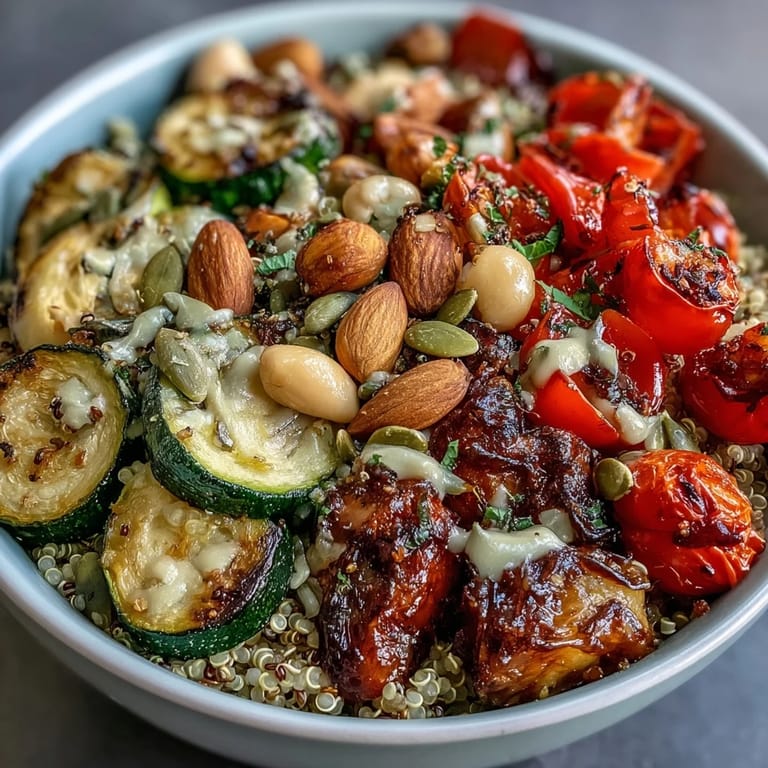
 My friend Sarah texted me one afternoon asking for a lunch idea that wouldn't leave her feeling sluggish at her desk, and I found myself pulling together whatever colorful vegetables were lurking in my crisper drawer with some quinoa I'd been meaning to use. That one bowl became her go-to order whenever she visited, and watching her actually look forward to lunch made me realize how satisfying a truly nourishing meal could be. Now whenever I make this, I think of how food doesn't have to choose between tasting amazing and making you feel genuinely good.
I made this for a potluck once where I wasn't sure what everyone ate, and it ended up being the only dish that disappeared completely, carnivores and vegans fighting over the last bowl. That moment taught me that inclusive cooking isn't about compromise—it's about respect, and somehow these bright, honest flavors end up speaking to everyone at the table.
Ingredients
- Quinoa, 1 cup rinsed: This ancient grain cooks up fluffy and absorbs flavors beautifully, plus it's one of the few plant proteins with all nine amino acids, making it worth the tiny extra cost.
- Water or vegetable broth, 2 cups: Broth gives your quinoa more character than plain water, so don't skip this small upgrade if you have it on hand.
- Red bell pepper, 1 medium diced: Choose one that feels heavy for its size and has smooth, glossy skin, since those tend to be sweeter and juicier when roasted.
- Zucchini, 1 medium sliced: Cut it on a slight bias if you have a moment—it looks prettier and cooks more evenly than straight rounds.
- Carrot, 1 medium sliced: I learned the hard way that thin slices roast faster and more evenly than thick chunks, so don't be shy with that knife.
- Red onion, 1 small in wedges: The raw bite mellows beautifully when roasted, turning slightly sweet and caramelized at the edges.
- Cherry tomatoes, 1 cup halved: These stay plump and juicy rather than drying out completely, which is why they're superior to larger tomatoes here.
- Olive oil, 2 tablespoons for roasting: Good olive oil matters because you taste it, so don't use your fancy extra virgin for roasting—save that for the vinaigrette.
- Dried oregano, 1 teaspoon: This herb is subtle enough not to overpower everything else but gives the whole bowl a Mediterranean whisper.
- Black beans or chickpeas, 1 can drained: Both work beautifully, though beans are earthier while chickpeas bring a firmer bite that holds its shape better.
- Roasted almonds or walnuts, 1/4 cup chopped: The crunch is essential here for texture contrast, and roasted versions have more depth than raw ones.
- Pumpkin seeds, 2 tablespoons: These add a subtle nutty flavor and magnesium that your body will thank you for later.
- Extra virgin olive oil, 3 tablespoons for vinaigrette: Now is the time to use that good stuff, since it's the star of your dressing and carries all the flavor.
- Fresh lemon juice, 2 tablespoons: Squeeze it yourself right before using—bottled just tastes tired and flat by comparison.
- Dijon mustard, 1 teaspoon: This emulsifies your vinaigrette and prevents it from separating, plus adds a sophisticated tang that people can't quite identify but love.
- Maple syrup or honey, 1 teaspoon: A tiny amount balances the tartness of the lemon and ties all the flavors together like magic.
- Garlic clove, 1 small minced: Mince it finely so it distributes evenly through the dressing instead of leaving harsh bites.
- Salt and black pepper: Taste as you go, since you'll need more than you think to make all these fresh ingredients sing.
Tired of Takeout? 🥡
Get 10 meals you can make faster than delivery arrives. Seriously.
One email. No spam. Unsubscribe anytime.
Instructions
- Heat your oven and prep your vegetables:
- Set the oven to 425°F and while it's warming up, cut all your vegetables into roughly the same size so they roast evenly and nothing gets left behind raw. Arrange them on a baking sheet in a single layer, which is the key to getting them caramelized rather than steamed.
- Dress and roast:
- Drizzle with olive oil, sprinkle the oregano, salt, and pepper, then toss everything together with your hands until every piece is glossy and coated. Pop it in the oven and stir halfway through—this is when your kitchen starts smelling impossibly good.
- Cook the quinoa while vegetables roast:
- Combine rinsed quinoa with water or broth in a saucepan, bring it to a rolling boil, then drop the heat down low and cover it. Set a timer for 15 minutes and resist the urge to peek—those 5 minutes of rest after cooking are when the quinoa finishes absorbing moisture and becomes fluffy instead of mushy.
- Make your vinaigrette:
- Whisk together the olive oil, lemon juice, mustard, sweetener, and minced garlic in a small bowl, then taste and adjust for salt and pepper. This takes maybe two minutes and tastes infinitely better than bottled dressing.
- Assemble your bowls:
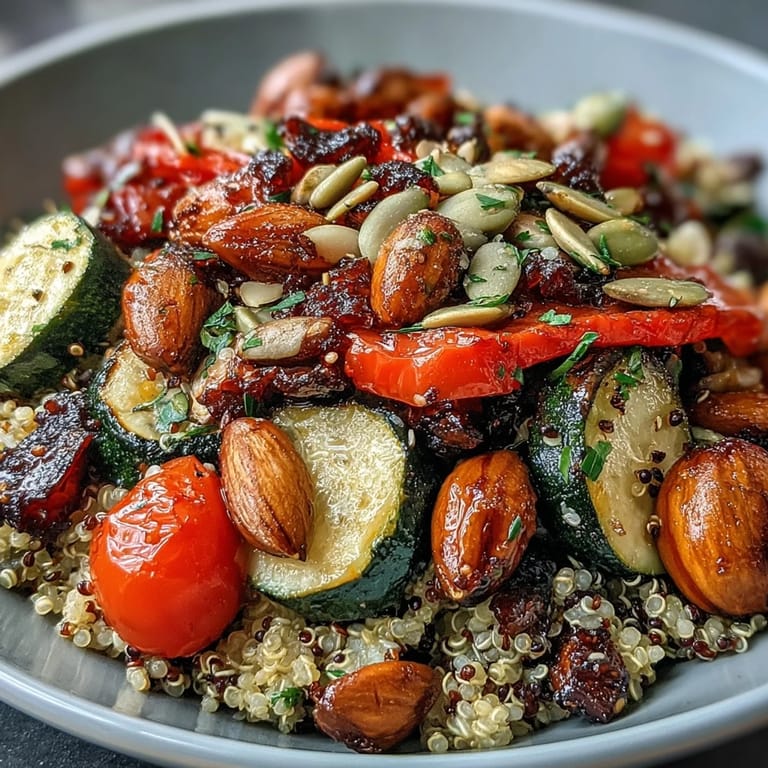
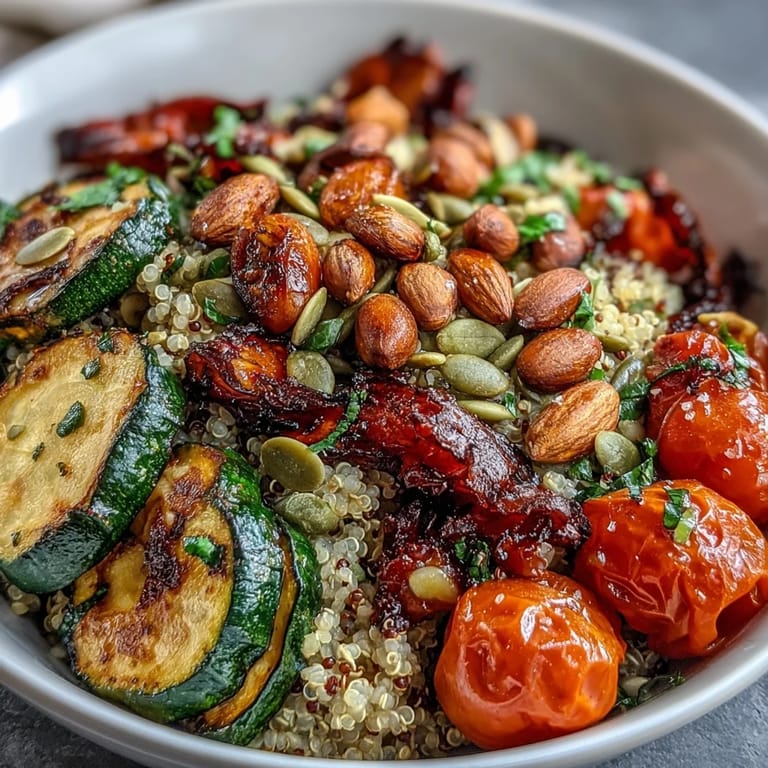
- Divide the fluffy quinoa among four bowls, then arrange roasted vegetables, beans, nuts, and seeds on top of each one in whatever pattern appeals to you. Drizzle the vinaigrette over everything just before serving so the greens stay bright and crisp.
- Serve fresh or chill:
- Eat it warm if you're hungry right now, or let it cool completely and refrigerate it for a refreshing cold lunch tomorrow. Both versions are completely different experiences, and honestly both are perfect.
 Save to Pins
 A colleague who'd been stress-eating sad desk salads for years finally bit into this bowl and got quiet for a moment, and when she looked up she just said the food tasted like someone cared. That's when I understood that a power bowl isn't about the nutrients or the hashtags—it's about taking time to build something that feels like an act of kindness.
Why Seasonal Vegetables Make All the Difference
The beauty of this recipe is that it doesn't demand exact vegetables, which means you can follow the seasons and whatever looks vibrant at your market. In spring I use fresh asparagus and snap peas, summer calls for grilled summer squash and fresh corn, fall brings roasted sweet potatoes and brussels sprouts, and winter wants earthy beets and roasted cauliflower. Your bowl becomes a conversation with the season instead of the same thing year-round, and that novelty keeps you coming back.
Building Protein into Plant-Based Eating
I used to think vegetarian meals meant you'd feel hungry an hour later, until someone pointed out that I wasn't actually combining complete proteins. Quinoa has most amino acids on its own, but when you pair it with beans or tofu, you're creating a protein profile that rivals meat without any of the heaviness that makes you want to nap. The nuts and seeds add fat that helps your body absorb all those nutrients, so you're genuinely satisfied instead of just full.
The Vinaigrette Is Your Secret Weapon
Never skip the dressing because it's what transforms a pile of healthy ingredients into something you actually crave. The mustard acts as an emulsifier keeping the oil and lemon juice from separating, while the sweetener rounds out all the edges so nothing tastes too acidic or sharp. A really good dressing makes simple vegetables taste like you've spent hours in the kitchen, which is the whole point of cooking smart instead of cooking complicated.
- Make extra vinaigrette and keep it in a jar in your fridge for salads all week.
- Add a poached egg or some grilled tofu if you need more protein than the beans provide.
- Feta cheese or avocado are optional but they turn this into something even more indulgent.
 Save to Pins
 This bowl has become my answer for when I want to eat something that feels nourishing without tasting like deprivation, and that's not a small thing. Keep it in regular rotation and you'll stop treating healthy eating like a chore and start treating it like something that tastes good and makes you feel good.
Frequently Asked Questions
- → Can I make this bowl ahead of time?
Yes, this bowl meal preps beautifully. Cook the quinoa and roast vegetables in advance, then store separately in airtight containers for up to 4 days. Assemble and dress just before serving.
- → What vegetables work best in this bowl?
Any seasonal vegetables roast well here. Try sweet potato cubes, broccoli florets, cauliflower, Brussels sprouts, or asparagus. The key is cutting pieces evenly so they roast at the same rate.
- → How do I know when the quinoa is done cooking?
The quinoa is ready when all liquid is absorbed and the germ has separated into a tiny spiral. You'll see small white threads curling around each grain. Let it sit covered for 5 minutes after cooking for perfect fluffiness.
- → Can I use a different grain instead of quinoa?
Absolutely. Brown rice, farro, bulgur, or wheat berries make excellent substitutes. Adjust cooking time according to package directions, as some grains take longer to cook than quinoa.
- → What protein options work besides beans?
Grilled chicken strips, baked tofu, roasted chickpeas, or a poached egg all add protein. For a plant-based boost, try hemp seeds or nutritional yeast sprinkled on top.
- → Is the lemon vinaigrette necessary?
The dressing ties all components together, but you can substitute with tahini dressing, balsamic glaze, or pesto. The acidity helps balance the earthy quinoa and sweet roasted vegetables.