 Save to Pins
 My sister called me in a panic the afternoon of her garden party, asking if I could whip up something elegant that wouldn't wilt in the spring heat. I'd never made pavlovas before, but something about the challenge appealed to me—those delicate, cloud-like nests that sound impossible until you realize they're mostly air and patience. Three hours later, watching her guests bite into the crispy shells and gush about the pillowy centers, I understood why this Australian classic has stayed beloved for generations. It turns out that impressive desserts don't always require hours of fussy work, just attention and the courage to let your oven do most of the thinking.
I've since made these for birthday brunches, anniversary dinners, and that one summer potluck where I was nervous nobody would eat them because they looked too delicate. Every single time, they disappear first, and I find myself making extra batches because people ask for the recipe immediately. There's something about serving food that feels both indulgent and light that makes people slow down and actually enjoy the moment.
Ingredients
- Egg whites (4 large, room temperature): This is non-negotiable—cold eggs won't whip up properly, and even a speck of yolk will sabotage your meringue, so separate them carefully over a small bowl first.
- Superfine sugar (1 cup): The fine crystals dissolve seamlessly into the egg whites, creating that glossy, stable structure; regular sugar leaves a slightly grainy texture that disappoints.
- Cornstarch (1 teaspoon): This stabilizes the meringue and keeps it from weeping, a lesson I learned after my first batch turned slightly damp by evening.
- White vinegar (1 teaspoon): It adds a subtle tang that balances the sweetness and helps the meringue hold its shape during baking.
- Vanilla extract (1 teaspoon for meringue, 1 for cream): Don't skip this—it rounds out the flavor and prevents the pavlovas from tasting one-note.
- Heavy whipping cream (1 cup, cold): Cold cream whips faster and holds its peaks better, so chill your bowl and beaters for a few minutes beforehand.
- Powdered sugar (2 tablespoons): Use this instead of granulated sugar for the cream—it dissolves instantly without any grittiness.
- Fresh strawberries (1½ cups, hulled and sliced): Choose berries that are ripe but still firm; overripe ones release too much liquid and make everything soggy.
- Granulated sugar and lemon juice (for berries): The sugar draws out the berry juices while the lemon juice brightens everything and prevents oxidation.
Tired of Takeout? 🥡
Get 10 meals you can make faster than delivery arrives. Seriously.
One email. No spam. Unsubscribe anytime.
Instructions
- Set up your workspace and oven:
- Preheat to 250°F and line your baking sheet with parchment paper, which prevents sticking and creates a barrier between the meringue and the hot pan. A hot oven right when you need it makes all the difference.
- Whip those egg whites to glossy perfection:
- Start at medium speed and watch them go from foamy to soft peaks—this takes a few minutes, and you'll see them transform into billowy clouds. Once you see soft peaks, gradually add the superfine sugar one tablespoon at a time, which sounds tedious but ensures it dissolves completely instead of making your meringue grainy.
- Reach the stiff peak stage:
- Keep beating until the mixture is thick, shiny, and forms stiff peaks that stand straight up when you lift the beater—this usually takes another minute or two. The meringue should look almost glossy enough to reflect light back at you.
- Fold in the secret ingredients:
- Gently fold in the cornstarch, vinegar, and vanilla with a spatula using wide, sweeping motions to keep all that air you just whipped in. Over-mixing here deflates everything you've worked for, so be gentle and stop as soon as the ingredients disappear.
- Shape your nests:
- Spoon or pipe six meringue portions onto your parchment paper, then use the back of a spoon to create a small indent in the center of each one—this is where your cream and berries will nestle. Don't worry about them looking perfect; rustic is actually more charming.
- Bake low and slow:
- Let them bake for a full hour at 250°F, which dries them out gently without browning them. Then turn the oven off, crack the door open just slightly, and let them cool all the way down inside—this prevents cracking from temperature shock.
- Macerate those strawberries:
- While the pavlovas cool, toss your sliced strawberries with a tablespoon of sugar and a teaspoon of lemon juice, then let them sit for about fifteen minutes. The sugar draws out all their natural juices, creating a light syrup that keeps the berries from drying out on the finished dessert.
- Whip your cream just right:
- Pour cold heavy cream into a cold bowl and whip it with powdered sugar and vanilla until it forms soft, pillowy peaks—not stiff peaks or it'll turn to butter. This stage is crucial for texture; soft peaks mean the cream stays cloud-like rather than dense.
- Bring it all together:
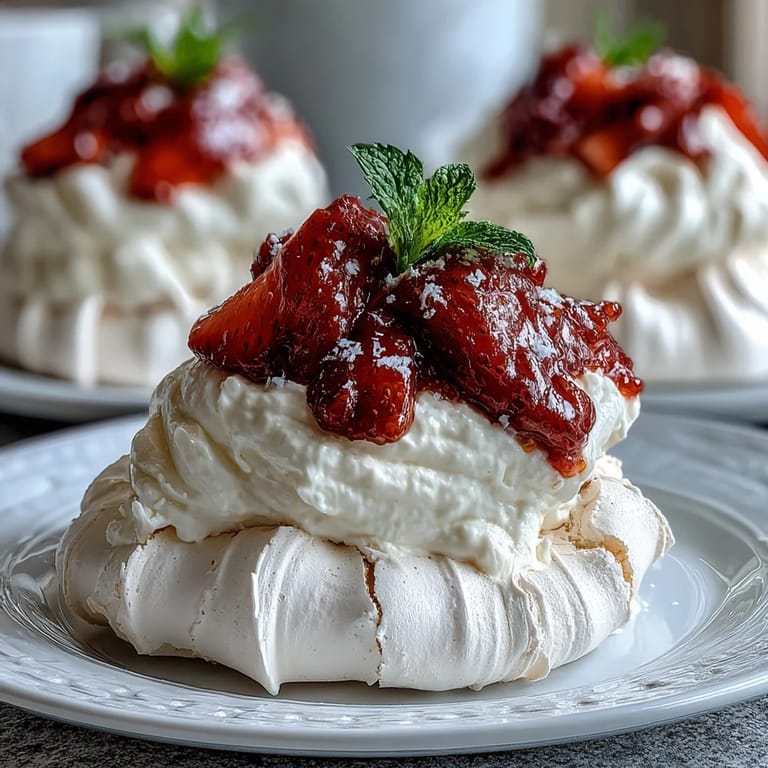
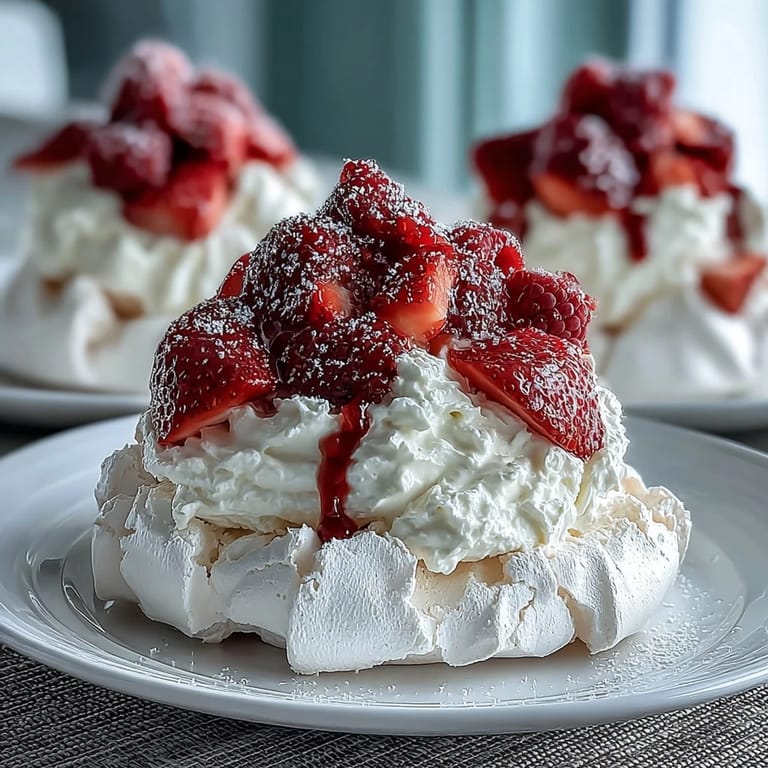
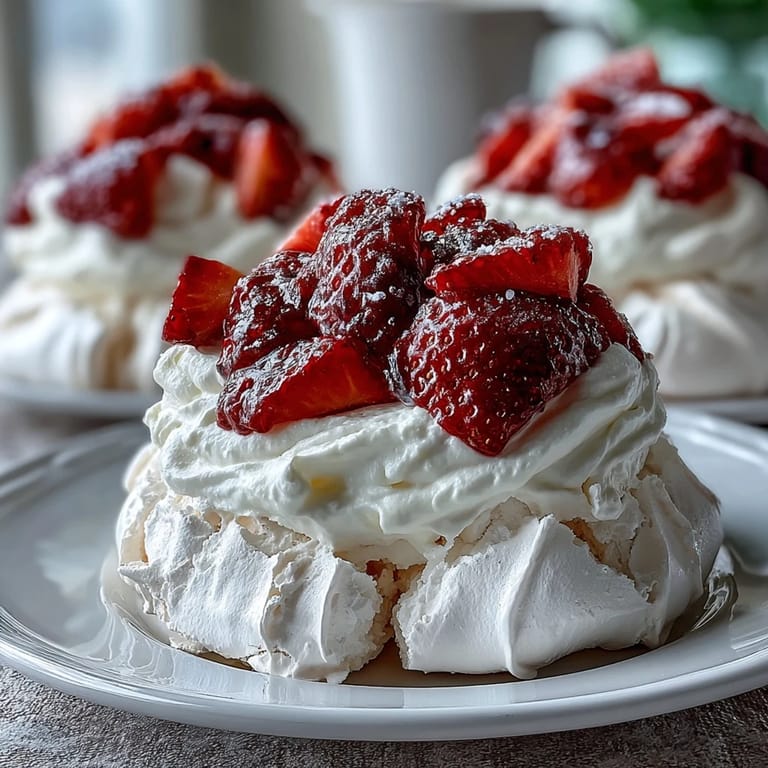
- Set each meringue nest on a serving plate, fill the center generously with whipped cream, and crown it with a generous spoonful of strawberries and their syrup. Serve right away so everything stays at its best.
 Save to Pins
 The first time a dinner guest told me these pavlovas reminded her of a café in Sydney she'd visited decades ago, I realized this dessert carries something beyond taste—it's a little vessel of memory and lightness. Since then, they've become my go-to for moments when I want to feel like a proper baker without losing my mind in the kitchen.
The Science Behind the Crunch
Pavlovas are essentially stabilized foam—egg white proteins unfold and trap air bubbles when you beat them, and the sugar dissolves into the mixture, creating a structure that sets firm in the oven. The cornstarch and vinegar work together to keep everything stable; the acid slightly denatures the proteins while the starch absorbs any moisture that might escape, which is why both are essential and not interchangeable. The low oven temperature dries out the meringue slowly without browning it, creating that signature crispy-on-the-outside, marshmallow-like interior that makes them so special.
Timing and Make-Ahead Magic
One of the best things about pavlovas is that the hardest part—making the meringue shells—can be done a full day ahead, which means you're only assembling them shortly before serving. Store the cooled, completely room-temperature meringues in an airtight container at room temperature, and they'll stay crispy and fresh for up to twenty-four hours. The whipped cream and macerated berries should be made no more than a few hours ahead; assemble everything within thirty minutes of serving to keep that textural contrast perfect.
Flavor Variations and Customizations
Once you master the base recipe, you can play with endless flavor combinations—try raspberries with a dusting of dark chocolate, passion fruit curd with toasted coconut, or whipped cream infused with lavender for something unexpected. I've also brushed the whipped cream with a thin layer of berry coulis or a drizzle of passion fruit pulp, which adds both tartness and elegance without changing the overall technique. The meringue shell itself is so neutral that it becomes a blank canvas for whatever fruit and flavors call to you.
- Consider adding a pinch of salt to your whipped cream to amplify the sweetness and add depth.
- For something richer, fold a tablespoon of mascarpone into your whipped cream for a subtle tang.
- Experiment with different extracts like almond or coconut to shift the entire personality of the dessert.
 Save to Pins
 These pavlovas feel special every single time, whether you're making them for a crowd or just for yourself on an ordinary afternoon. There's real magic in transforming four simple egg whites into something that tastes like a celebration.
Frequently Asked Questions
- → How do you achieve crisp meringue nests?
Beat egg whites until stiff peaks form, fold in cornstarch, vinegar, and vanilla, then bake slowly at low temperature for about an hour to dry out and crisp the surface.
- → Can I use different fruits instead of strawberries?
Absolutely. Fresh berries like raspberries, blueberries, or a mix work wonderfully and can be macerated with sugar and lemon juice for enhanced flavor.
- → What is the purpose of macerating the strawberries?
Macerating softens the fruit and draws out natural juices, intensifying sweetness and adding a slight tang to balance the creaminess.
- → How long should the meringues cool before assembling?
Allow the meringues to cool completely inside the turned-off oven with the door ajar, usually about an hour, to maintain their crisp texture.
- → What tips help achieve stable whipped cream?
Use cold heavy cream and powdered sugar, whipping until soft peaks form. Chilling the bowl and whisk beforehand can improve stability.