 Save to Pins
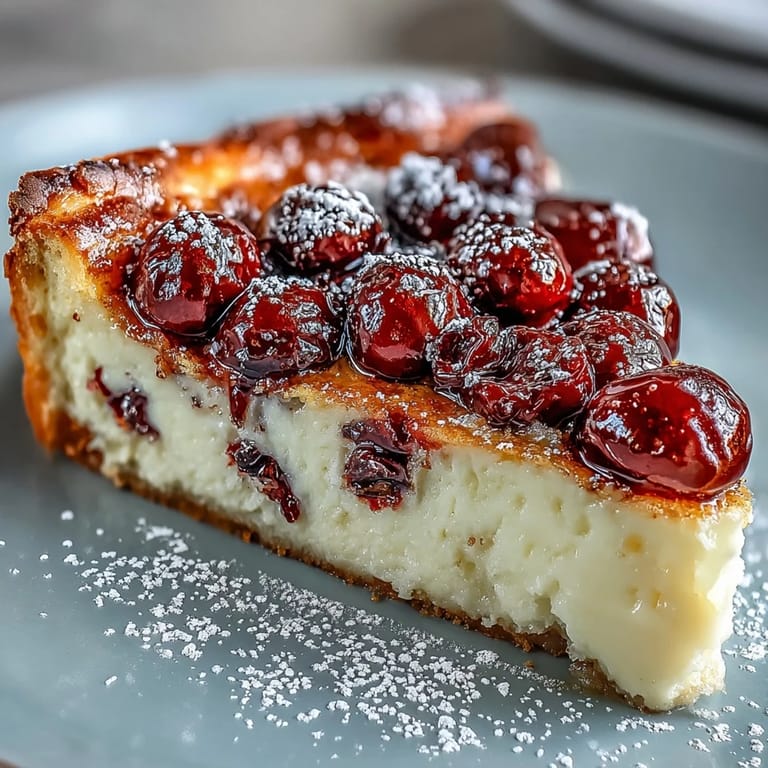
 There’s something about the sizzle of sugar-milk custard hitting a warm baking dish that always makes me smile—especially in the heart of cherry season, when the fruit is practically begging to be baked into a clafoutis. One steamy afternoon, drawn in by the vibrant pile of cherries at the market, I grabbed the lot, thinking only of the simple pleasure of pitting them. When the first spoonful emerged from the oven, that golden, wobbling custard perfumed with vanilla bean, it was hard not to cross the invisible line from everyday dessert to celebration. This dish turns humble ingredients into something effortlessly elegant, the kind of treat that practically brings summer into your kitchen. Baking clafoutis the French way is less about perfection, more about savoring the fleeting ripeness of cherries while you can.
The first time I made clafoutis for friends, the kitchen was noisy with laughter and the occasional cherry pit ping as we prepped together. It’s a forgiving dish—it doesn’t mind if there’s a bit of extra juice or if someone sneaks a cherry before baking, which just adds to the relaxed, communal feel of the evening.
Ingredients
- Fresh sweet cherries: The juicier the cherries, the more the clafoutis bursts with flavor; use a cherry pitter for speed.
- Large eggs: Room temperature eggs help the custard set silky smooth.
- Granulated sugar: Just enough to sweeten without hiding the tartness of the cherries.
- Vanilla bean: Scraping real vanilla seeds into the mix enhances every creamy bite—don’t skip this if you want full-on aroma.
- All-purpose flour: A little goes a long way here; sift it for lump-free batter.
- Salt: Just a pinch sharpens all the other flavors.
- Whole milk: Whole milk grants richness and soft, custardy texture.
- Heavy cream: Adds an indulgent finish—trust me, it’s worth it.
- Unsalted butter: Cooled, it adds subtle flavor and keeps the crumb delicate.
- Butter for greasing: Don’t skimp; it helps the clafoutis release effortlessly.
- Powdered sugar: That final snowy dusting is as much for drama as sweetness.
Tired of Takeout? 🥡
Get 10 meals you can make faster than delivery arrives. Seriously.
One email. No spam. Unsubscribe anytime.
Instructions
- Warm up and prep:
- Set your oven to 180°C (350°F), then coat your baking dish generously with softened butter so the custard won’t stick.
- Arrange the cherries:
- Scatter the pitted cherries across the bottom—press a few down if they try to roll away, it’s part of the fun.
- Start the custard:
- Crack the eggs into a medium bowl and whisk with the sugar until pale, frothy, and slightly thickened, hearing the gentle tap of your whisk against the bowl.
- Add the flavor and dry mix:
- Stir in the precious vanilla seeds, then sprinkle over the flour and salt, whisking until smooth without lumps.
- Finish the batter:
- Slowly pour in the milk and cream, whisking as you go, then add in the cooled melted butter—try not to drool on the bowl as the scent hits you.
- Assemble the clafoutis:
- Pour the custard evenly over the waiting cherries, watching them peek out before settling beneath the surface.
- Bake and watch:
- Slide the dish into the oven and bake 35–40 minutes till the edges puff and it’s burnished gold on top, with just a soft tremble at the center.
- Rest and finish:
- Let it cool for at least 15 minutes; sprinkle powdered sugar like a dusting of snow right before serving.
- Serve and savor:
- Enjoy the first slice while it’s still gently warm or bring it to the table at room temperature—the choice is yours.
 Save to Pins
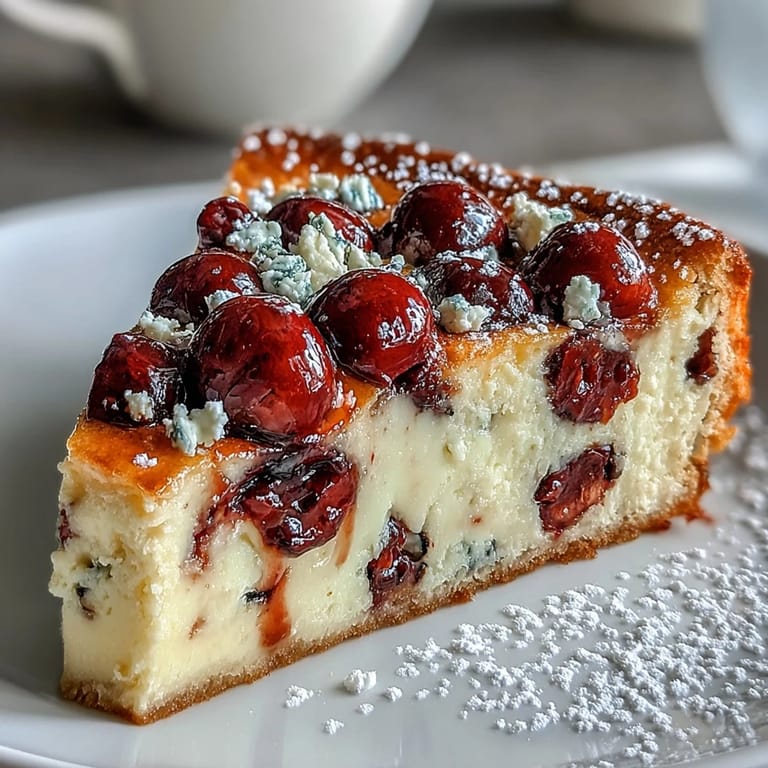
 I realized, after serving this at a Sunday brunch, that nearly everyone went silent during the first bite—only the clink of spoons and soft sighs filled the room. There’s a kind of quiet shared joy when a humble dessert succeeds in stealing the spotlight.
Cherry Pitting Hacks That Really Help
After several cherry-stained shirts and the odd slippery pit skittering across my floor, I started pitting cherries over a wide bowl to catch the mess. If you don’t have a cherry pitter, a sturdy straw or a clean chopstick works wonders with a gentle push. Rinsing the cherries and drying them well before pitting makes the whole process less slippery and a bit more satisfying.
Ways to Play With Flavors
Don’t be afraid to swap in half the cherries with sliced plums, apricots, or even blueberries—the custard welcomes all kinds of fruit. For a more grown-up version, a splash of kirsch or amaretto whispers in the background, providing subtle complexity that only reveals itself after a few bites.
Best Serving Moments
Clafoutis shines as a show-off centerpiece at brunch with friends or quietly paired with black coffee on a lazy afternoon. Leftovers—if you have any—make a dreamy midnight snack straight from the fridge.
- Briefly reheat slices in a low oven to revive the custard.
- Dust with extra powdered sugar right before serving for that bakery finish.
- Serve with a dollop of crème fraîche if you're feeling indulgent.
 Save to Pins
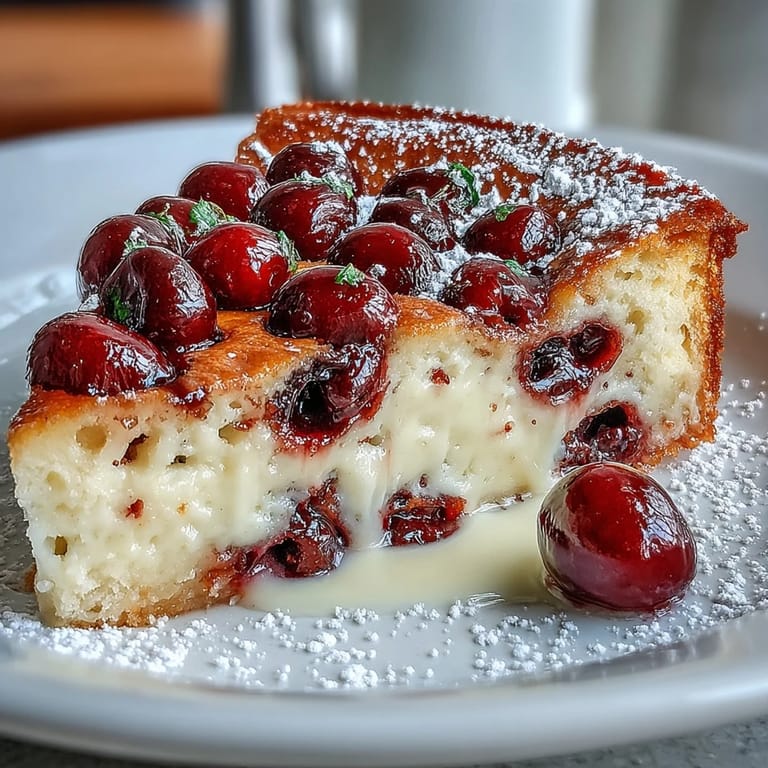
 If you try this clafoutis once, you’ll find yourself eagerly awaiting cherry season every year. Happy baking and don’t forget to sneak yourself the warm, first slice.
Frequently Asked Questions
- → Should I pit the cherries?
For easier eating and a milder texture pit the cherries. Leaving pits gives a slightly almond-like flavor and is traditional in some versions, but be cautious when serving.
- → How can I tell when it's done?
The clafoutis should be puffed and lightly golden with the center just set; a slight wobble is fine since it will continue to set as it cools.
- → Can I use frozen cherries?
Yes. Thaw and drain excess liquid first to avoid a watery custard. Toss briefly in a little flour to help prevent sinking if very soft.
- → What gives the custard its texture?
The balance of eggs, flour and dairy creates a tender, slightly custardy set; whisk until smooth but avoid overmixing to keep it light.
- → How should leftovers be stored?
Cover and refrigerate up to 2–3 days. Rewarm gently in a low oven or serve chilled, depending on preference.
- → Any good serving suggestions?
Dust with powdered sugar and serve warm or at room temperature. Pairs nicely with a splash of cream, espresso, or a sweet wine for contrast.