 Save to Pins
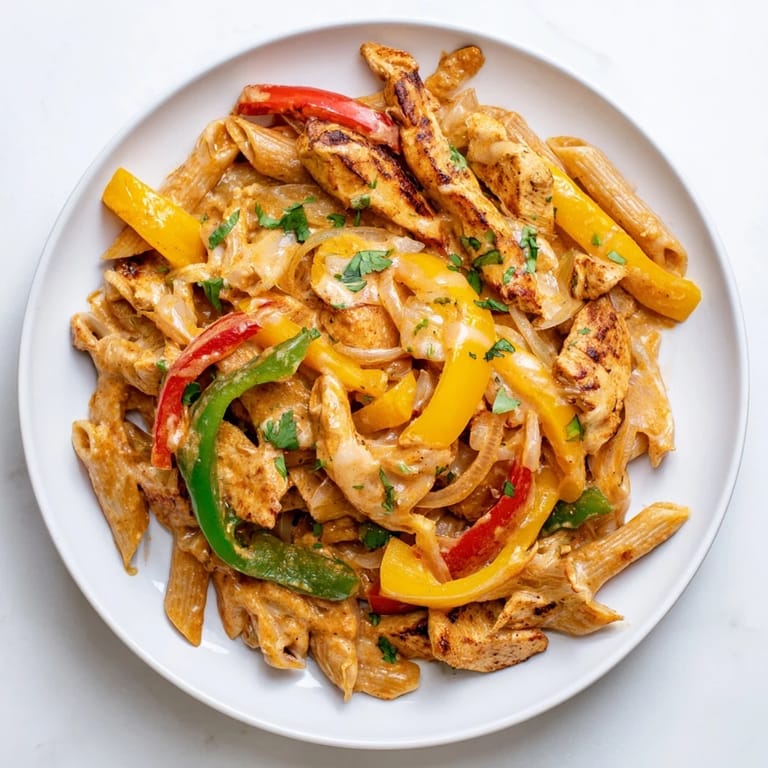
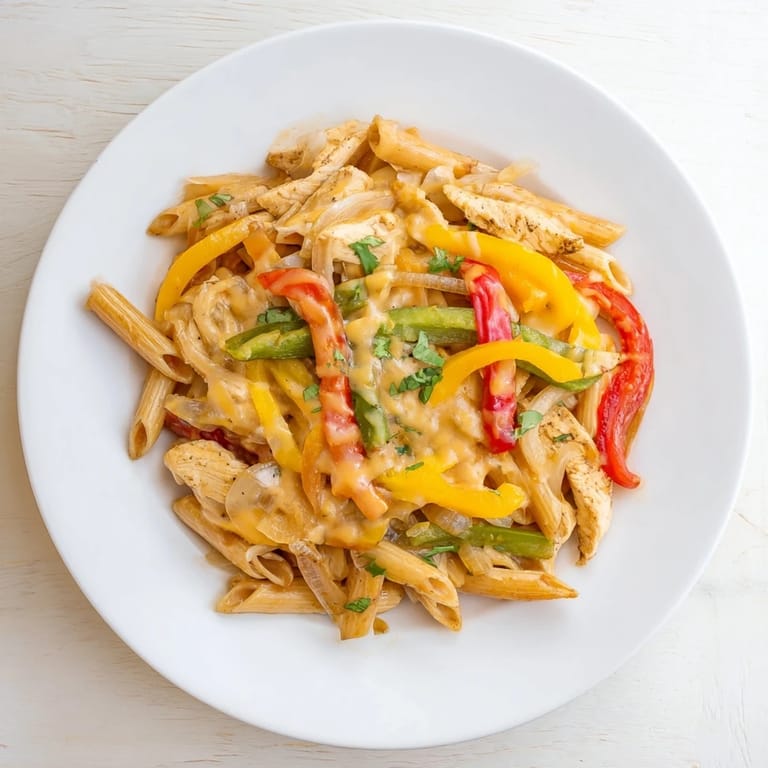
 My skillet was a mess of colors before I even realized what I was making. Peppers everywhere, chicken sizzling louder than I expected, and somehow the pasta went in dry and I panicked for a second. But then the broth started bubbling, the cream swirled in, and I just stood there stirring, watching it all come together like some kind of weeknight magic. That's when I knew this dish wasn't just dinner, it was going to be a regular.
I made this for my sister after she moved into her first apartment with a kitchen smaller than a closet. She had one good skillet and not much else, so I wanted to show her something impressive that didn't require a full cookware arsenal. We stood shoulder to shoulder at her tiny stove, and when the cheese melted over the top, she actually gasped. She still texts me photos every time she makes it, usually with some creative pepper variation I never would have thought of.
Ingredients
- Boneless, skinless chicken breasts (450 g, cut into thin strips): Thin strips cook fast and soak up the seasoning beautifully, plus they're easier to eat twirled around pasta than big chunks.
- Red, yellow, and green bell peppers (thinly sliced): The trio of colors isn't just pretty, each one brings a slightly different sweetness and the thin slices get those nice charred edges.
- Medium onion (thinly sliced): Onions add a savory backbone and soften into sweet, caramelized ribbons that blend right into the sauce.
- Garlic (2 cloves, minced): Fresh garlic hits differently than powder, it blooms in the oil and perfumes the whole dish with that unmistakable warmth.
- Penne or rotini pasta (250 g): These shapes grab onto the creamy sauce and trap little bits of pepper and chicken in their ridges, making every forkful satisfying.
- Olive oil (2 tablespoons): A good oil prevents sticking and helps the chicken and vegetables develop that golden, slightly crispy exterior.
- Low-sodium chicken broth (600 ml): This is what cooks the pasta right in the skillet, infusing it with flavor from the inside out instead of just coating it.
- Heavy cream (120 ml): Just enough to make the sauce creamy and luscious without turning it into a heavy, drowsy meal.
- Chili powder, cumin, smoked paprika, oregano, salt, pepper, cayenne (fajita seasoning blend): This mix is the soul of the dish, smoky and warm with just enough heat to keep things interesting.
- Shredded cheddar or Monterey Jack cheese (100 g): Melts into gooey, golden pockets that pull apart in strings when you serve it, the kind of cheese moment everyone remembers.
- Fresh cilantro and lime wedges: Cilantro adds a bright, herbal pop and lime juice cuts through the richness, waking up every flavor just before it hits the table.
Tired of Takeout? 🥡
Get 10 meals you can make faster than delivery arrives. Seriously.
One email. No spam. Unsubscribe anytime.
Instructions
- Sear the chicken:
- Heat 1 tablespoon of olive oil in a large skillet over medium-high heat, then add the chicken strips and half the fajita seasoning blend. Let them sizzle undisturbed for a minute before stirring, so they pick up a golden crust, then cook until browned and nearly done, about 4 to 5 minutes total, and set them aside.
- Char the vegetables:
- Pour the remaining oil into the same skillet and toss in the sliced peppers and onion, stirring occasionally until they soften and develop those dark, caramelized edges, about 5 minutes. Stir in the minced garlic and let it bloom for just a minute until your kitchen smells incredible.
- Combine and simmer:
- Return the chicken to the skillet along with the uncooked pasta, chicken broth, and cream, stirring everything together. Bring it to a gentle boil, then reduce the heat to medium-low, cover with a lid, and let it simmer for 12 to 15 minutes, stirring occasionally so the pasta cooks evenly and absorbs all that flavorful liquid.
- Melt the cheese:
- Once the pasta is tender and most of the liquid is absorbed, remove the lid and sprinkle the shredded cheese evenly over the top. Cover again for about 2 minutes, just long enough for the cheese to melt into a gooey, golden layer.
- Garnish and serve:
- Pull the skillet off the heat, scatter fresh cilantro over the top, and serve it straight from the pan with lime wedges on the side. Squeeze a little lime over each serving for that bright, zesty finish that ties everything together.
 Save to Pins
 The first time I brought this to a potluck, I wasn't sure how it would hold up sitting on a table for an hour. But people kept coming back for seconds, scraping the edges of the skillet where the cheese had crisped up a little. One friend asked if I'd catered it, and I just laughed and told her it was one pan, one stove, and a lot of peppers. That's when I realized this dish had a way of making me look like I tried way harder than I actually did.
Choosing Your Pasta Shape
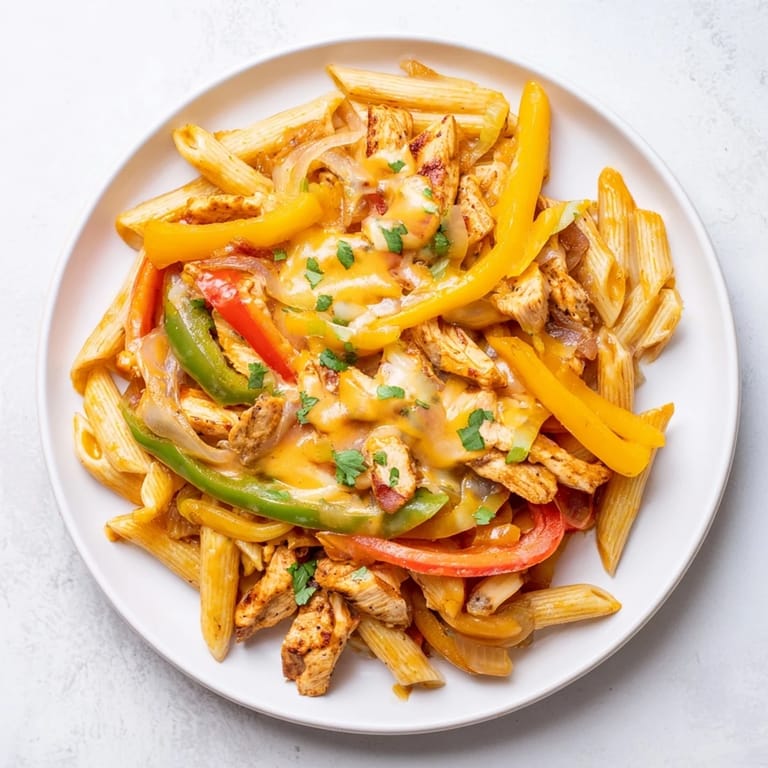
Penne and rotini are my go-to shapes because their ridges and curves catch the creamy sauce and trap little bits of chicken and pepper inside. I've tried this with spaghetti once and it worked, but it didn't have that same hearty, everything-in-one-bite satisfaction. If you want to experiment, farfalle or rigatoni would both be great, just make sure whatever you choose has some texture to hold onto that bold fajita flavor. Short, sturdy shapes also stir more easily in the skillet without breaking apart, which matters when you're cooking everything together in one pan.
Adjusting the Heat Level
The cayenne pepper in the seasoning blend is optional, but I almost always add it because I like a little tingle on the back of my tongue. If you're cooking for kids or anyone who prefers milder food, just leave it out and the dish will still have plenty of flavor from the cumin and smoked paprika. On the other hand, if you want to crank up the heat, toss in some sliced jalapeños with the peppers or drizzle hot sauce over your plate at the end. I've learned that it's easier to add heat at the table than to try to cool down a too-spicy skillet, so start conservative and let everyone customize their own serving.
Making It Lighter or Heartier
When I want to lighten this up a bit, I swap the heavy cream for half-and-half or even evaporated milk, and honestly, it still tastes rich and satisfying. Whole-wheat pasta adds a nutty flavor and extra fiber, though it does take a minute or two longer to cook, so keep an eye on the liquid level. If you want to go the other direction and make it even more indulgent, stir in extra cheese or top each serving with sour cream and avocado slices.
- For a protein boost, add black beans or shredded rotisserie chicken along with the fresh chicken.
- Throw in a handful of spinach or kale during the last few minutes of simmering for some quick greens.
- If you have leftover fajita vegetables from another meal, toss them in, this dish is forgiving and adaptable to whatever's in your fridge.
 Save to Pins
 This skillet has become my answer to the what's for dinner question on nights when I'm too tired to think but still want something that feels like a real meal. It's colorful, it's comforting, and it always makes the kitchen smell like a party is about to start.
Frequently Asked Questions
- → Can I use chicken thighs instead of breasts?
Yes, boneless skinless chicken thighs work beautifully. They're slightly more forgiving and stay moist during cooking. You may need an extra 2-3 minutes of initial cooking since thighs are thicker than breast strips.
- → What pasta shapes work best for this dish?
Penne, rotini, and bow-tie pasta are ideal choices that capture the sauce well. Avoid very thin pasta like angel hair, which can become mushy. Whole-wheat varieties add extra fiber and a nuttier flavor.
- → How do I adjust the spice level?
For milder flavors, reduce the chili powder and omit the cayenne pepper entirely. For extra heat, add sliced jalapeños during the vegetable sauté or increase cayenne to ½ teaspoon. Taste and adjust seasonings as you cook.
- → Can I make this dairy-free?
Substitute heavy cream with full-fat coconut milk or cashew cream, and use dairy-free cheese or simply omit it. The dish remains creamy and flavorful with these swaps.
- → What's the best way to store leftovers?
Store cooled portions in an airtight container for up to 3 days. Reheat gently on the stovetop over medium-low heat, adding a splash of broth or water to restore creaminess. The pasta may absorb more liquid when stored, so additional liquid helps.
- → Can I use pre-cooked pasta?
While uncooked pasta allows better flavor absorption, you can use pre-cooked pasta. Add it toward the end (step 4) and reduce simmering time to 3-5 minutes to avoid mushiness. The dish won't be quite as cohesive.