 Save to Pins
 My neighbor handed me a container of this salad on a sweltering afternoon, and I realized halfway through that I'd been eating the same sad desk lunch for weeks. The first bite was a revelation—crisp, bright, alive with ginger and sesame in ways I didn't know a simple cucumber salad could be. She shrugged when I asked for the recipe, saying it was just something she threw together on hot days when her kitchen felt too warm to do real cooking. Turns out the best meals often come from the least fussy thinking.
I made this last summer for a potluck where everyone brought casseroles, and it vanished before the main course arrived. People kept coming back to it between bites of heavier food, and I watched someone's shoulders visibly relax after a few forkfuls. That's when I understood this salad does something beyond filling your plate—it feels like relief.
Ingredients
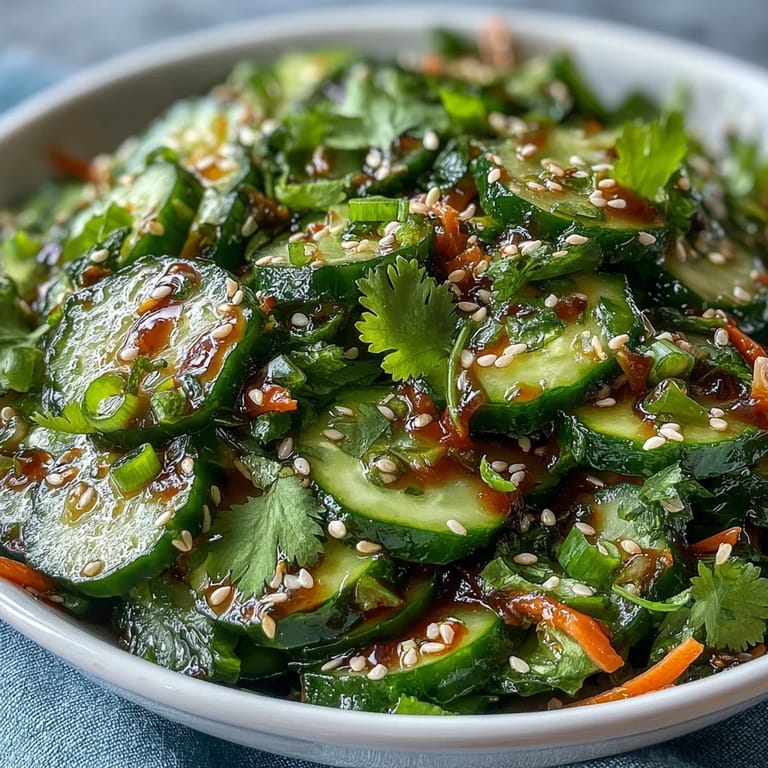
- English cucumbers (2 large, thinly sliced): These have fewer seeds and thinner skin than regular cucumbers, so they stay crisp longer and don't water down your bowl.
- Spring onions (2, thinly sliced): They add a gentle bite that builds as you eat, far milder than raw onion but still present.
- Carrot, julienned (1 small, optional): A touch of sweetness and color that makes the salad feel more complete without overwhelming it.
- Soy sauce (2 tablespoons): The backbone of the dressing—use tamari if gluten bothers you, and don't skip it for low-sodium versions as you'll lose the umami punch.
- Rice vinegar (1 tablespoon): Milder and slightly sweet compared to other vinegars, it balances the salt without puckering your face.
- Toasted sesame oil (1 tablespoon): This is non-negotiable; regular sesame oil tastes flat and grassy by comparison, and toasted oil brings that nutty warmth that makes people ask what your secret is.
- Sugar or maple syrup (1 teaspoon): Just enough to round out the edges and let the salty-sour-spicy play together without harsh corners.
- Garlic (1 clove, minced): Fresh garlic here—garlic powder will taste dusty and disappointed in comparison.
- Fresh ginger (1 teaspoon, grated): The smell alone tells you this is going to be good, and it adds a warmth that ties everything together.
- Chili flakes or fresh red chili (1 teaspoon or ½ chili, optional): Heat is optional here, but it wakes up all the other flavors and makes them sing louder.
- Toasted sesame seeds (2 tablespoons, for garnish): The crunch and nuttiness at the end that makes people notice they're eating something intentional.
- Fresh cilantro (1 tablespoon, chopped, optional): Herbal and bright, though mint or basil work beautifully if cilantro isn't your thing.
Tired of Takeout? 🥡
Get 10 meals you can make faster than delivery arrives. Seriously.
One email. No spam. Unsubscribe anytime.
Instructions
- Salt and drain the cucumbers:
- Slice your cucumbers and toss them with a pinch of salt in a colander, letting them sit for 5-10 minutes. This draws out water that would otherwise make the salad weepy and sad by the time you eat it, then pat them dry gently with paper towels so they stay crisp.
- Combine your vegetables:
- In a large bowl, toss together the dried cucumbers, spring onions, and carrot if you're using it. This is when the kitchen smells clean and vegetable-fresh, before the aromatics arrive.
- Whisk the dressing:
- In a small bowl, combine soy sauce, rice vinegar, sesame oil, sugar, minced garlic, grated ginger, and chili if you want heat. Whisk until the sugar dissolves completely—you'll see it go from grainy to glossy, and the smell will suddenly become complex and alive.
- Dress and toss:
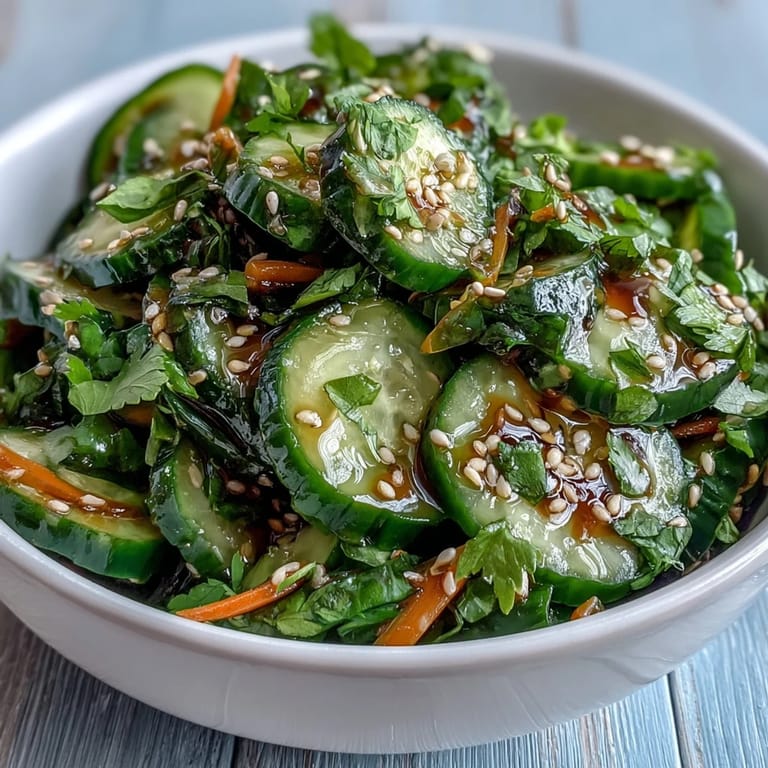
- Pour the dressing over your vegetables and toss everything together, making sure every piece gets coated. The dressing will seem thin at first but clings beautifully to the cucumber slices.
- Garnish and finish:
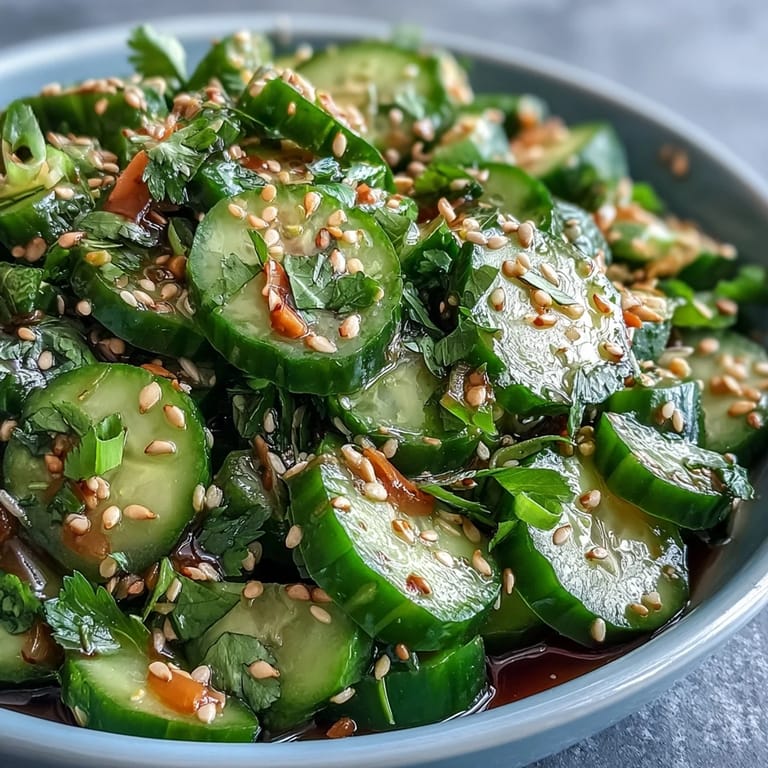
- Transfer to a serving dish and scatter sesame seeds and cilantro over the top. Serve right away for maximum crunch, or chill for 10-15 minutes if you prefer it cold and more marinated.
 Save to Pins
 A friend who usually eats very plain food told me this was the first salad she'd ever actually enjoyed, and we sat on her porch eating it straight from the bowl while talking about nothing in particular. Sometimes feeding someone changes something small but real between you.
Why This Dressing Works
The magic here is balance—salty soy and umami, tangy vinegar, warm toasted sesame, bright ginger and garlic, a whisper of heat if you want it. None of these flavors dominates; instead they create layers that keep surprising you as you eat. It's the kind of dressing that teaches you something about seasoning just by tasting it, and suddenly you'll find yourself making it for everything.
Storage and Timing
The salad is best eaten within a few hours of assembly, though the dressing will keep in a jar in your fridge for up to a week. You can also dress the cucumbers and vegetables separately and combine them just before serving if you're planning ahead. The longer it sits, the softer the cucumber becomes and the more the flavors meld—some people love that marinated quality, while others prefer the initial crunch.
Flavor Variations and Swaps
This salad is forgiving and loves experimentation. Add sliced radishes for extra bite and color, or thin slices of bell pepper for sweetness. Swap cilantro for mint or basil depending on your mood or what's growing in your garden. The dressing itself is flexible too—if you like it spicier, add more chili; if you prefer it sweeter, a touch more maple syrup won't hurt. Some people add a tablespoon of peanut butter to the dressing for creaminess, or a squeeze of lime juice for extra brightness.
- Try adding sliced radishes or bell pepper for textural variety and color.
- Fresh mint or basil work beautifully instead of cilantro if that's what you have.
- A splash of rice vinegar or lime juice can be added if you want extra tang.
 Save to Pins
 This salad has quietly become one of my most-made recipes, the kind you return to when you need something refreshing but don't want to think too hard. It's proof that simple food, made with intention, is enough.
Frequently Asked Questions
- → How do I ensure the cucumbers stay crunchy?
Salting the cucumbers and letting them drain removes excess moisture, helping maintain their crisp texture when tossed with the dressing.
- → Can I use tamari instead of soy sauce?
Yes, tamari works perfectly as a gluten-free alternative, offering a similar rich umami flavor.
- → What can I add to vary the salad’s flavor?
Try adding sliced radishes or bell peppers for extra crunch, or swap cilantro for mint or basil for a fresh herbal twist.
- → Is it better served chilled or room temperature?
The salad can be served immediately or chilled for 10-15 minutes to enhance the marinade's depth and coolness.
- → How can I make the salad spicier?
Increase the amount of chili flakes or add fresh red chili slices to the dressing according to your heat preference.
- → What dishes pair well with this salad?
This crisp salad complements grilled meats, seafood, or rice bowls, adding a bright, refreshing contrast.